
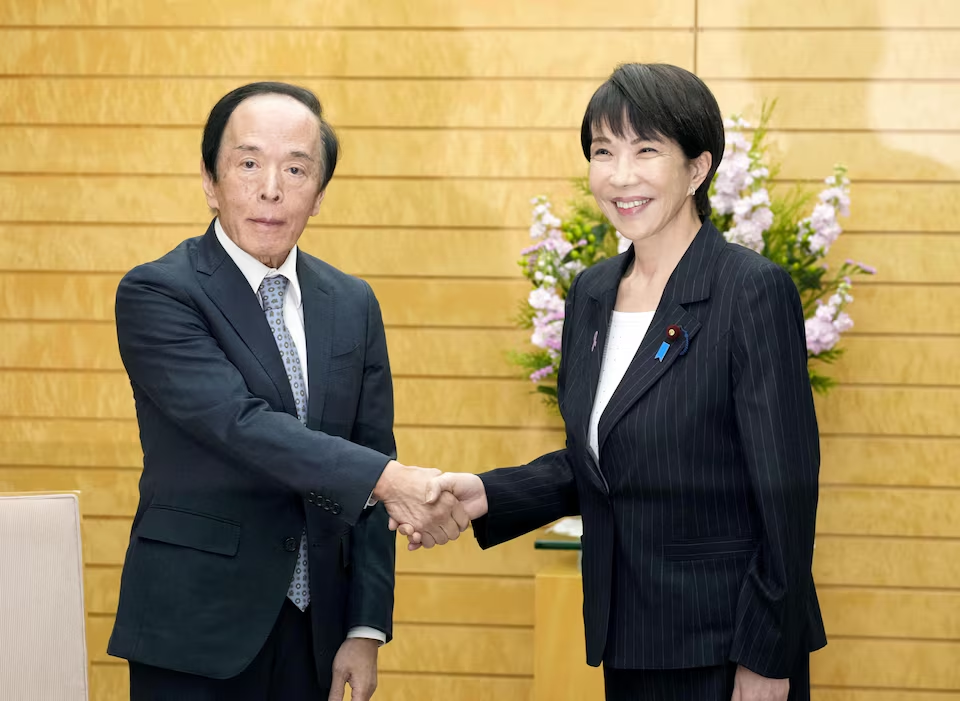
Bank of Japan Governor Kazuo Ueda has secured political space for a widely expected December interest rate hike, persuading Prime Minister Sanae Takaichi—a long-time critic of tightening—to accept the need for action amid persistent inflationary pressures and a weak yen.
The diplomatic outreach helped calm earlier speculation that Japan’s new government might push back against further monetary tightening, clearing the way for the BOJ to raise its short-term policy rate by 25 basis points to 0.75%, a level not seen in roughly three decades.
While a December move now appears almost certain, analysts say the central bank faces a far more complicated challenge ahead: communicating the path of future rate hikes at a time when policymakers lack a shared view on Japan’s long-term neutral interest rate.
The uncertainty has left bond markets on edge, with investors watching closely for signals on how aggressively the BOJ intends to normalize policy after years of ultra-loose stimulus.
“The BOJ sees a December hike pretty much as a done deal. The more important question is what’s next,” said Mari Iwashita, executive rates strategist at Nomura Securities.
Read Also: SoftBank Masayoshi Son Surpasses Yanai As Japan’s Richest Man
She warned that the yen could weaken if Ueda fails to assure markets the BOJ will continue shrinking negative real rates—yet overly strong guidance could unsettle the government.
“It’s a bit tricky,” she added.
Ueda effectively telegraphed the upcoming rate increase in a speech Monday, saying policymakers would weigh the “pros and cons” of tightening at the December meeting. Markets quickly responded, pricing in an 80% probability of a hike, according to several traders.
Instead of objecting, senior officials in Takaichi’s administration—traditionally aligned with reflationist policies—offered muted or even supportive comments.
Finance Minister Satsuki Katayama said Tuesday she saw no issue with Ueda’s remarks, suggesting the government would not obstruct the move.
Even advisers close to Takaichi’s pro-stimulus camp acknowledged that a sustained weak yen could justify further tightening.
“The BOJ will have to raise rates if the yen’s weakness persists even after next week’s U.S. monetary policy decision,” said Toshihiro Nagahama, a member of a government economic panel.
Takaichi, who took office on Oct. 21, initially voiced discomfort with the pace of normalization, having dismissed rate hikes as “stupid” just a year earlier. The BOJ has raised rates twice under Ueda—moves that sparked political friction but were ultimately defended as necessary to counter destabilizing currency swings.
A sharply weaker yen remains a key factor behind the administration’s softer tone. Officials fear that failing to address Japan’s deeply negative real interest rates could trigger renewed currency volatility, raising import costs and straining households.
For Ueda, the recent political thaw marks a significant win for BOJ “hawks” seeking to unwind the legacy of former governor Haruhiko Kuroda’s expansive stimulus framework.