
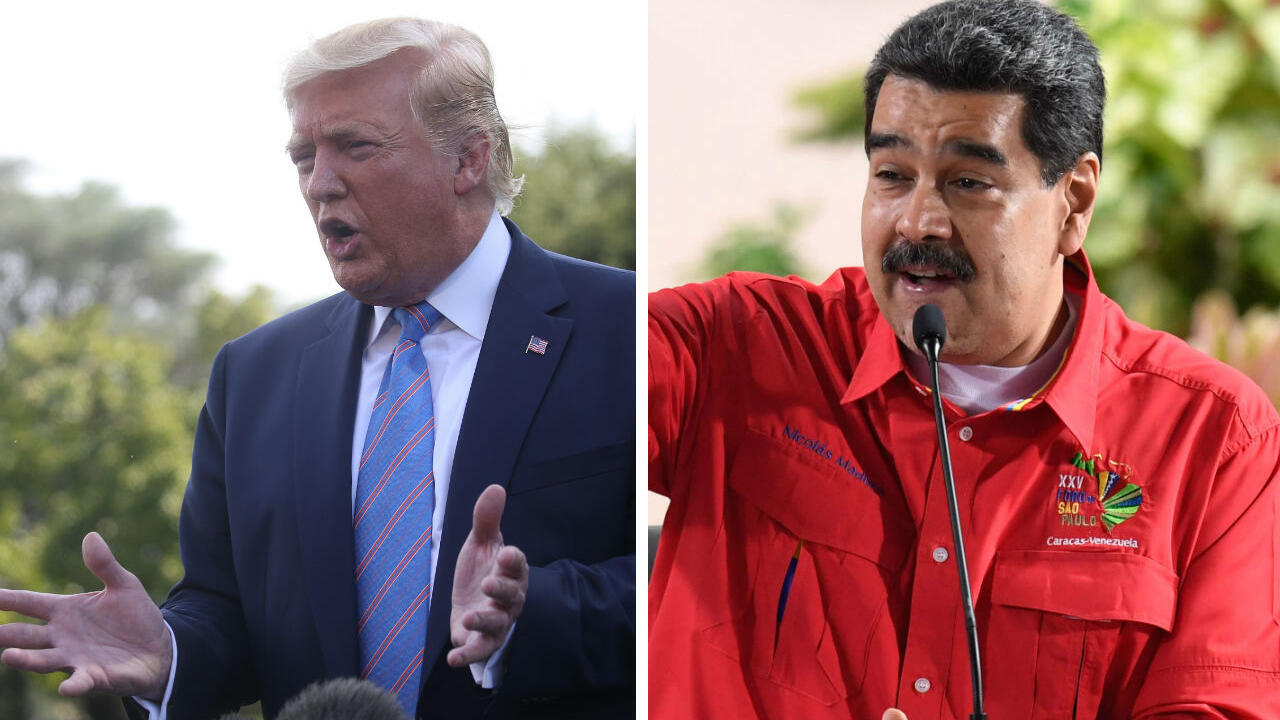
Sources say Trump urged Venezuela’s leader to relinquish power immediately, while Maduro demanded global immunity and dismissed U.S. pressure as unacceptable.
U.S. President Donald Trump reportedly delivered a stark ultimatum to Venezuelan leader Nicolás Maduro during a recent phone call, urging him to step down immediately in exchange for safe passage out of the country. Maduro rejected the appeal, according to multiple accounts cited by the Miami Herald, instead demanding sweeping protections for himself and his inner circle.
Trump confirmed over the weekend that the call took place but offered little detail, telling reporters only: “I wouldn’t say it went well or badly, it was a phone call.” Neither the White House nor Venezuela’s government has publicly elaborated on the content of the discussion, which was described as highly unusual for the two leaders.
According to sources familiar with the exchange, Trump conveyed a “blunt message” to Maduro amid a four-month U.S. pressure campaign that has included a significant naval deployment off Venezuela’s northern coast. The reported ultimatum offered safe passage for Maduro, his wife, and his son—but only if Maduro agreed to resign “right away.”
Read Also: Trump Demands Action Against Rep. Ilhan Omar Over Allegations
Maduro allegedly refused and countered with a set of demands, including worldwide immunity from prosecution and permission to retain influence over Venezuela’s armed forces even if he ceded political authority. The Miami Herald reported that no subsequent direct contact occurred, though Maduro is said to have requested a second call after Trump declared Venezuela’s airspace “closed in its entirety.” According to the report, the Maduro government received no reply. The initial call was reportedly facilitated by Brazil, Qatar, and Turkey.
Addressing supporters at a rally in Caracas, Maduro denounced foreign pressure and insisted that Venezuela sought a peace rooted in sovereignty. “We want peace, but peace with sovereignty, equality, freedom,” he said. “We do not want a slave’s peace, nor the peace of colonies.”
Despite reports of an ultimatum, analysts caution that the United States may not be preparing for large-scale military action. Some Venezuelan insiders believe the threats lack credibility, according to comments shared with the Wall Street Journal.
Since taking office in 2013, Maduro has weathered mass protests, a severe economic collapse, a 2018 assassination attempt, and intense international pressure. His government is widely considered to have lost last year’s presidential election to opposition candidate Edmundo González.
International efforts toward a negotiated solution continue. Colombian President Gustavo Petro has proposed Cartagena as a venue for talks between Maduro’s government and opposition leaders. Meanwhile, Maduro used a letter to OPEC to accuse the United States of seeking to seize Venezuela’s vast oil reserves “through the lethal use of military force.”