
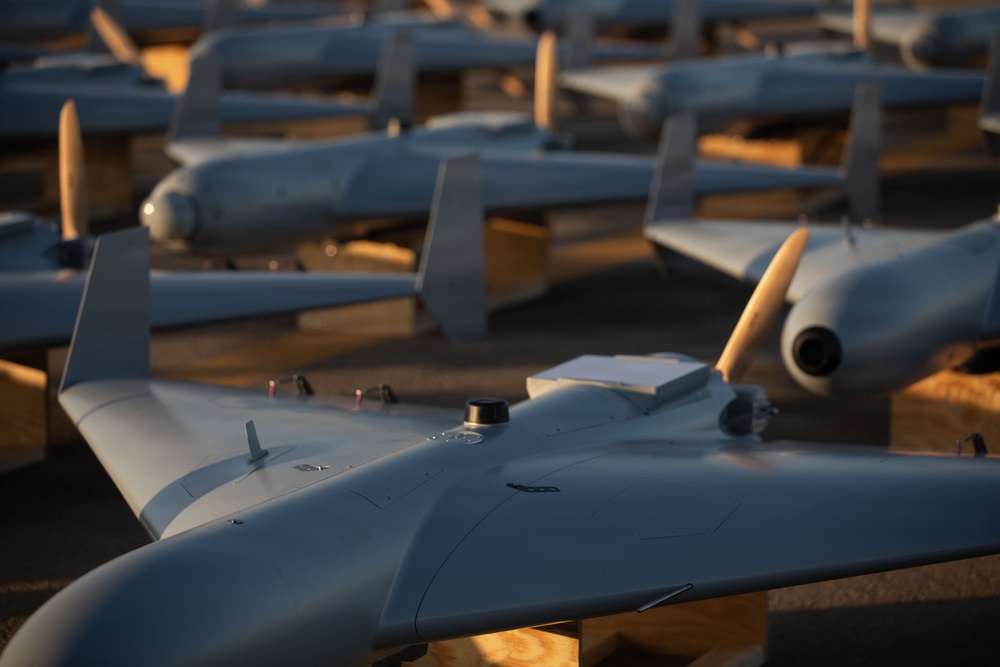
Washington unveils first unit armed with low-cost LUCAS attack drones, signaling a major shift in U.S. military posture and a direct warning to Tehran.
The United States has deployed a new class of low-cost, long-range attack drones to the Middle East, marking one of Washington’s most significant military shifts in its effort to deter Iran’s growing drone capabilities. U.S. Central Command confirmed the move as it announced the creation of Task Force Scorpion Strike, the first operational unit equipped with the Low-Cost Unscrewed Combat Attack System (LUCAS).
Senior U.S. officials say the deployment is designed to “flip the script on Iran,” whose Shahed-136 drones have been used extensively by Tehran and its regional proxies, as well as by Russian forces in Ukraine. American engineers reverse-engineered the LUCAS system directly from a captured Iranian Shahed, adapting the design into a scalable platform suitable for swarm attacks and long-range strikes.
The new task force, operating under U.S. Special Operations Command Central, comprises roughly two dozen personnel overseeing the deployment and integration of the drones. While officials declined to reveal how many systems are currently fielded, they emphasized that the numbers are “significant enough to provide real capability.”
Each LUCAS drone costs about $35,000—far less than traditional U.S. long-range strike systems—and can operate autonomously, fly beyond line of sight, and be launched from land bases, ground vehicles, or ships. The drones were developed by Arizona-based SpektreWorks.
Read Also: Trump Presses Maduro To Step Down In Reported Ultimatum Call
The move reflects growing concern within the Pentagon that Iran has gained a battlefield edge through the mass use of one-way attack drones, particularly those launched by groups across the Middle East and by Russian forces in Ukraine. U.S. officials say Iranian-supplied designs have repeatedly shown their ability to overwhelm air defenses through sheer volume.
By deploying an American-made version, Washington aims to neutralize that advantage and demonstrate that it can rapidly scale its own low-cost strike capabilities. The drones have already been tested against regional targets, though they have not been used in combat.
Officials say the LUCAS system could eventually support operations against Iranian-backed groups such as the Houthis in Yemen, though a formal ceasefire limits U.S. options. They also note that the technology could be expanded into other theaters as the military pushes to increase long-range firepower at lower cost.
The U.S. military has historically used Shahed-style drones for training, not combat. With the activation of Task Force Scorpion Strike, Washington has taken a step toward fielding them as frontline weapons—signaling to Tehran that it now faces the same mass-drone threat it once leveraged against others.