
Washington has moved to restrict travel for five European figures, announcing visa bans, over allegations that they played key roles in efforts to pressure technology companies into limiting speech the United States describes as unfavorable to American perspectives. Among those targeted is a former senior official of the European Union, a decision that has quickly sharpened tensions between the Trump administration and European governments.
US Secretary of State Marco Rubio said the individuals were involved in what he called coordinated attempts by foreign actors to influence how American platforms handle content. In his words, these efforts amounted to censorship campaigns directed at US speakers and businesses, something the administration says it will no longer tolerate. Rubio framed the move as a response to years of pressure exerted on Silicon Valley firms to suppress opinions disliked by European regulators or advocacy groups.
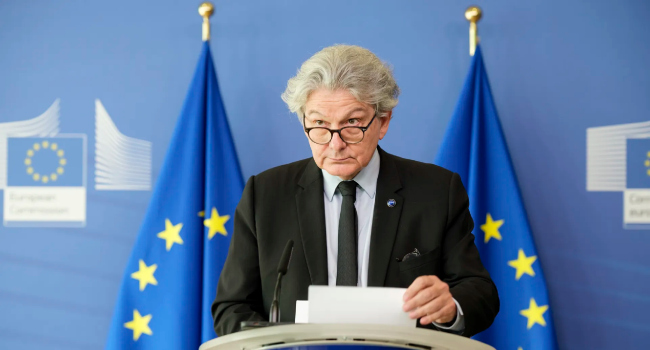
The most high profile name on the list is Thierry Breton, who served as the EU commissioner for the internal market until last year. US officials argue that Breton was central to shaping and enforcing the European Union’s Digital Services Act, legislation designed to curb online hate, misinformation and disinformation. According to the State Department, the law has been used as leverage against American owned platforms, including X, formerly Twitter, owned by Elon Musk, a close ally of President Donald Trump.
Breton rejected the accusations, describing the visa ban as politically motivated and likening it to a modern day witch hunt. He argued that claims of censorship were misplaced and suggested that the real threat to free expression lay elsewhere.
Read also: US, Ukraine Say Miami Talks Productive Though Inconclusive
Other individuals affected include Imran Ahmed of the Centre for Countering Digital Hate, leaders of the German group HateAid, Josephine Ballon and Anna Lena von Hodenberg, and Clare Melford of the Global Disinformation Index. Several of them said the US action was meant to intimidate those involved in enforcing European digital rules and defending human rights online. They accused Washington of using the language of free speech to silence critics and undermine lawful regulation.
European officials have also pushed back strongly. France’s foreign minister said the European Union would not accept outside interference in how it governs its digital space, stressing that the Digital Services Act was adopted through democratic processes and does not apply beyond Europe’s borders.
The dispute is unfolding against a wider backdrop of strain in transatlantic relations. The Trump administration has increasingly criticized European speech laws, arguing they amount to ideological control, while Brussels insists the rules are about transparency and accountability for powerful platforms. With recent fines against X and warnings that US companies operating in Europe could face tighter scrutiny, the clash over digital regulation is fast becoming a defining fault line between Washington and its allies.