
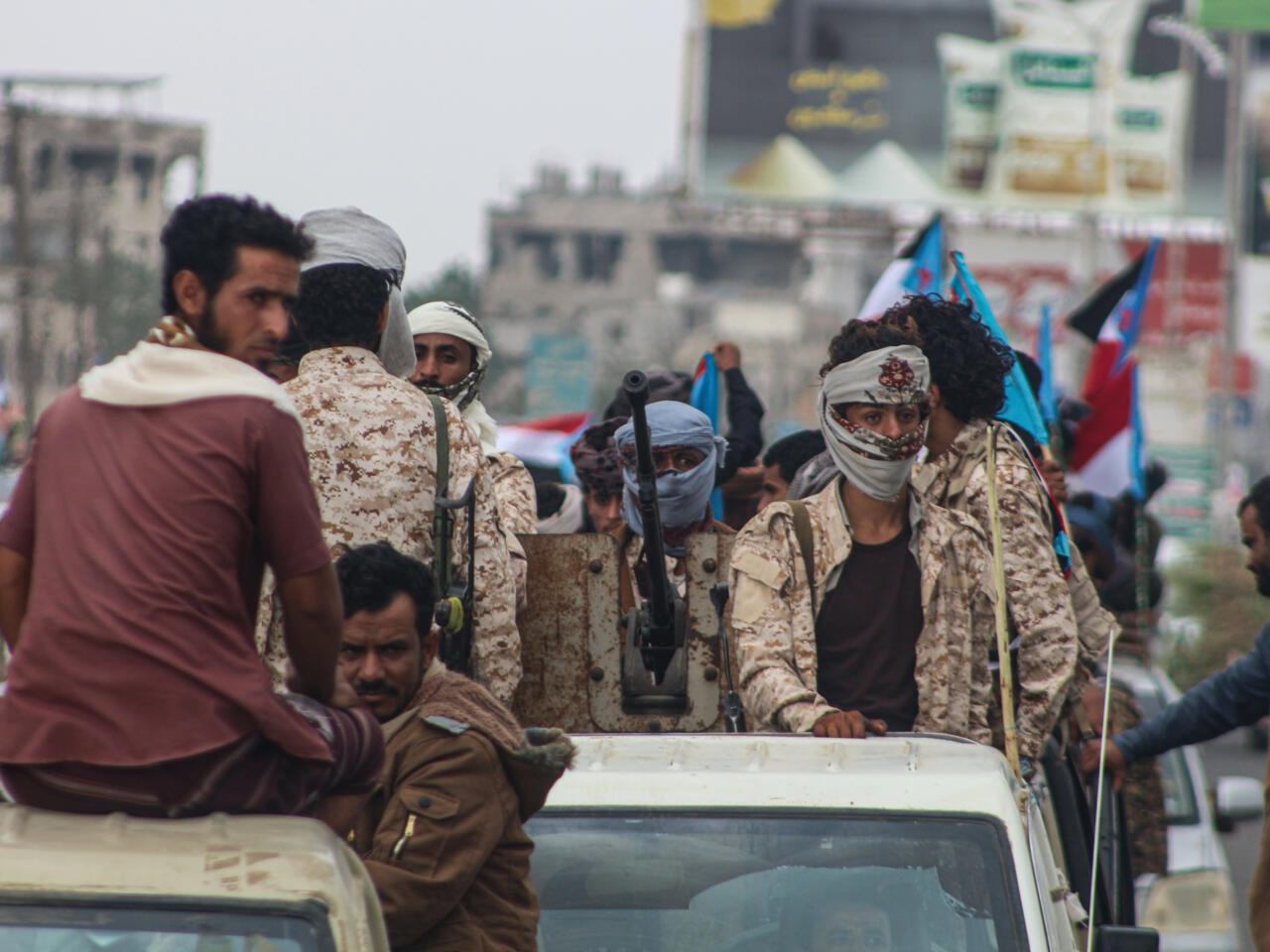
Saudi Arabia sharply escalated its dispute with the United Arab Emirates on Tuesday, declaring its national security a “red line” and backing a demand for Emirati forces to leave Yemen within 24 hours, following a Saudi led coalition airstrike on the southern port city of Mukalla.
The warning marked Riyadh’s strongest public rebuke of Abu Dhabi since the Yemen war began and exposed rare open tensions between two longtime Gulf allies fighting on the same side of the conflict.
Saudi Arabia said it supported a decision by Yemen’s Saudi backed presidential council to set a one day deadline for the withdrawal of UAE forces, hours after coalition aircraft struck what they described as foreign military support arriving at Mukalla port.
The coalition said the airstrike targeted supplies intended for the Southern Transitional Council, a separatist group backed by the UAE that has clashed with Yemeni government forces in recent weeks.
Saudi officials urged Abu Dhabi to comply with the withdrawal demand, stressing that actions undermining Yemen’s recognized government crossed a security threshold for the kingdom.
Rashad al Alimi, head of Yemen’s presidential council, went further by cancelling a defense agreement with the UAE, according to Yemen’s state news agency.
In a televised address, Alimi accused Abu Dhabi of fueling internal conflict through its backing of the STC.
“It has been definitively confirmed that the United Arab Emirates pressured and directed the STC to undermine and rebel against the authority of the state through military escalation,” Alimi said, describing the situation as a direct threat to Yemen’s stability.
Read Also: U.S. Unleashes LUCAS Drones In Middle East Amid Iran Tensions
The UAE foreign ministry did not immediately respond to requests for comment.
According to the Saudi led coalition, the Mukalla strike came after two vessels arrived over the weekend from the UAE port of Fujairah without authorization.
The coalition said the ships disabled their tracking systems upon arrival and unloaded weapons and combat vehicles intended to support STC forces. Saudi state media reported that the strike caused no casualties or damage to civilian infrastructure.
The UAE joined the Saudi led coalition against Yemen’s Iran aligned Houthi movement in 2015. While Abu Dhabi began drawing down troops in 2019, it has continued to wield influence through local allies, particularly in southern Yemen.
This month, STC forces launched a sudden offensive against Saudi backed government troops, breaking years of relative military deadlock and claiming control over much of the south. Saudi Arabia had warned the group against advancing in Hadramout province and called for a withdrawal, a demand the STC rejected.
The flare up has brought Riyadh and Abu Dhabi closer than ever to direct confrontation in Yemen, a country already fractured by nearly a decade of war.
Gulf stock markets fell on Tuesday as investors reacted to the diplomatic rift, showing concerns about regional stability.