
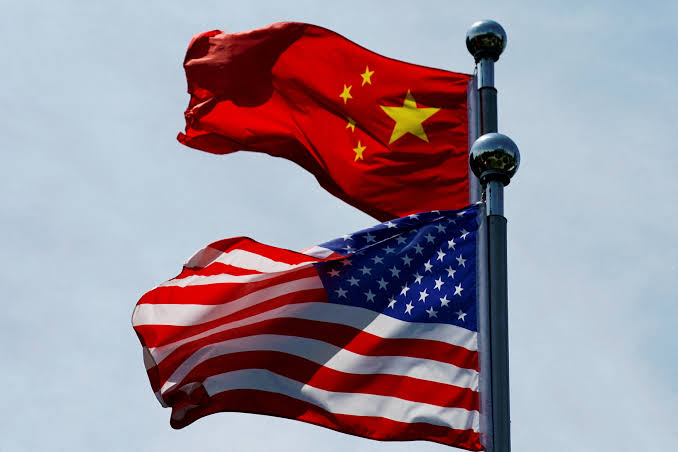
The United States plans to concentrate its military power more narrowly on defending its own territory and countering China, while scaling back the level of support it offers to allies in Europe and other regions, according to a new Pentagon strategy document released on Friday. The 2026 National Defense Strategy signals a clear shift in Washington’s security thinking, placing greater responsibility on partners abroad to manage their own defense needs as American forces redirect attention to domestic security and the Indo-Pacific.
The document states that as US military resources are increasingly focused on homeland defense and competition with China, allies outside that core theater will be expected to shoulder primary responsibility for their security, with Washington providing support that remains important but more constrained than in the past. This marks a notable departure from earlier Pentagon strategies that emphasized extensive US backing for allied defense across multiple regions.
In its assessment of global threats, the strategy adopts a more measured tone toward America’s long standing rivals. It calls for what it describes as respectful relations with Beijing, even as China is identified as the main strategic competitor shaping US military priorities. Russia, by contrast, is characterized as a persistent but manageable challenge, particularly for NATO members along the alliance’s eastern flank. Notably, the document makes no reference to Taiwan, a longstanding US partner that China claims as its own territory, an omission that is likely to draw scrutiny from regional analysts.
Read also: Vietnam Communist Party Leader To Lam Secures New Term
The new approach contrasts sharply with the previous National Defense Strategy issued under former president Joe Biden, which labeled China as the most consequential long term challenge facing the United States and described Russia as an acute and immediate threat. Under the Trump administration, the focus has shifted inward, with border security framed explicitly as a core national security concern. The strategy argues that failures to secure the border in recent years enabled large scale illegal migration and fueled narcotics trafficking, developments it portrays as direct threats to national stability.
Reflecting this view, the Pentagon pledges to prioritize efforts to secure US borders, counter what it calls forms of invasion, and support the deportation of undocumented migrants. The document also drops any reference to climate change as a security risk, reversing the Biden era position that identified it as an emerging threat with implications for global stability.
The strategy elevates Latin America within US defense planning, aligning with a broader shift in the Trump administration’s foreign policy. It states that Washington intends to reassert military dominance across the Western Hemisphere to protect the homeland and secure access to strategically important areas. The document invokes a modern interpretation of the Monroe Doctrine, referred to as the Trump Corollary, reinforcing the idea that the region should remain free of rival powers.
Since returning to office, President Donald Trump has expanded the use of US military force in Latin America. This has included a high profile operation that resulted in the capture of Venezuelan leader Nicolas Maduro and his wife, as well as a series of strikes on dozens of boats accused of drug smuggling. More than 100 people were reportedly killed in those operations. The administration has not publicly provided conclusive evidence linking the targeted vessels to trafficking networks, while international law experts and human rights groups have raised concerns that the strikes may constitute unlawful killings of civilians who posed no immediate threat to the United States.