
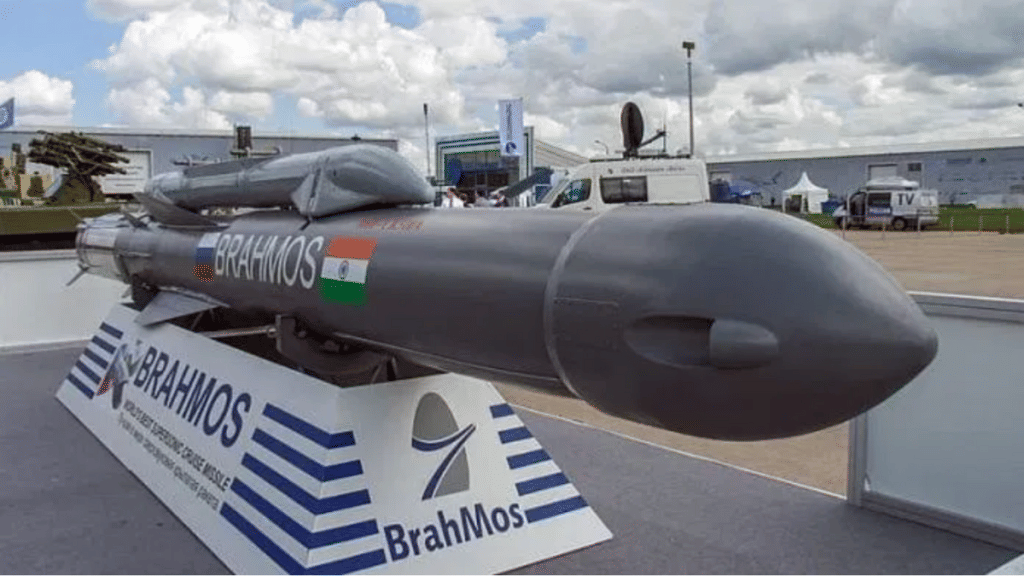
A missile system India used against Pakistan for the first time in actual combat last year is now headed to Indonesia, in a deal worth roughly $630 million that positions Jakarta as the newest buyer of one of the fastest cruise missiles on Earth.
An Indian government official confirmed Tuesday that India will supply both BrahMos supersonic cruise missiles and Astra air-to-air missiles to Indonesia, with the agreement expected to be finalized during Prime Minister Narendra Modi’s two-day visit to Jakarta. Reuters sources had flagged the deal’s likely timing days earlier.
Indonesia now joins Vietnam and the Philippines as the only countries to sign BrahMos purchase agreements, cementing India’s transformation from missile buyer to missile exporter in the span of a single decade.
That shift traces directly back to a battlefield.
Combat use of BrahMos during India’s four-day conflict with Pakistan last year triggered a wave of international interest in the weapon, according to Indian officials familiar with the export pipeline. More than half a dozen countries have since inquired about acquiring the system, including the United Arab Emirates, which entered talks with New Delhi last month.
BrahMos missiles, developed jointly by India and Russia, can be fired from land, sea or air platforms and rank among the fastest cruise missiles in active military service anywhere. The Astra missiles included in Tuesday’s deal are beyond-visual-range weapons designed for integration onto Russian-made Sukhoi fighters — aircraft already flying in Indonesia’s air force fleet.
Read also: Sikh’s Killing: Tension As India Expels Canadian Diplomat
Neither government has said much publicly. The Indian government did not respond to earlier requests for comment, and Indonesia’s embassy in New Delhi has likewise stayed silent on the arrangement.
The dollar figure has moved considerably since talks began.
Indonesia first confirmed in March that it had reached an agreement with India to procure the BrahMos system, with the Indonesian Defense Ministry describing negotiations at the time as advanced and estimating the deal’s value between $200 million and $350 million. Tuesday’s confirmed price tag of roughly $630 million nearly doubles that earlier ceiling, reflecting what a third Indian source described as a broader package than initially discussed.
That package extends well beyond the missiles themselves. Indian officials say the deal includes supporting infrastructure, operator training, long-term maintenance services and technical assistance designed to sustain the systems over years of deployment — components built around what the same source called a phased acquisition model, allowing Indonesia to expand its missile capabilities incrementally rather than all at once.
Strategic timing surrounds the transaction on every side. India and China are competing openly for influence across the Indo-Pacific, and a defense export deal of this scale with Southeast Asia’s largest economy extends New Delhi’s military footprint directly into that contest.
Modi’s itinerary in Jakarta includes talks with Indonesian President Prabowo Subianto covering maritime security, defense industrial cooperation and regional connectivity, alongside what Indian sources describe as broader coordination across the Indo-Pacific region.
Read also: India And France Overhaul 1992 Tax Treaty In Strategic Reset
Trade ties between the two nations already run deep. Bilateral commerce hit $28.15 billion in the 2024-25 fiscal year, making Indonesia India’s second-largest trading partner within the Association of Southeast Asian Nations bloc.
Modi has framed this trip, along with stops planned in Australia and New Zealand, as reinforcing India’s “Act East” policy and its Mutual and Holistic Advancement for Security Across Regions initiative — shorthand for a foreign policy vision built around a free, open and inclusive Indo-Pacific.
BrahMos Aerospace Private Limited, the joint Indian-Russian venture that manufactures the missiles, now counts three foreign militaries as customers, a client list that started with zero exports and has grown almost entirely on the strength of one four-day war.