
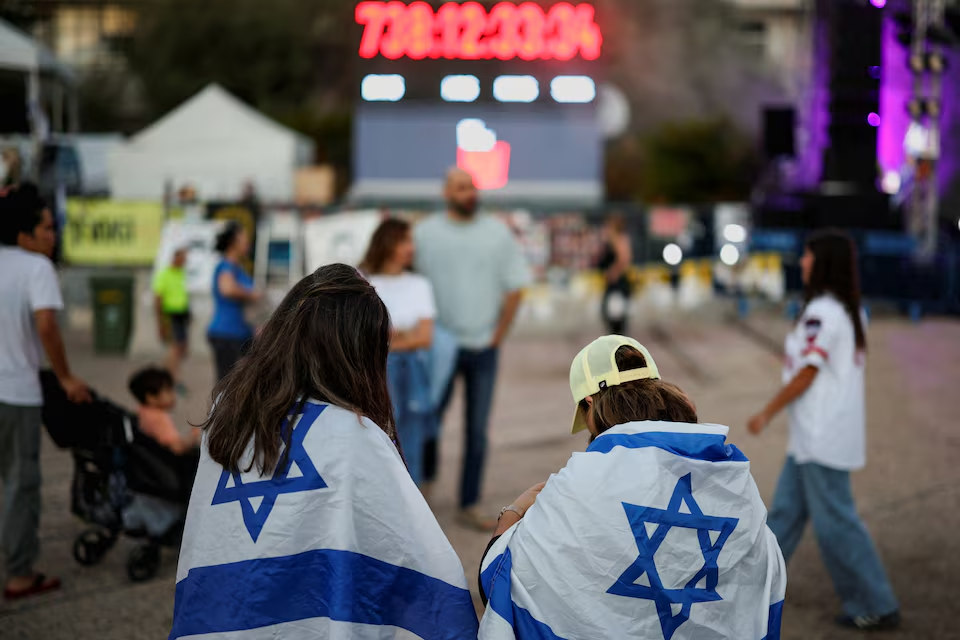
Israel will turn off a clock in Tel Aviv on Tuesday that has counted the days of captivity of hostages taken during Hamas’ October 7, 2023 attack, marking the end of a painful national vigil after the military confirmed the recovery of the last remaining hostage.
The digital clock, displayed in what became known as Hostages Square, will stop after 844 days. Its shutdown follows the announcement by the Israel Defense Forces on Monday that the body of Ran Gvili, 24, was located in Gaza and returned to Israel.
The clock became a focal point for weekly demonstrations by thousands of Israelis demanding the return of those abducted during the Hamas-led assault, which killed about 1,200 people and triggered the war in Gaza, according to Israeli authorities.
With the recovery of Gvili’s remains, Israel has now accounted for all hostages taken during the attack, an outcome widely described by officials and families as a moment of collective closure.
Read Also: Israel Forces First Gaza Evacuation Since Ceasefire Began
Israeli military officials said Gvili, an off-duty police officer recovering from an injury, was killed while fighting militants who infiltrated Israel during the assault. He was defending Kibbutz Alumim, near the Gaza border, when he was shot and later taken into Gaza by fighters from Islamic Jihad, a Palestinian militant group allied with Hamas.
Gvili’s mother, Talik, addressed reporters late Monday after the recovery was confirmed, thanking supporters who had stood by the family for more than two years.
Read Also: Netanyahu Accepts Trump’s Board Of Peace Invitation
“We have a closure,” she said. “Rani returned home an Israeli hero — truly an Israeli hero — and we are the most proud of him in the world.”
Her remarks reflected the emotional weight carried by families who had waited months for news of their loved ones.
A public ceremony is scheduled for Tuesday at Hostages Square as the clock is turned off, according to the Hostages and Families Forum, the group that organized rallies and coordinated advocacy efforts for the captives and their relatives.
Gvili’s sister, Shira, is expected to attend alongside former hostages and family members of those taken on October 7. Organizers said the event will serve both as a tribute and a collective moment of remembrance.
Since the attack, Hostages Square has hosted near-weekly demonstrations, candlelight vigils, and speeches, becoming one of the most recognizable symbols of the crisis inside Israel.
The recovery of the last hostage also completes a central element of the initial phase of U.S. President Donald Trump’s plan to bring the war to an end, according to U.S. and Israeli officials.
Washington announced earlier this month that the process had moved into a second phase, which includes further Israeli troop withdrawals and the reopening of Gaza’s Rafah border crossing with Egypt.
The Rafah crossing has remained the primary exit point for Gaza’s more than 2 million residents and has been under Israeli military control since 2024.
For Palestinians in Gaza, the prospect of the border reopening has raised hopes for access to medical care abroad.
Nour Daher, a 31-year-old Gaza resident with a heart condition, said he has been waiting for months for permission to leave the territory for treatment.
“I have the medical referral papers. I registered with the World Health Organization,” Daher said. “Now I’m waiting for my name to appear on their lists. The last time I checked, they said they were waiting for a country willing to take my case.”
Daher said he suffers near-daily episodes of severe heart palpitations and remains hopeful that the reopening will allow him to receive care.