
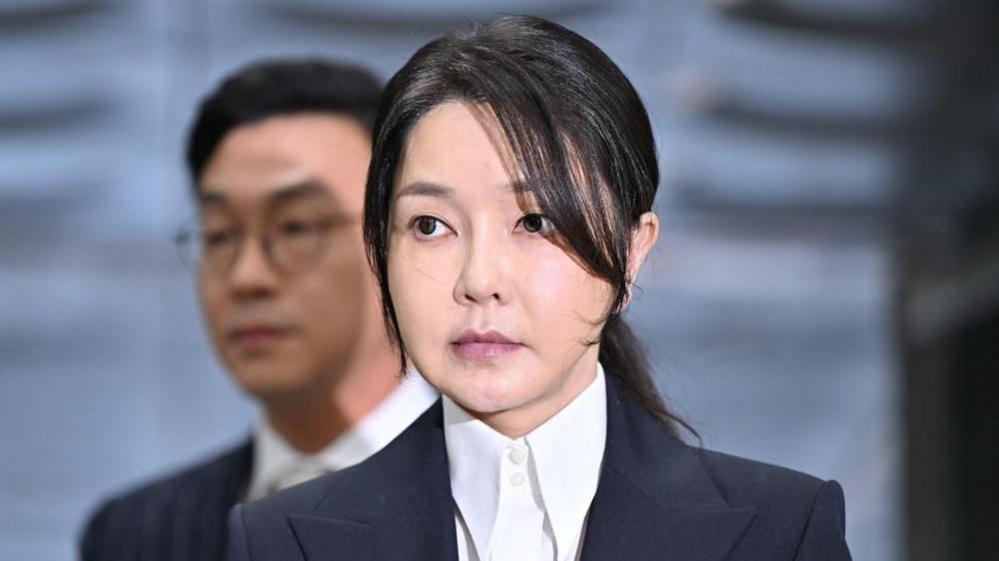
Seoul, South Korea — A court in Seoul has sentenced former first lady Kim Keon-hee to 20 months in prison after finding her guilty of accepting bribes from figures linked to the controversial Unification Church in exchange for political and business favours, marking a significant development in the country’s ongoing political corruption trials.
The Seoul Central District Court handed down the verdict on Wednesday, making Kim, 52, one of the highest-profile political figures in recent South Korean history to receive a prison sentence. Prosecutors had sought a much longer term — up to 15 years — and significant fines across multiple charges, but the court ultimately upheld only the bribery charge, rejecting accusations of stock price manipulation and violations of political funding laws due to a lack of evidence.
Judge Woo In-sung said Kim had “misused her position as a means of pursuing personal gain,” noting the symbolic influence that comes with being the nation’s first lady even without an official government role. The court also ordered the forfeiture of 12.8 million won (about $9,000) and the confiscation of a luxury diamond necklace linked to the case.
According to the special counsel team, Kim received luxury items — including Chanel handbags and a Graff diamond necklace — from associates of the Unification Church in 2022 in return for political concessions and advantages that could benefit the group’s interests. The church is a long-standing and controversial religious organization in South Korea with deep political ties.
Read Also: NYT Framing, Tinubu’s $9m, And Nigeria’s Silence—Epilogue
Kim has been held in detention since August 2025 while several criminal cases have progressed through the courts. She denied wrongdoing throughout the trial and has said that allegations against her were unjust. Her legal team indicated it will consider an appeal.
The conviction comes as part of a broader series of legal challenges facing South Korea’s political elite: Kim’s husband, former President Yoon Suk Yeol, was sentenced earlier this month to five years in prison related to abuses of power and obstruction of justice tied to his 2024 declaration of martial law. This marks the first time in modern South Korean history that both a former president and first lady have been simultaneously convicted and imprisoned.
The case has reignited debates within South Korea about corruption, the influence of religious organisations on politics, and the accountability of public figures with access to power and privilege.