
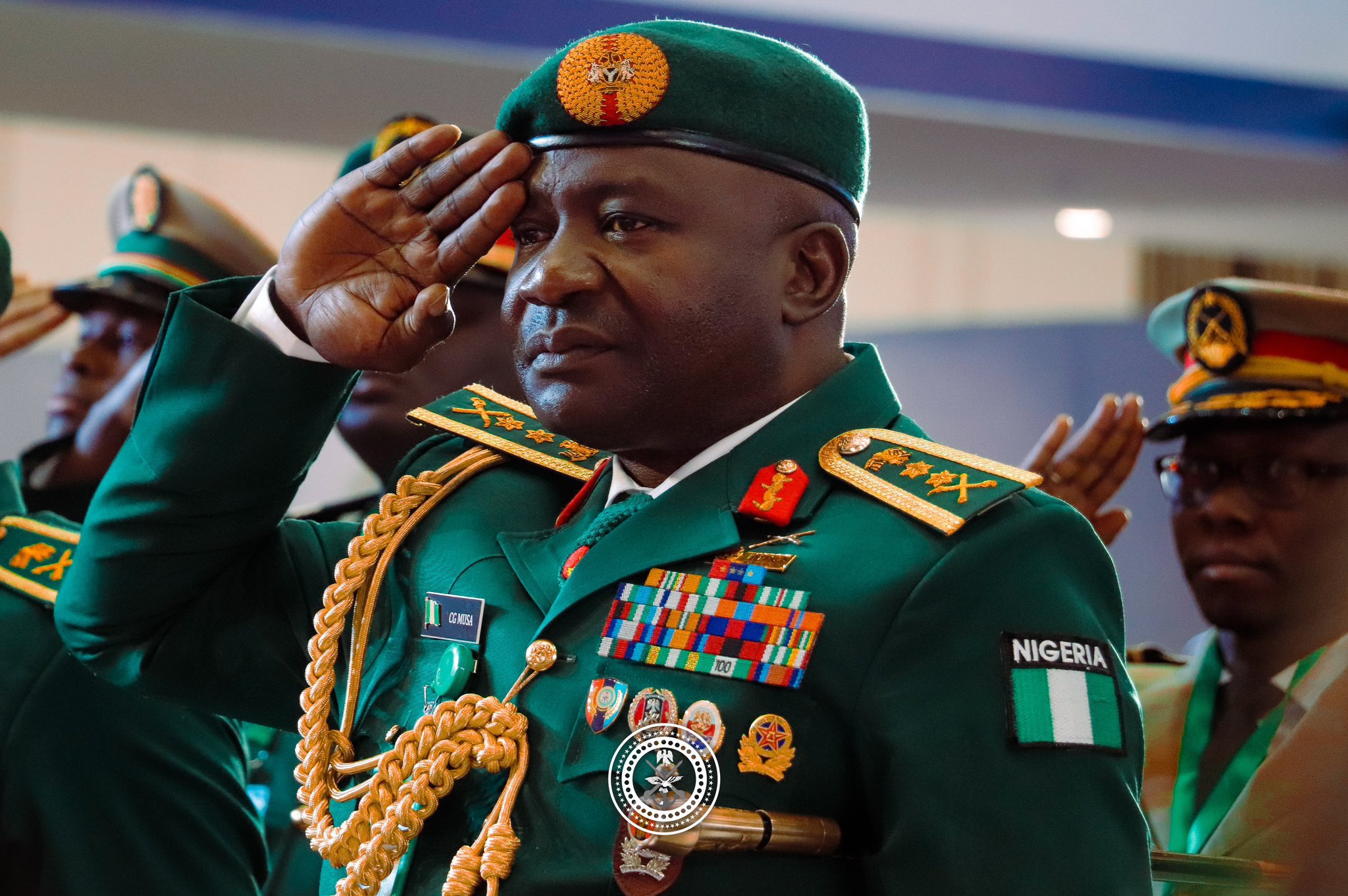
Fresh details have emerged around an alleged coup plot involving serving officers of the Nigerian Armed Forces, as senior military authorities move closer to prosecuting those accused of attempting to destabilise the government. The revelations shed light on internal security tensions, the military’s disciplinary process, and the broader political atmosphere in a region that has recently seen a resurgence of unconstitutional power grabs.
One of the individuals linked to the unfolding investigation recounted a chilling account of how the situation escalated. “I was supposed to be arrested, and if I refused, I was supposed to be shot,” he said, describing what he claimed were the orders surrounding his apprehension. While authorities have not publicly verified this specific claim, it has intensified public interest in the gravity of the allegations and the stakes involved.
The military had earlier confirmed that, in October, sixteen officers were arrested over what it described as acts of indiscipline and breaches of service regulations. At the time, officials framed the arrests largely as internal disciplinary measures, without explicitly linking them to any attempt to overthrow the government. That position has since shifted.
In a statement released last week, military authorities said further investigations had uncovered more serious allegations against some of the detained officers. According to the findings, a number of them were allegedly involved in plotting to topple the government, conduct described as fundamentally incompatible with the ethics, values, and professional standards expected of members of the Armed Forces of Nigeria.
Read also: Australian Open Women’s Doubles Final: Mertens, Zhang Win
Major General Samaila Uba, Director of Defence Information, said those identified as having cases to answer would now face formal trial. “Accordingly, those with cases to answer will be formally arraigned before an appropriate military judicial panel to face trial in accordance with the Armed Forces Act and other applicable service regulations,” he said. The move signals a transition from internal probes to a full judicial process within the military system.
The allegations have also taken on a political dimension. Reports suggest that several senior government officials and prominent national figures were allegedly marked as targets in the foiled plot, a claim that has not been independently confirmed by the authorities. The reported plot has also been linked, in public speculation, to the cancellation of Nigeria’s 65th Independence Anniversary parade, although officials have not formally established a direct connection.
In a related development, the residence of former Bayelsa State governor and ex-minister Timipre Sylva was reportedly raided as part of the investigation into possible links to the alleged coup attempt. Sylva has not been formally charged, and no official statement has detailed the outcome of the raid, but the incident has added to the political sensitivity surrounding the case.
Minister of Defence, General Christopher Musa, has taken a dismissive tone toward the alleged plotters, describing them as lacking seriousness and strategic understanding. “I think these guys were a bunch of unserious individuals. If you look at the calibre of persons involved, I don’t know what got into their heads to think they can take on the Armed Forces like that,” he said.
Read also:
General Musa also argued that any attempt to overthrow the government would have faced resistance beyond the military itself. He said Nigerians, having endured years of military rule in the past, would not tolerate a return to that era. “Even Nigerians would have fought them. Nigerians have fought against military rule for quite some time. Mr President has been one of them,” he said, adding that those behind the alleged plot had badly misjudged the country’s political reality.
Nigeria’s history gives weight to those remarks. Between 1966 and 1993, the country experienced multiple coups and long stretches of military governance. The return to civilian rule in 1999 marked a major turning point, and democratic governance has endured for more than two decades despite periodic political and security challenges.
The alleged coup attempt comes at a time of heightened regional anxiety. West Africa has witnessed a wave of military takeovers and attempted coups in recent years, including a reported attempt in neighbouring Benin Republic late last year. Against this backdrop, Nigerian authorities appear keen to project firmness and institutional control, both to reassure citizens at home and to signal stability in an increasingly volatile region.