
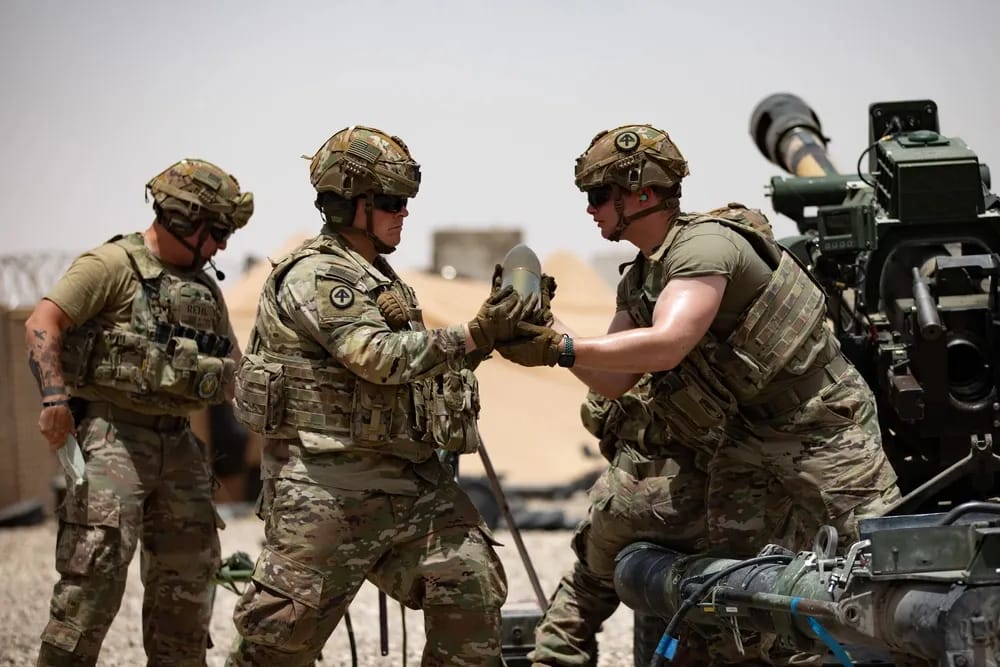
The U.S. has deployed a small team of troops to Nigeria, marking the first public acknowledgment of American forces on the ground since airstrikes were carried out in the country on Christmas Day, officials said on Tuesday. General Dagvin R.M. Anderson, head of U.S. Africa Command (AFRICOM), confirmed the deployment during a briefing, describing it as part of increased collaboration between Washington and Abuja to counter terrorist threats in West Africa.
“That has led to increased collaboration between our nations to include a small U.S. team that brings some unique capabilities from the United States,” General Anderson said, though he did not provide further details on the team’s size, mission, or operational locations. Nigeria’s Defense Minister Christopher Musa confirmed the presence of the U.S. personnel but likewise withheld specifics.
According to a former U.S. official, the team’s primary role appears to involve intelligence gathering and providing support to Nigerian forces targeting Islamist militants. The deployment follows President Donald Trump’s December airstrikes against what he described as Islamic State targets in Nigeria, part of a broader effort to counter escalating attacks by Boko Haram and Islamic State West Africa Province (ISWAP) in the country’s northwest.
Read also: Iran US Nuclear Talks: UAE Warns Region Cannot Face War
The U.S. has been monitoring the region for months, with surveillance flights conducted from Ghana since at least late November. The latest military collaboration comes amid heightened U.S. criticism of Nigeria’s handling of religiously targeted violence. Trump has repeatedly claimed that Christians in Nigeria face an “existential threat” from Islamist militants, and he has warned that further American action could follow if Abuja fails to protect vulnerable communities.
Nigeria has consistently denied claims of systematic persecution, emphasizing that its security operations are aimed at militant groups that attack both Christian and Muslim civilians. Despite these assurances, the northwest remains the epicentre of a 17-year insurgency, with militants increasingly targeting military convoys, government installations, and local populations.
The U.S. military’s AFRICOM reported that the December airstrike in Sokoto state, conducted in coordination with Nigerian authorities, killed multiple ISIS-affiliated militants. Officials say the strike is part of a broader campaign to degrade extremist networks in West Africa, which have been emboldened by porous borders, weak local governance, and regional conflicts.
Security analysts note that the U.S. deployment signals Washington’s intent to intensify its counterterrorism efforts in the region while maintaining a supporting role for Nigerian forces. The small footprint also reflects sensitivity to domestic and international concerns over sovereignty and the perception of U.S. intervention in African conflicts.
For Nigeria, the partnership with the United States represents both an operational boost and political pressure. While the government welcomes technical and intelligence support against insurgents, officials are wary of framing the fight as a religious conflict, emphasizing a broader national security approach.
The ongoing cooperation between Abuja and Washington underscores the increasingly complex regional security landscape, where local militias, transnational extremist groups, and foreign powers converge, making Nigeria a critical focus in West Africa’s fight against terrorism.