
United States and Iran will hold nuclear talks in Oman on Friday, a tentative diplomatic opening that comes amid sharp rhetoric from President Donald Trump and mounting regional tensions.
The announcement follows days of uncertainty over whether the talks would proceed, with disagreements over location and scope threatening to derail them.
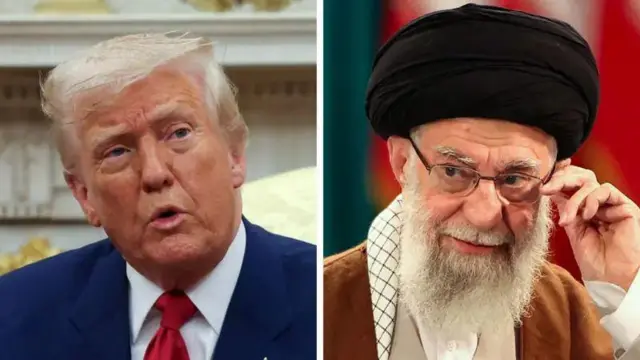
As preparations took shape, Trump delivered a stark warning to Iran’s Supreme Leader, Ayatollah Ali Khamenei.
Read Also: US Says It Shot Down Iranian Drone Near Aircraft Carrier
Asked by NBC News whether Khamenei should be worried, Trump replied, “I would say he should be very worried.” He added, “He should be. As you know, they’re negotiating with us.”
The president has ordered a buildup of U.S. forces in the region and threatened military action if Tehran refuses to accept limits on its nuclear program and halt the killing of protesters.
Read Also: US: $1.2trn Spending Bill Passes House To End Shutdown
Khamenei responded on Sunday with a warning of his own, saying any U.S. attack on Iran would trigger a “regional war.” The exchange highlights the high stakes surrounding the US–Iran nuclear talks in Oman, even as both sides signal a willingness to keep channels open.
U.S. Secretary of State Marco Rubio said earlier that special envoy Steve Witkoff had been preparing to meet Iranian officials in Turkey alongside regional representatives, before receiving “conflicting reports” about Iran’s participation.
Rubio stressed that for talks to “lead to something meaningful,” they could not focus solely on Iran’s nuclear activities, a point Iranian officials have resisted.
Araghchi pushed back, saying Iran’s position remains clear.
“President Trump said, ‘no nuclear weapons,’ and we fully agree with that. That could be a very good deal,” he said. “Of course, in return we expect sanction lifting. So that deal is possible.
According to Axios, the Trump administration agreed to Oman as the venue “to be respectful” of allies, though it remains “very sceptical” about the chances of success.
The talks are overshadowed by last June’s 12-day war between Israel and Iran, during which Trump said Iran was “going to have a nuclear weapon within one month” before he ordered U.S. air and missile strikes on three key Iranian nuclear facilities.
Any progress could ease regional pressures, while failure may harden positions on both sides.