
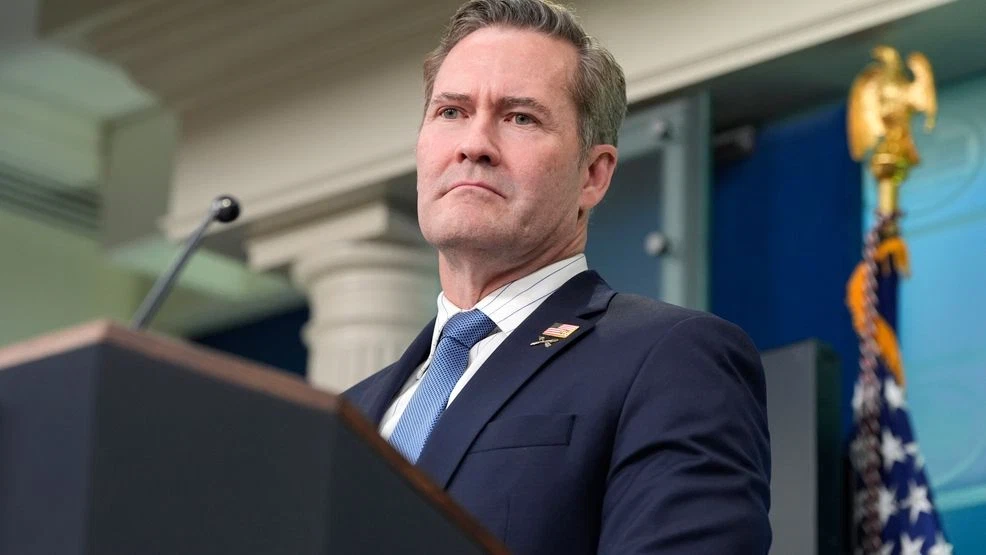
The United States plans to make an initial payment toward the billions of dollars it owes the United Nations in the coming weeks, U.S. Ambassador to the organization Mike Waltz told Reuters on Friday, signaling a partial effort to address long-standing arrears while calling for continued reforms at the world body.
Waltz spoke two weeks after U.N. Secretary-General Antonio Guterres warned that the organization faces “imminent financial collapse” due to unpaid contributions, with the majority of arrears attributed to the United States.
“You’ll certainly see an initial tranche of money very shortly,” Waltz said in a telephone interview. “It’ll be a significant … down payment on our annual dues … I don’t believe that the ultimate figure is decided, but it’ll be in a matter of weeks.”
U.N. officials say Washington accounts for more than 95 percent of outstanding regular budget payments. By early February, the U.S. owed $2.19 billion in standard contributions, $2.4 billion for ongoing and past peacekeeping operations, and $43.6 million for U.N. tribunals.
On December 30, the U.N. General Assembly approved $3.45 billion for the organization’s 2026 regular budget, after weeks of negotiation. The funds cover core operations at U.N. offices globally, including headquarters in New York, staff salaries, conferences, development initiatives, and human rights programming.
The financial strain on the U.N. has intensified amid the Trump administration’s broader retreat from multilateral commitments. While U.S. arrears have grown sharply during Trump’s tenure, U.N. officials note that delayed contributions have been a recurring challenge historically.
Read also: Trump Says He ‘Didn’t See’ Racist Clip In Shared Video
The United States did not contribute to the regular U.N. budget last year and still owes $827 million for 2025 obligations, alongside $767 million for 2026. In addition, voluntary funding for U.N. agencies has been sharply reduced, and the administration has sought to withdraw from organizations such as the World Health Organization.
Congress recently approved a spending bill that includes $3.1 billion for U.S. dues to the U.N. and other international organizations. When asked whether the upcoming payment would address 2025, 2026, or both sets of obligations, Waltz said the funds would be applied generally to arrears and “also in recognition of some of the reforms that we’ve seen.”
Waltz stressed U.S. support for Secretary-General Guterres’ UN80 reform initiative, calling it an essential first step that must continue. “It doesn’t go far enough, but it’s an important step. I wish the secretary-general had made it in year one or two of his tenure, not year nine,” he said.
The ambassador emphasized that U.S. engagement would focus on restoring the U.N. to its primary mandates. “We’re very focused … on getting back to basics, on peace and security. And … the president is rightly asking, how can we get the UN back to realizing its full potential?” Waltz said.
Read further: Polish Aviation Resumes Following Alliance Ukraine Alert
U.N. operations rely heavily on timely assessed contributions from member states. Delays in payments can disrupt administrative functions and programs, including peacekeeping missions and humanitarian operations in conflict zones. Guterres has repeatedly warned that failure to secure U.S. payments could result in delayed salaries for U.N. staff and interruptions to field activities.
The regular budget, funded through mandatory assessments, supports core functions such as conference services, administrative operations, and headquarters and field office costs. Peacekeeping missions, which are funded separately, contribute substantially to U.S. arrears.
U.S. officials have argued that reforms are necessary to improve efficiency, accountability, and prioritization of essential security and humanitarian tasks. Waltz said the administration is focused on ensuring contributions are directed toward vital peace and security efforts, while pressing for institutional changes.
Congressional backing for U.N. funding has fluctuated, reflecting debates over the effectiveness of multilateral programs and U.S. influence within international institutions. Waltz said the upcoming payment is intended both to reestablish credibility in U.S. contributions and to reinforce broader reform objectives.
Analysts note that while the initial payment may alleviate immediate financial pressures, structural changes are required to prevent recurring arrears and to ensure long-term operational stability. U.N. officials emphasize that delayed contributions from any major member can complicate budgeting and hinder program delivery.
Guterres and U.N. governing bodies have highlighted the importance of timely contributions and reforms to enhance transparency, strengthen audit mechanisms, and focus on core mandates. Waltz said ongoing discussions within the U.S. administration are aimed at aligning financial commitments with reform measures, ensuring accountability while supporting the U.N.’s mission.
The United States, the largest contributor to both regular and peacekeeping budgets, historically provides roughly 20 to 25 percent of assessed contributions. Timely payments from Washington are widely considered critical to maintaining continuity of U.N. operations worldwide.
The forthcoming payment represents a partial resolution of accumulated arrears and a signal of renewed U.S. financial engagement, though officials caution that further contributions and sustained reforms will be required to stabilize the organization’s finances over the long term.