
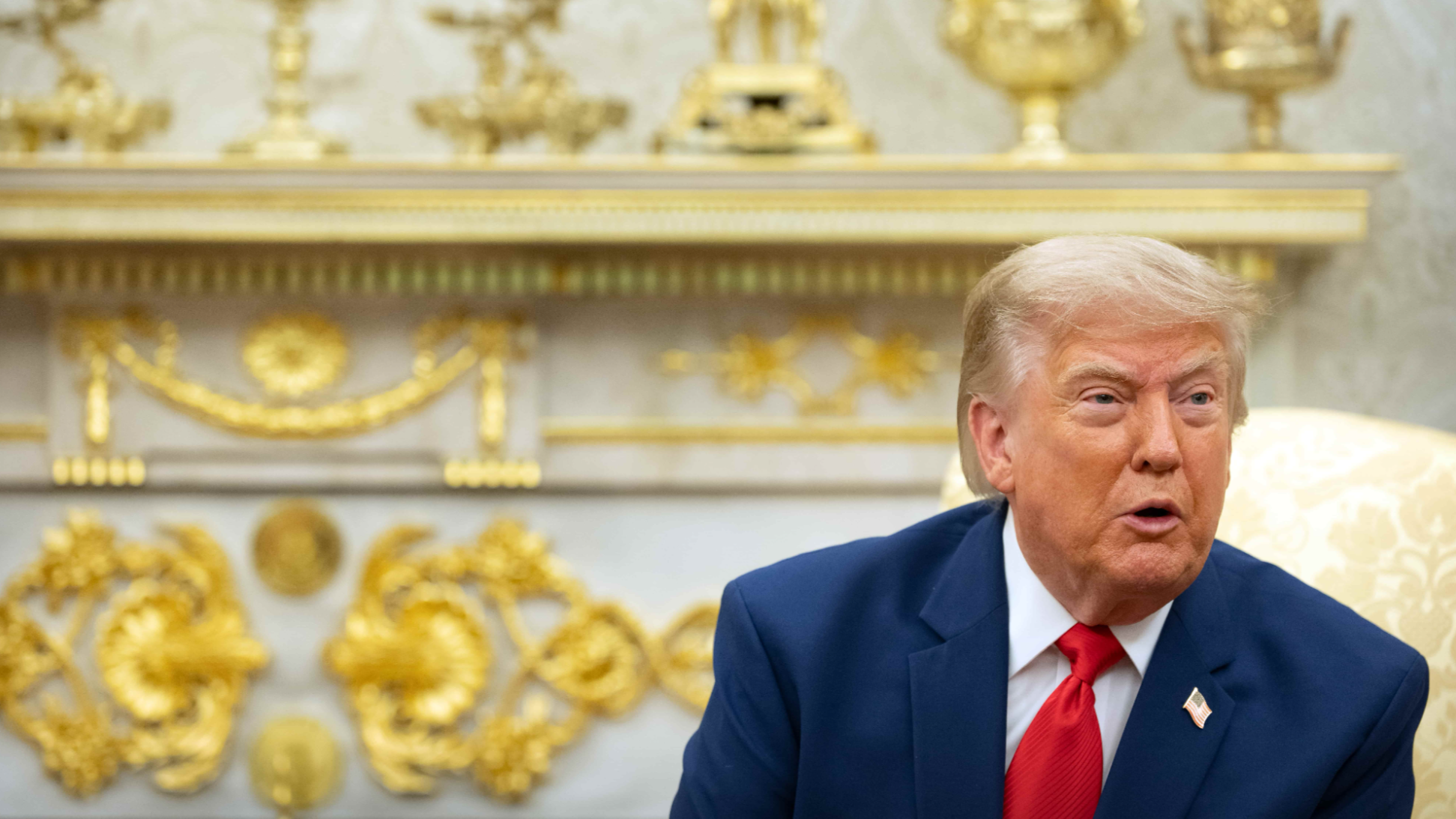
Oil prices posted one of their sharpest jumps of the Iran war Thursday after Houthi fighters in Yemen struck two Saudi tankers in the Red Sea, pushing Brent crude above $100 a barrel for the first time since May and prompting President Trump to threaten “major military punishment” against both the militia and Iran.
The Houthis said they hit the tankers Encelia and Layla with missiles and drones. A maritime security source said the Encelia sent a distress call after being struck near the Saudi port of Jizan, and Saudi state news agency SPA said the attack sparked a fire at the ship’s bow. Reuters could not independently confirm a strike on the Layla, though Trump referenced attacks on two vessels.
The assault was the first since the Houthis, who control northern and western Yemen, announced a naval blockade on Saudi Arabia earlier in the week, targeting the millions of barrels of oil Riyadh has been rerouting daily by pipeline to the Red Sea to bypass Iran’s effective blockade of the Strait of Hormuz. The threat now hangs over the Bab el-Mandeb strait, the Red Sea passage that ranks as the world’s second-most important energy shipping route after Hormuz.
Shippers are already adjusting course. Several tankers have turned north through the Suez Canal rather than risk the Bab el-Mandeb, a longer and more expensive path around Africa, and insurance costs for vessels transiting the southern Red Sea doubled for some companies Thursday. Traffic through the Strait of Hormuz itself has nearly stopped: only one tanker crossed it Thursday, the lowest count since May 7, according to shipping-tracking data.
Read also: US And Israel Strike Iran In Operation Shield Of Judah
Trump told Axios he was close to deciding whether to relaunch major combat operations against Iran, saying of Tehran, “They haven’t received enough pain yet.” On social media, he warned that Iran would be held responsible for any further Houthi attacks and said damages to shipping would be covered using frozen Iranian assets, without specifying a mechanism for doing so. Secretary of State Marco Rubio said separately that the Houthis had been “suckered” into the attacks by Iran and called on the group to stand down.
Iranian Foreign Minister Abbas Araghchi warned on social media platform X that “seizing another nation’s assets to pay for unrelated future claims is an incendiary precedent,” arguing that no country’s assets would be safe once governments normalized such confiscation.
Sources in Iran and Yemen told Reuters that Tehran had flown Revolutionary Guard commanders, military advisers and missile- and drone-related equipment into Yemen in the days before the Houthis announced their blockade; the Houthis dismissed the report.
The tanker strikes came as the U.S. carried out its 13th consecutive night of strikes on Iran overnight Thursday into Friday. Iranian state media reported missiles hit Qeshm Island in the Strait of Hormuz on both nights, and state broadcaster IRIB said a U.S. missile strike on the city of Ahvaz killed four people and injured five. Iran said it retaliated with strikes on U.S. missile systems, weapons and fuel storage sites in Jordan and on U.S. military positions in Kuwait; Jordan’s army said it intercepted all but one of four incoming Iranian missiles, along with six drones, with the remaining missile landing in an uninhabited area. Iran’s Revolutionary Guards said they struck a U.S. electronic warfare unit at Kuwait’s Al-Adiri base, causing unspecified casualties that neither the U.S. nor Kuwait has confirmed. Iranian military spokesperson Brig. Gen. Mohammad Akraminia said Iran would continue retaliating for as long as U.S. strikes on its infrastructure and coastline continue.
Separately, four people familiar with U.S. intelligence said Iranian strikes on CIA targets in the Gulf earlier in the war prompted American intelligence agencies to investigate whether Russia has been assisting Iran with targeting data or drone technology.
Rising oil prices are stoking inflation fears that are weighing on Trump’s Republican allies ahead of November’s congressional elections. The Republican-led House of Representatives passed legislation Thursday directing Trump to end U.S. military action against Iran, the latest in a series of similar rebukes from Congress that have not altered the course of the war; the Senate blocked a companion measure hours later.
Washington has confronted the Houthis over shipping before without lasting success: a U.S. campaign against the group last year involved more than 1,100 strikes and killed hundreds of Houthi fighters over 52 days at a cost exceeding $1 billion, according to U.S. officials, without the American military achieving air superiority over the group.