
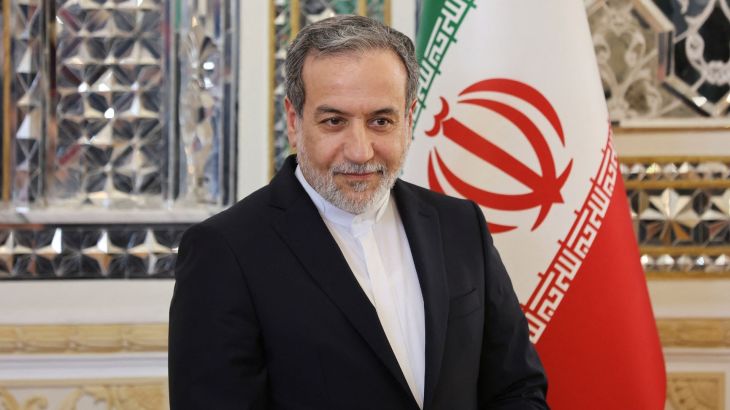
Iranian diplomacy returned to Geneva on Monday as Foreign Minister Abbas Araghchi sought to navigate one of the most sensitive phases in Tehran’s decades-long nuclear standoff with Washington. His arrival marks the second round of direct talks between the two nations since renewed negotiations earlier this month, a diplomatic effort aimed at containing regional tensions amid a dramatic military build-up in the Gulf.
Araghchi signaled a determination to advance substantive negotiations while reinforcing Iran’s negotiating boundaries. In a message on X, he wrote, “I am in Geneva with real ideas to achieve a fair and equitable deal. What is not on the table: submission before threats.” This statement underscores Tehran’s insistence that any agreement must respect its core interests, particularly its right to maintain a nuclear programme for civilian purposes and the preservation of its missile capabilities, which Iranian officials have repeatedly declared non-negotiable.
Read Also: Myanmar Expels Timor-Leste Rep Over War Crimes Dispute
The backdrop for these discussions is both complex and volatile. Following a 12-day military confrontation in June, key Iranian nuclear sites sustained strikes attributed to the United States and Israel. The International Atomic Energy Agency (IAEA) has since requested access to these facilities to verify uranium stocks and ensure compliance with the Non-Proliferation Treaty (NPT). Tehran has expressed concerns over potential radiation risks at the damaged sites, insisting that inspections must follow stringent protocols to avoid environmental hazards.
On Monday, Araghchi met with Rafael Grossi, the IAEA director general, ahead of broader diplomatic engagement. According to Iran’s state-run IRNA news agency, Araghchi’s team expects “deep technical discussions” with the agency, which Tehran considers an important intermediary in the negotiations with Washington. Yet, friction persists. Iranian officials have criticized Grossi for declining to condemn the military strikes on Iranian nuclear infrastructure, which remain under agency safeguards. Such comments reflect Tehran’s broader concern that technical oversight could be perceived as acquiescence to foreign military action.
Oman continues to play a key facilitative role. Araghchi is scheduled to meet his Omani counterpart, Badr bin Hamad al-Busaidi, who mediated the initial round of talks. Oman’s diplomatic involvement signals a continued preference within Iran for indirect channels of communication that maintain strategic leverage while avoiding public escalation.
At the same time, military developments underscore the tension framing these discussions. Iran’s Islamic Revolutionary Guard Corps (IRGC) commenced naval exercises in the Strait of Hormuz, a strategically vital waterway, on the same day Araghchi arrived in Geneva. State media emphasized that the drills are under direct supervision of the IRGC leadership and are designed to respond to increased U.S. naval deployments, including a second aircraft carrier and an expanded warship presence in the region.
The U.S. administration has demonstrated similar assertiveness. Reports suggest that President Donald Trump has publicly framed a potential regime change in Tehran as strategically advantageous, while dispatching high-level envoys—including his special envoy Steve Witkoff and Jared Kushner—to Geneva. Senior U.S. military personnel, such as Brad Cooper, unexpectedly joined the delegation in Muscat during the first round of talks, signaling the degree to which Washington is intertwining military and diplomatic channels.
Read Also: Malaysia Reports 503 New Tuberculosis Cases
These negotiations also occur amid heightened internal scrutiny in Iran. Last month, nationwide protests were met with lethal force, resulting in thousands of deaths, largely on the nights of January 8 and 9. Iranian authorities framed the unrest as foreign-instigated, alleging the involvement of U.S. and Israeli agents. International human rights organizations and the United Nations have held Tehran responsible for excessive use of force against peaceful demonstrators. Hardline political factions remain wary of any concessions that might be construed as weakness, particularly in a climate of domestic and international criticism.
The parliament has signaled clear guardrails for the talks. Hardline lawmakers, including Hamid Rasaei of the Paydari (Steadfastness) faction, cautioned against granting the IAEA inspection access without guarantees for Iran’s territorial integrity, nuclear site security, and the uninterrupted pursuit of peaceful nuclear activities. In a public statement, Rasaei underscored the perception of threat from U.S. military deployments, noting, “When U.S. warships have opened their arms to embrace Iranian missiles, U.S. bases have opened arms to take our missiles, and the homes of Zionist military personnel are anticipating the sound of the air raid sirens, it is obvious that such conditions cannot be met at the moment.”
Diplomatic efforts in Switzerland are occurring alongside other critical international negotiations, notably discussions aimed at resolving the conflict in Ukraine, which has now entered its fourth year following Russia’s 2022 invasion. While both issues share the broader theme of strategic tension and international law, experts caution that immediate breakthroughs in either track appear unlikely. Ukrainian President Volodymyr Zelenskyy recently reiterated at the Munich Security Conference that Kyiv has faced repeated pressure to make concessions, signaling that the pursuit of compromise remains uneven across geopolitical theatres.
The convergence of these pressures—domestic, regional, and global—places the Geneva talks at a precarious intersection. Iran seeks to maintain technological and strategic autonomy while avoiding a full-scale confrontation with the United States. Washington aims to prevent nuclear escalation without triggering a broader regional war. Both parties are operating under an elevated sense of scrutiny, with mediators such as the IAEA and Oman providing crucial channels for negotiation and verification.
Araghchi’s Geneva mission reflects the ongoing calculus of Iranian foreign policy: asserting sovereignty, protecting strategic assets, and managing the optics of negotiation without conceding to external pressures. The coming days will test not only the technical details of nuclear oversight but also the broader resilience of diplomatic channels under conditions of military posturing and political volatility. For observers of Middle Eastern geopolitics, the outcome may offer a bellwether for the limits of engagement between Tehran and Washington in a region where miscalculations carry outsized risks.