
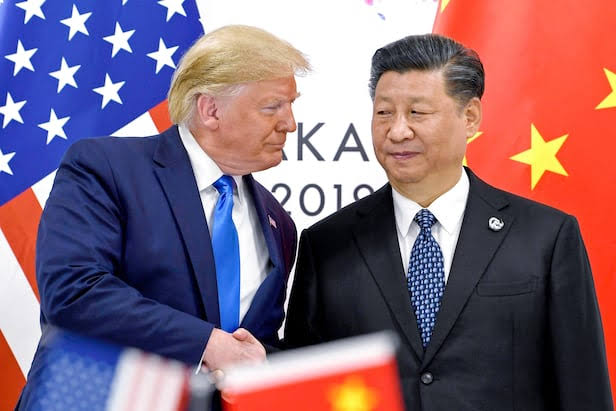
The U.S. President Donald Trump is set to visit China from March 31 to April 2 to hold discussions with Chinese President Xi Jinping, the White House announced on Friday.
This was made public just hours before the U.S. Supreme Court overturned a part of Trump’s tariffs on imported goods, including those imposed on China, in a move that could drastically change the course of trade talks between the two countries.
The Supreme Court ruled that Trump overstepped his bounds under the International Emergency Economic Powers Act (IEEPA) when he decided to impose 20% tariffs on some Chinese exports headed to the United States.
These tariffs were imposed on the grounds of national emergencies caused by the distribution of fentanyl and trade imbalances. However, tariffs imposed under other congressional authorities, such as Section 301 and Section 232, are still in place.
This will be Trump’s first visit to China since 2017 and the first face-to-face meeting between the two leaders since the October 2025 summit in South Korea, where the two leaders reached a trade truce agreement.
This agreement temporarily halted additional tariffs in exchange for Chinese actions such as halting export restrictions on essential minerals and stepping up efforts against illicit fentanyl smuggling.
Read Also: Xi And Starmer Meet, Seek Stronger China-UK Ties
White House sources said that the trade truce is expected to be extended during the Beijing talks, although the Supreme Court ruling has cast uncertainty over the agenda.
Trump announced on Thursday that he plans to impose a new 10% global tariff for 150 days, although it is still unclear what will be affected.
“The China visit is going to be a wild one,” Trump told foreign leaders visiting the country, without going into details about the agenda.
The Chinese embassy in Washington refused to comment on the visit, although the Chinese government has not yet confirmed the dates.
The Supreme Court decision may also make it more difficult for the recent progress in U.S.-China relations, according to analysts. Scott Kennedy, a China economics specialist at the Center for Strategic and International Studies in Washington, said the court ruling “cements Trump’s weakness in their eyes” and may also affect how Chinese leaders view the U.S. negotiating position.
“Chinese leaders are pleased with the trajectory of the bilateral relationship in which the U.S. is weaker, and they would like to see this situation continue and avoid a re-escalation,” he said.
Trump’s trade policies against China have been changing since his second term started in January 2025. Although his administration started with a global trade war that included broad tariffs against several partners, Trump has lately eased restrictions on China in such areas as high-tech computer chips, drones, and other strategic exports.
The broad tariffs have been criticized for having a negative effect on the U.S. by insulating China, which has encouraged other countries to fill the holes in global supply chains.
Read Also: Chinese Government Warn Students Over Japan, Taiwan Tensions
The Supreme Court decision was aimed at tariffs imposed through IEEPA, which Trump had relied on to take emergency actions regarding national security and trade imbalances.
The administration has argued that the global tariffs are a necessary response to trade imbalances and the protection of U.S. manufacturing. Tariffs, together with previous diplomatic actions, were intended to reduce the influence of China in strategic industries while also addressing the illicit flow of fentanyl, which has driven public health concerns within the U.S.
Trump’s upcoming visit will be the first in-person summit between the U.S. and China since the October 2025 summit and follows several months of gradual shifts in policy, including the reduction of tariffs and temporary waivers on specific high-tech exports.
Although no official agenda has been released, it is expected that the leaders will discuss the extension of the trade truce, economic collaboration, and the continued management of areas of tension, such as Taiwan and strategic technology transfers.
Trump’s international trade policy has also impacted other trading partners of the U.S., including its allies in Europe and North America. The broad tariffs, which were initially imposed on China, were extended to a large number of nations, resulting in resistance and defying the norms of international trade.
The Supreme Court ruling may restrict the powers of the president in the future, as it has curbed the president’s authority in using IEEPA.
It has been reported that Trump’s visit to China will be a long working visit in Beijing.
The White House and the Chinese government are expected to make joint announcements closer to the visit date.