
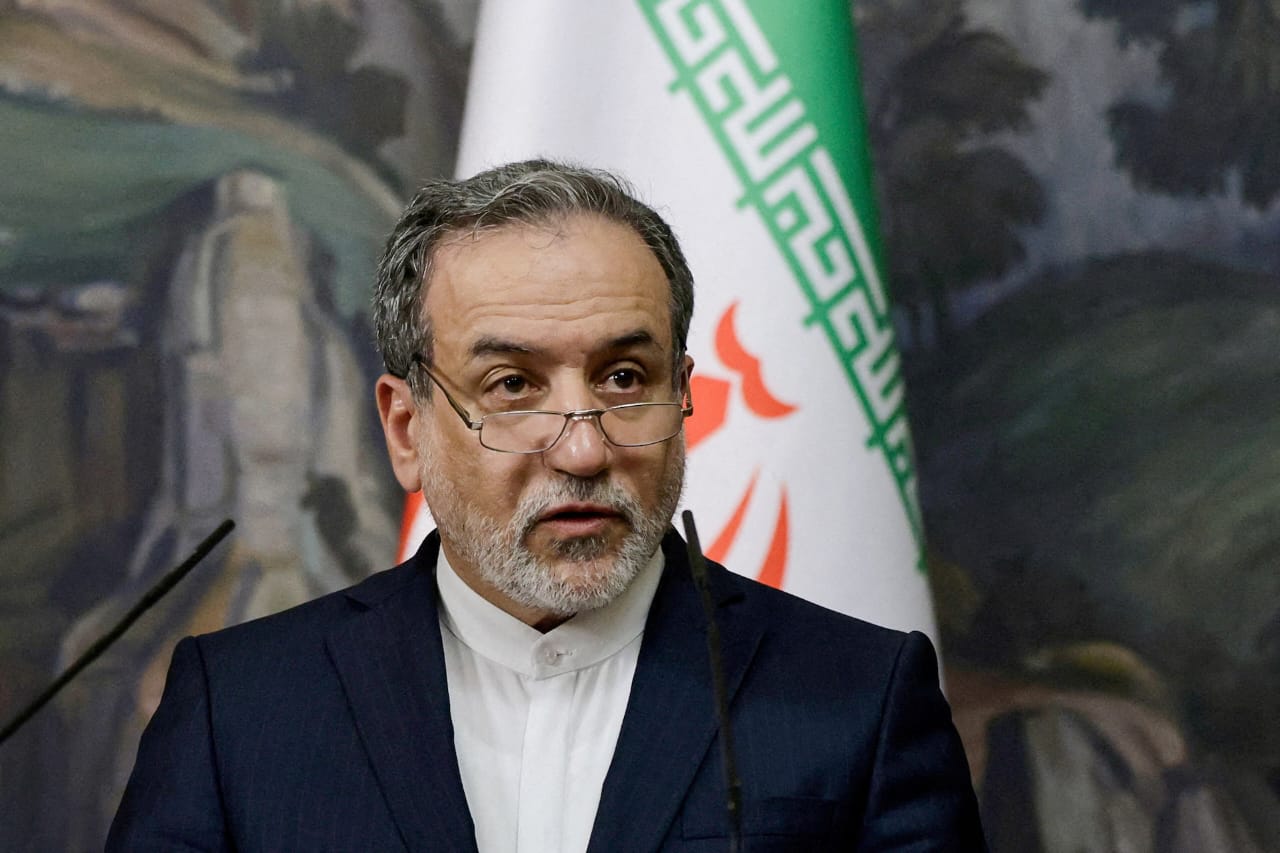
Iran has committed to maintaining no stockpile of enriched uranium capable of producing a nuclear weapon, Oman’s foreign minister said on Friday, describing the pledge as the most significant progress yet in preventing Tehran from developing a bomb.
Badr bin Hamad Al Busaidi, whose government brokered indirect negotiations between Washington and Tehran in Geneva on Thursday, said the agreement removes the possibility of Iran assembling nuclear weapons even if enrichment continues.
Iran would degrade its current uranium reserves to the lowest possible level and convert them into fuel that cannot be reversed into weapons-grade material, he said.
“If the ultimate objective is to ensure forever that Iran cannot have a nuclear bomb, I think we have cracked that problem through these negotiations,” Al Busaidi told CBS News in Washington after meeting US Vice President JD Vance earlier in the day.
The foreign minister said full verification by the International Atomic Energy Agency, the UN’s nuclear watchdog, would accompany the arrangement. He described the commitment as unprecedented in decades of negotiations over Iran’s nuclear program.
“This is something completely new. It really makes the enrichment argument less relevant, because now we are talking about zero stockpiling,” Al Busaidi said. “If you cannot stockpile material that is enriched, then there is no way that you can actually create a bomb.”
Asked whether the progress made in Geneva would be enough to prevent a US military strike on Iran, he said he hoped so. “We have really advanced substantially,” he said, though various details still needed to be worked out.
Al Busaidi said he believed all outstanding issues could be resolved within months and that Iran was open to discussing its missile program, a demand the United States has raised in recent weeks. He said a comprehensive peace deal was within reach if diplomacy were given the space it needs.
Read also: U.S. Charges 30 More In Minnesota Anti-ICE Church Protest
President Donald Trump struck a more cautious tone on Friday, telling reporters in Washington that he was not happy with how Iran was negotiating. “They should make a deal. They’d be smart if they made a deal,” Trump said.
He added that he would prefer not to use military force but that “sometimes you have to do it.”
The remarks reflected Trump’s longstanding approach to Iran—alternating between threats of military action and expressions of willingness to negotiate. Trump has said publicly that he favors a diplomatic solution with Tehran while deploying military assets to the region and imposing additional sanctions.
The third round of indirect talks concluded Thursday in Geneva, with both sides expected to reconvene Monday in Vienna for further negotiations. Oman has served as an intermediary between the two governments, which have no direct diplomatic relations.
Iran has not publicly confirmed the details of any commitment on uranium stockpiling. Officials in Tehran have previously insisted that the country’s nuclear program is for peaceful purposes and that it has no intention of building a weapon.
The 2015 nuclear agreement, known as the Joint Comprehensive Plan of Action, placed limits on Iran’s enrichment activities and stockpiles in exchange for sanctions relief. Trump withdrew the United States from that deal in 2018, prompting Iran to gradually exceed the agreement’s restrictions.
Read more: Bill Clinton Denies Knowledge In Epstein Inquiry
Efforts to revive the accord stalled in recent years, and Iran has since accumulated stockpiles of uranium enriched to levels close to weapons-grade, according to IAEA reports. The agency has also raised concerns about Iran’s lack of cooperation with inspectors and unexplained traces of nuclear material found at undeclared sites.
Al Busaidi’s description of the proposed arrangement suggests a fundamentally different approach than the 2015 deal. Rather than capping enrichment and stockpiling at specified levels, the new framework would eliminate stockpiling entirely while allowing enrichment to continue for civilian purposes, with uranium converted into fuel immediately.
Whether such an arrangement can be verified and enforced remains unclear. The IAEA has sought expanded access to Iranian nuclear facilities, and its head, Rafael Grossi, has pointed to the need for inspections at sites including Isfahan, where Iran operates a uranium conversion facility.
Trump’s dissatisfaction with the pace of talks reflects internal divisions within his administration over how to approach Iran. Some advisers have pushed for maximum pressure and the threat of military action, while others have advocated for a negotiated settlement that could address broader regional issues.
The talks have unfolded as tensions in the Gulf remain high. The United States has deployed additional naval assets to the region, and Iran has conducted military exercises near the Strait of Hormuz, a chokepoint for global oil shipments.
Oman has positioned itself as a neutral broker in the dispute, maintaining relations with both Washington and Tehran. The sultanate played a similar role in facilitating the backchannel talks that led to the 2015 nuclear deal.