
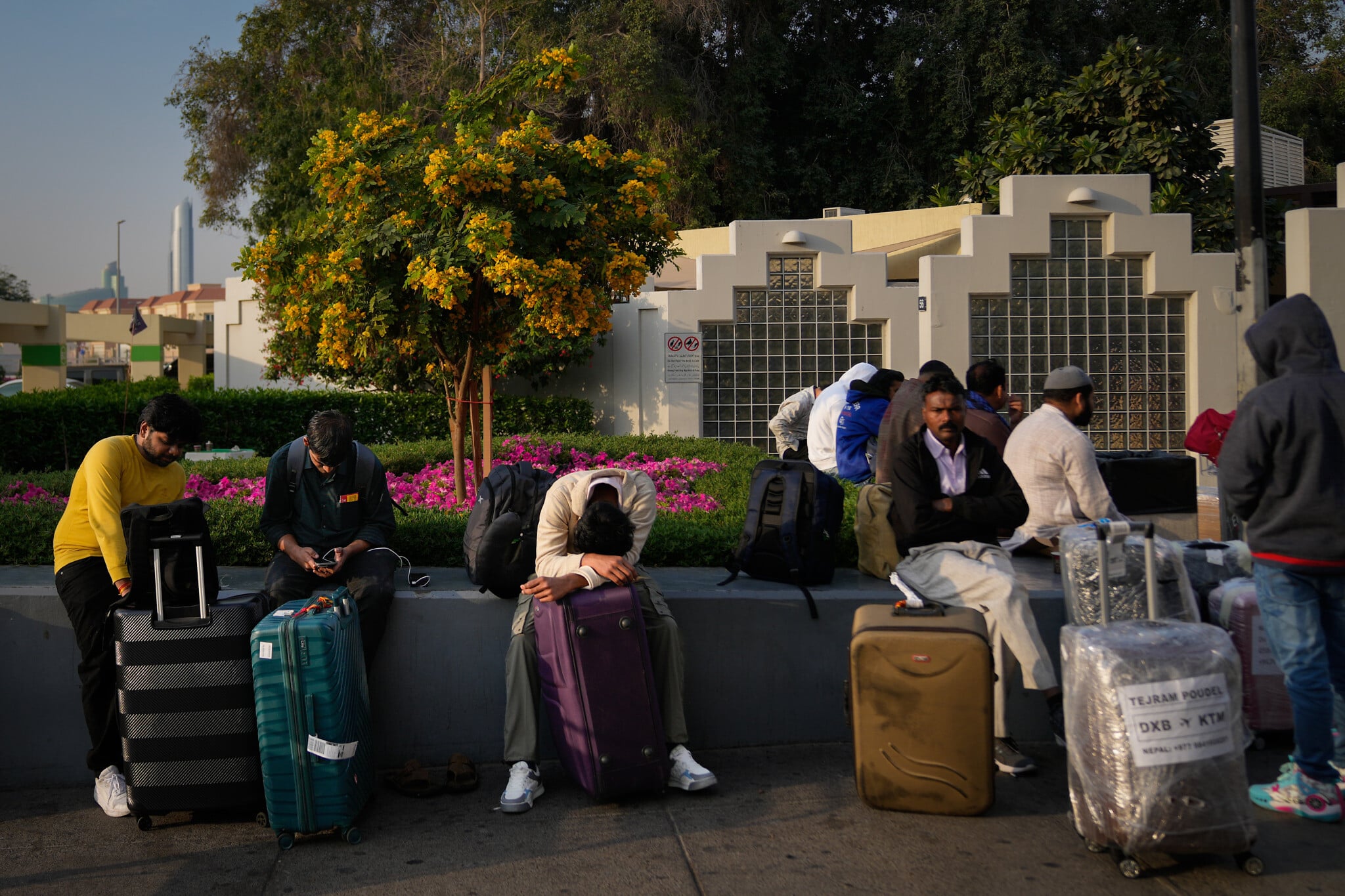
Civil aviation in the Middle East has come to a standstill, and airlines around the world have started to divert and cancel flights due to the coordinated strikes by the US and Israel in Iran, which have led to widespread retaliation in the region and the closure of vast sections of airspace, affecting travelers from Europe to Asia.
The global flight schedules have been further disrupted due to the strikes launched by the US and Israel in the early hours of Saturday against several targets in Iran, including the capital Tehran and several other cities in the country.
This operation, which has been launched on a large scale to weaken the military and strategic capabilities of Iran, has led to the retaliation by Iran in the form of missile and drone strikes on several Gulf countries hosting US and its allied forces, leading to the closure of the airspace in the region due to safety reasons.
Dubai International, Abu Dhabi, and Hamad International in Doha, some of the busiest international airports connecting Europe, Asia, and Africa, have had their flights suspended or greatly reduced over the weekend.
Emirates Airline has said it would not operate in and out of Dubai until mid-Monday, while Qatar Airways has reported the temporary suspension of its flights due to the closure of Qatari airspace.
Read Also: What We Know About The US–Israel Strike And Iran’s Response
Other airlines have also reported cancellations on routes to the Middle East and have had to divert their routes to avoid the closed skies.
The airspace over several countries, including Iran, Iraq, Israel, Bahrain, Kuwait, and parts of the UAE and Qatar, has been effectively closed to civilian air traffic on Sunday.
This has meant that flights from Europe to Asia have had to be routed through longer and less direct routes over the north, including Saudi Arabia and the Caucasus region.
Aviation analytics companies have estimated that well over a thousand flights scheduled to fly over the weekend have been cancelled, with thousands more experiencing delays as the airlines review their flight paths in light of the evolving restrictions.
“Cirium, an aviation data platform, said around 23 percent of incoming flights to the major Middle Eastern hubs were cancelled on Saturday, with more cancellations on Sunday as closures continue.”
Stories emerging from the airports of the affected countries have shown the confusion and anger of the passengers, with British passengers en route to the Gulf complaining of being stuck in the air after their flights were cancelled without a clear idea of when the flights would resume.
Others, en route to their holiday destinations, have found themselves seeking alternative flights to get home.
The impact on the personnel and the facilities of these airports has also been felt.
The authorities in the United Arab Emirates confirmed that there had been casualties due to the Iranian missile and drone strikes, including the confirmed loss of life due to the strikes on the airports in Dubai and Abu Dhabi since the start of the conflict.
Four airport employees were also injured due to the strikes on the Dubai airport, which is one of the most prominent airports in the world by virtue of the passenger traffic it handles.
National governments also issued travel cautions, as seen by the advice issued by the United Kingdom’s Foreign Office, which advised citizens of the United Kingdom not to travel to Bahrain, Kuwait, Qatar, and the United Arab Emirates, as well as to shelter in place if they were already present in the region.
Read also: Iran Announces Khamenei Killed In Joint US-Israel Strike
The United Kingdom’s Foreign Office also extended the advice for travel to Israel and the Palestinian territories due to the hostilities present in the region.
British authorities have also urged citizens of the country to register with the consular authorities, with more than 76,000 people, the majority of whom were based in the UAE, having registered by Sunday morning.
The FCO also urged citizens to remain in place if they were based in Duqm, Oman, but to leave if they were based in Salalah.
It also urged citizens based in Saudi Arabia and Jordan to remain indoors, while those based in other countries from Syria to Turkey were urged to remain vigilant and take shelter where possible.
Longer-term or more extensive repatriation operations are also believed to be under consideration, although the timing of the operations is unknown.
The initiation of the war was marked by the strikes launched by the U.S. and Israel on Iranian territory on Saturday.
According to various sources, the war was aimed at strategic military targets and leaders in Iran.
The strikes were reportedly aimed at preventing the advancing threats of Iran’s nuclear and missile capabilities, but the full strategic consequences of the strikes, especially on the Iranian military leadership, remain to be seen.
As the developments in the region continue to unfold, the airlines and the relevant authorities have not communicated when normal air activities would resume in the Middle Eastern skies.