
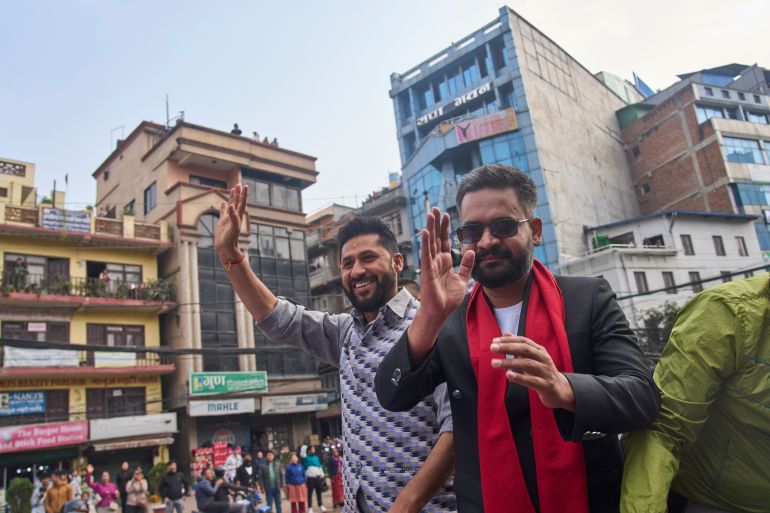
Nepal opened polling stations on Thursday morning for the country’s first general election since youth-led protests in September killed 77 people, forced a government to resign, and produced the most significant political rupture in the Himalayan republic’s post-monarchy history, a fast-track election called within six months of the crisis and executed under a condensed 150-day administrative schedule by an interim government of former Chief Justice Sushila Karki, the first woman to lead a government in Nepal’s history.
Nearly 19 million people, including 800,000 first-time voters, are eligible to choose 275 members of the House of Representatives through a mixed system of first past the post and proportional representation. More than 3,400 candidates from 68 parties are contesting the election. Voters cast two separate ballots: one for a named candidate in their local constituency under first past the post, and one for a party list under proportional representation, with 165 seats filled by the former method and 110 by the latter. A combined force of 320,000 personnel from the Nepal Police, Armed Police Force, and the Nepal Army was deployed to prevent a recurrence of the violence that marked the September 2025 period.
The Rastriya Swatantra Party is widely projected to multiply its vote tally from the 2022 election, when it won 21 seats as a new party, and could possibly obtain a majority on its own. That projection rests almost entirely on the presence at its head of Balendra Shah, 35, the former Kathmandu mayor who became the public face of the September protests and whose December agreement to join RSP and contest as its prime ministerial candidate transformed the party’s electoral prospects. Shah is pitted against the Communist Party of Nepal (UML) chairman K.P. Sharma Oli, 73, in the latter’s stronghold of Jhapa-5 in Nepal’s eastern Jhapa region, the most scrutinised individual contest of the election.
More than in any previous Nepali election, this vote revolves around personality cults. The RSP declared a prime ministerial candidate, an unusual practice in Nepal’s parliamentary tradition, and so did the Nepali Congress, which named 49-year-old Gagan Thapa as its leader, replacing former prime minister Sher Bahadur Deuba, who will be 80 this June. Oli’s UML re-elected him as chairman at a party convention in December.
The Nepali Communist Party was formed in November 2025 from the merger of several left-wing groups, including the CPN Maoist Centre led by former prime minister Pushpa Kamal Dahal, and contests Thursday’s election as a new consolidated left formation.
Read Also: Nepal’s Army Steps In After Oli’s Exit Amid Gen Z Uprising
Even if Shah’s RSP gets a majority, analysts note it could face internal divisions. There are already signs of tension between Shah and RSP founder Rabi Lamichhane, who is also battling multiple court cases related to financial misconduct allegations. The division of authority and credit between a charismatic prime ministerial candidate and an equally ego-driven party founder is a structural fault line that has destabilised governing coalitions in Nepal before, and the RSP would not be immune to it in government. More likely, the outcome will be another coalition government. In that case, there is a risk of the horse-trading, nepotism, and corruption that characterised previous coalitions.
The institutional context for the election is unusual in a country where provincial assemblies normally hold concurrent elections. Thursday’s snap poll is limited to the federal lower house.
No concurrent elections for the provincial assemblies are being held, as those bodies were simply retained in their existing configuration while the national election was organised. That decision was taken on pragmatic grounds, organising concurrent provincial elections within the 150-day window was assessed as administratively unfeasible, but it means the new national government will inherit an existing set of provincial administrations whose political composition may not reflect Thursday’s national result.
Nepal’s geographic and strategic position gives its election an external dimension that domestic analysts have highlighted. The outcome will determine the country’s diplomatic balance between India and China, two powers whose interests in Nepal are direct, active, and in several areas competitive. KP Oli’s UML has historically been perceived as tilted toward Beijing, while Nepali Congress has been closer to New Delhi. RSP’s manifesto commits to balanced foreign policy with both neighbours, a formulation that gives neither capital a guarantee and that the new government, if led by Shah, would need to define in practice under pressure from both sides.
Read Also: Nepal Lifts Social Media Ban After Deadly Youth Protests
Bibas Pariyar, a 22-year-old painter from Gorkha working in Kathmandu, said he had travelled home to vote and that his expectations were concrete rather than ideological.
“We need new people who can give work to people, reform agriculture and pay adequate remuneration for workers,” he said. “The old politicians only amassed money for themselves through corruption and did nothing for the people.” The sentiment he expressed is representative of the demographic that added more than one million voters to Nepal’s electoral roll since the September uprising, mostly young, mostly urbanised, and mostly focused on economic conditions that have sent millions of Nepalis abroad in search of work that is unavailable at home.
Nepal has had 32 changes in government since 1990. Its economy, heavily reliant on remittances from the nearly four million Nepalis working abroad, has not generated the formal employment its growing young population requires. Whether Thursday’s election produces a stable majority or another coalition subject to the same dynamics that have toppled predecessors is the central question that will determine whether September’s protests translate into durable political change or another cycle in what analysts have called Nepal’s permanent instability.