
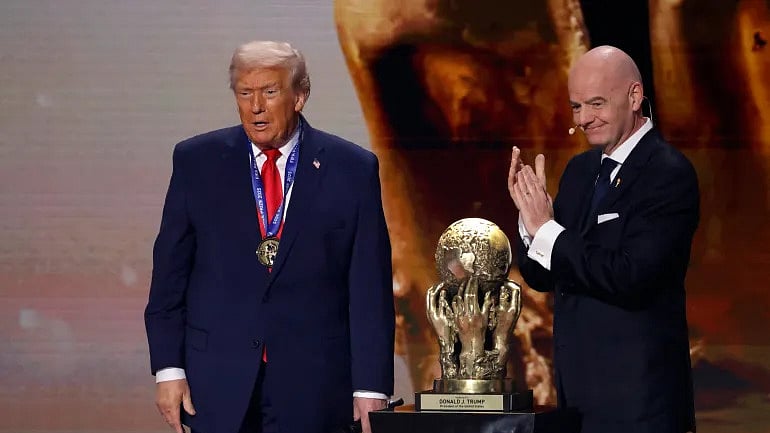
Iran faces the prospect of becoming the first country in the modern era to withdraw from a World Cup after its sports minister said participation in this summer’s tournament is no longer possible following American airstrikes that killed the Islamic Republic’s supreme leader, leaving FIFA scrambling to assess whether it must find a replacement.
The potential pullout from the 48-team competition set for the United States, Canada and Mexico from June 11 would force soccer’s global governing body into uncharted territory.
No nation has ever withdrawn from the World Cup once qualified in the tournament’s contemporary history, creating urgent logistical and political questions for an event already complicated by the war that began when US and Israeli forces struck Tehran.
Iran qualified for three group matches—two in Los Angeles and one in Seattle. Whether those fixtures proceed now depends on negotiations between FIFA, Iranian authorities and the American government over security guarantees that President Donald Trump suggested Thursday may not be sufficient given what he described as threats to Iranian players.
“The Iran national soccer team is welcome to the World Cup, but I really don’t believe it is appropriate that they be there, for their own life and safety,” Trump wrote on Truth Social.
The Iranian Football Association responded hours later by saying the United States should not be allowed to host if it cannot guarantee player safety. “The World Cup is a historic and international event and its custodian is FIFA, not any country,” the federation said in a statement. “If any country should be excluded it is a host country that cannot ensure the safety of the teams taking part.”
Trump clarified in a second post that any threat would not originate from American sources. “It will be the Greatest and Safest Sporting Event in American History,” he wrote. “All Players, Officials, and Fans will be treated like the ‘STARS’ that they are!”
What dangers Trump referenced or who might pose them remained unclear. His comments came as tensions between Washington and Tehran have reached levels unseen since the 1979 revolution, with military operations ongoing and Iranian officials vowing retaliation for strikes that decapitated the country’s leadership.
Iran’s sports minister said Wednesday that participation had become impossible after the attacks.
The minister did not specify whether the decision reflected security concerns, political pressure or both, though state media has portrayed the World Cup as a potential arena for anti-Iranian demonstrations given the large diaspora community in California.
FIFA did not immediately respond to requests for comment on whether it had received formal withdrawal notice or what contingency plans exist. The organization owns and operates the World Cup but relies on host nations to provide security and infrastructure.
Disputes over those arrangements have occasionally delayed or relocated matches, but no qualified team has ever pulled out of a tournament.
Finding a replacement would present complications. The 48 teams were determined through years of regional qualifying competitions, and no clear mechanism exists to insert a new participant weeks before the opening match. FIFA could promote the highest-ranked team that failed to qualify, reorganize groups to accommodate 47 teams, or allow Iran’s scheduled opponents to advance by forfeit—each option carrying its own problems.
Read also: 15 Jailed For Life For Crocus City Hall Concert Massacre
The Iranian women’s national team has already fractured over the conflict. Australia granted humanitarian visas this week to five players who sought asylum during the Women’s Asian Cup in Queensland after state television branded them and their teammates “wartime traitors” for failing to sing the national anthem before a March 2 match against South Korea.
Trump had urged Australian Prime Minister Anthony Albanese to accept the players, saying the United States would offer refuge if Australia declined. Canberra’s decision to grant asylum removed the immediate question of what would happen to the women but highlighted fractures within Iranian soccer that extend beyond the men’s team.
Iranian athletes have faced impossible choices throughout the war. Competing under the national flag exposes them to accusations of supporting a government many citizens oppose, while refusing to represent Iran risks detention or worse upon return.
Several athletes have defected or sought asylum in recent weeks, complicating Tehran’s ability to field teams for international competitions.
The World Cup holds particular significance given its global audience and symbolic weight. Iran has participated in six previous tournaments, using the platform to project national pride and, in some years, subtle political messages. The 1998 team famously wore white armbands and presented white flowers to American opponents before a group match in France, gestures interpreted as peace overtures during a period of tentative diplomatic engagement.
Read also: Democrats Demand Minab School Bombing Answers From Hegseth
No such gestures appear likely this summer if Iran participates. The government has framed the war as an existential struggle against foreign aggression, and state media has made clear that athletes who fail to demonstrate loyalty face consequences.
Los Angeles hosts the largest Iranian diaspora population outside Iran, with an estimated 500,000 people of Iranian descent living in the metropolitan area. Many fled after the 1979 revolution or emigrated in subsequent decades. The community has organized protests against the Islamic Republic throughout the current conflict, and Iranian players competing there would likely face hostile crowds regardless of their personal political views.
Seattle’s Iranian community is smaller but still substantial, and the city has seen demonstrations supporting opposition movements in Iran. Whether organizers could guarantee player safety in either venue remains uncertain given the intensity of emotions the war has generated.
FIFA has navigated politically charged tournaments before. Russia hosted in 2018 despite international condemnation of its actions in Ukraine. Qatar hosted in 2022 amid human rights controversies. But neither situation involved active military conflict between a participating nation and the host country, making Iran’s dilemma unprecedented.
The organization’s statutes prohibit government interference in soccer federations and mandate that qualified teams participate unless extraordinary circumstances prevent it. What constitutes extraordinary has never been defined in the context of war between a participant and host.
Trump’s comments suggested he views Iranian participation as potentially dangerous but stopped short of barring the team, leaving the decision to FIFA and Iranian authorities.
That positioning allows him to claim he welcomed Iran while avoiding responsibility if violence occurs.
Iran has until May to withdraw formally without triggering FIFA sanctions, though the practical deadline for organizing a replacement would arrive much sooner. As the conflict enters its third week with no resolution in sight, the likelihood of Iranian participation appears to diminish daily regardless of what official statements suggest.