
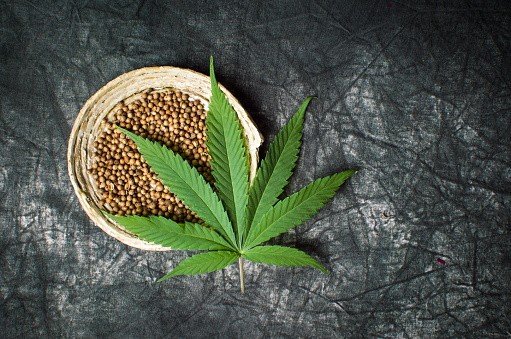
When I published my cannabis exposé in December 2025, I was not merely entering a debate. I was trying to change its terms.
Across much of Africa, cannabis has for too long been treated as an object of instinct rather than inquiry. It has lived in the public imagination as a shorthand for vice, disorder, delinquency, and decline. It has been discussed not with the calm seriousness one reserves for medicine, law, economics, and statecraft, but with the exaggerated moralism usually reserved for social panic. That has been the central failure of the African cannabis conversation: not simply that it has been conservative, but that it has been intellectually undisciplined.
A serious society does not approach consequential policy questions through taboo. It approaches them through distinction, evidence, and reason. Yet cannabis has rarely been granted that dignity on this continent. It has been flattened into caricature, reduced to a symbol, and denied the analytical depth that other complex policy issues routinely receive. The result has been a public discourse rich in alarm and poor in substance.
My December 2025 intervention was an attempt to disrupt that pattern. It argued that cannabis should no longer be confined to the stale vocabulary of stigma. It should be examined as a therapeutic question, a regulatory challenge, an agricultural prospect, an industrial possibility, a research frontier, and a test of policy seriousness. In other words, cannabis should be restored to the realm of thought.
The response made one fact difficult to ignore: the old rhetoric is weakening. Readers did not simply react to the controversy of the subject. They responded to the coherence of the argument. They engaged the issue as one deserving explanation rather than condemnation. That matters, because before reform enters the legal code, it must first enter public reason. Long before ministries legislate, publics must learn to think differently. Law rarely leads where a society still refuses to think.
This is the deeper significance of the present moment. Africa’s cannabis debate is no longer only about a plant. It is about whether the continent’s public institutions, political classes, and civic cultures are capable of confronting a complicated contemporary issue without collapsing into cliché. It is about whether governments can distinguish between categories that lazy politics prefers to merge. It is about whether law can become more intelligent than inherited fear.
Read also: The Cannabis Renaissance: What Humanity Must Learn Next
That is why Ghana’s policy direction deserves far more attention than it has received.
Its importance does not lie in spectacle. Ghana is not significant because it has embraced some reckless permissiveness or joined a fashionable global wave. It matters because it has moved, however imperfectly, toward a principle that should have guided African cannabis policy from the beginning: differentiation. A functioning state must be able to separate medicinal use from recreational misuse, industrial cultivation from illicit trafficking, scientific inquiry from criminal commerce. Once all cannabis-related activity is thrown into one undifferentiated legal basket, policy ceases to be serious. It becomes blunt, symbolic, and ultimately ineffective.
Ghana’s shift suggests a willingness to think like a modern regulatory state rather than a nervous moral guardian. That is no small distinction. Mature governments do not govern by reflex. They govern by classification, evidence, oversight, and proportion. They do not ask whether a subject feels politically uncomfortable. They ask what legal architecture is required to manage it responsibly.
That is precisely what many African countries, Nigeria above all, have been unwilling to do.
The medical dimension alone should have forced a more serious reckoning by now. Yet here too public debate has been trapped between two forms of intellectual laziness. One side insists that cannabis is little more than social poison in leafy form: a dangerous substance with no legitimate place in medicine or policy. The other treats it as a miracle cure, a near-mythical answer to human suffering. Both positions are unserious. Both collapse under scrutiny. Both substitute emotional certainty for disciplined judgment.
The truth is more measured, which is precisely why it deserves attention. Cannabis-derived treatments may have value in specific clinical contexts under carefully regulated conditions. They may provide relief in chronic pain management, palliative care, treatment-related symptoms, and certain conditions for which conventional therapies are ineffective, inaccessible, or burdened by severe side effects. This is not an argument for romanticism. It is an argument for clinical seriousness. Medicine does not ask whether a treatment flatters ideology. It asks whether evidence supports narrow, supervised, lawful use for identifiable patients under competent oversight.
In the African context, this question is especially urgent. Across the continent, pain remains undertreated, palliative care remains underdeveloped, and access to specialist medication is often unreliable or prohibitively expensive. For many patients, therapeutic scarcity is not a theoretical problem. It is lived reality. Under such conditions, the medicinal cannabis question is not a fashionable import from elsewhere. It is a practical policy issue about suffering, care, and the moral obligations of public health systems.
A government that claims to take health seriously cannot dismiss potentially useful therapeutic pathways because the politics feel awkward. It cannot elevate inherited anxiety above credible inquiry. If regulated medicinal cannabis can widen treatment options, support research, improve symptom management, and offer relief in clinically appropriate cases, then the state has a duty to investigate, regulate, and supervise—not to retreat behind slogan and stigma. Public health is not served by fear. It is served by evidence.
Read more: Part 7: The Future Of Healing — Cannabis And The Next Frontier
The economic case, meanwhile, is compelling for different reasons and must be handled with equal sobriety. Cannabis is not an economic savior. It will not repair broken institutions, reverse decades of structural decline, or miraculously industrialize weak economies. But that is a foolish standard. No serious sector is judged by whether it can rescue a nation all by itself. The real question is whether medicinal cannabis and industrial hemp can form part of a wider strategy of diversification, value addition, research development, and formal-sector growth.
Increasingly, the answer is yes.
A regulated cannabis economy creates value far beyond cultivation. It opens activity across controlled farming, seed development, extraction, processing, pharmaceutical manufacturing, packaging, laboratory testing, certification, logistics, data systems, compliance, export administration, and scientific research. It creates room not only for farmers, but for agronomists, pharmacists, chemists, legal specialists, transport operators, manufacturers, quality-control experts, and investors. It encourages the transition from illicit informality to taxable, monitorable, regulated enterprise.
For African countries that endlessly invoke industrialization while remaining tied to low-value agriculture or extractive dependency, this matters. Cannabis sits at an unusual and potentially productive intersection: agriculture, medicine, science, manufacturing, law, and trade. That combination is rare. It means the sector is not merely another crop; it is a platform for wider institutional and economic development. To ignore such a sector out of inertia is not caution. It is a policy failure.
And that failure becomes even clearer in the Nigerian case.
Nigeria has the scale, climate, scientific capacity, entrepreneurial energy, and regional influence to become one of Africa’s defining jurisdictions in cannabis policy. It has the human capital to support research, the agricultural base to sustain production, the domestic demand to justify serious debate, and the geopolitical weight to shape norms far beyond its borders. If Nigeria chose to act with intelligence, it could help define the future of medicinal cannabis and industrial hemp in West Africa, perhaps even on the continent as a whole.
Instead, it remains lodged in the exhausted grammar of prohibition.
At this stage, that posture can no longer be defended as prudence. Prudence implies thought, calibration, and foresight. What Nigeria has displayed is something else: a refusal to modernize policy in the face of changing evidence, emerging markets, and obvious regulatory need. That is not caution. It is stagnation dressed as principle.
And stagnation has consequences.
Refusing to create a lawful framework does not eliminate cannabis. It merely ensures that cannabis remains in the realm least useful to the state and most hospitable to abuse: illegality. It means lost tax revenue, lost research opportunities, lost investment, lost clinical development, and lost possibilities for lawful enterprise. It means farmers remain excluded from legitimate value chains. It means scientists remain constrained. It means investors face uncertainty. It means patients lose access to tightly regulated therapeutic alternatives that may matter in specific contexts. It means the state surrenders the terrain and then congratulates itself for having done nothing.
That is not governance. It is abdication.
Worse still, prohibition without policy corrodes public reasoning itself. It teaches societies to confuse criminalization with control. It allows policing to stand in for intelligence. It rewards rhetorical toughness while punishing nuance. It conditions political culture to prefer old myths to new evidence. Once that habit hardens, it spreads. A state that cannot reason carefully about cannabis will often struggle to reason carefully about other difficult questions as well. The damage is not only legal or economic. It is civic.
This is where journalism enters not as ornament, but as infrastructure for democratic thought.
My December 2025 exposé was not just an exercise in commentary. It was part of a broader effort to reposition cannabis within African public discourse—to move it from the outer edge of taboo toward the center of evidence-based policy consideration. Journalism does not pass legislation, but it does help create the intellectual conditions within which legislation becomes possible. It shapes what can be said, what can be questioned, what can be reconsidered, and what a public is prepared to take seriously.
That role is often undervalued. Yet no policy reform emerges from institutional machinery alone. Before frameworks are written, assumptions must be challenged. Before governments act, the old language must lose its authority. Before law changes, the terms of legitimacy must shift. This preparatory work happens in public argument, and serious journalism can accelerate it by replacing noise with structure, panic with explanation, and inherited dogma with disciplined scrutiny.
That is why the response to the exposé mattered. Readers were not only curious. They were receptive to seriousness. They demonstrated an appetite for context, evidence, and thoughtfulness. That appetite is politically significant. It suggests that citizens are more ready for intelligent reform than many governments assume. It suggests that the public sphere, often dismissed as reactionary, may already be moving ahead of official policy.
That should not surprise us. Reform often begins quietly. Not with dramatic declarations, but with a change in how people reason. A subject once held hostage by fear begins to be discussed in the language of evidence. Caricature gives way to differentiation. Moral panic yields, slowly, to policy thinking. By the time legislation arrives, the deeper transformation has already happened: citizens have learned to think about the matter differently.
That is the larger lesson for Africa.
Cannabis policy should not be reduced to a simplistic question of permissiveness. It is, more fundamentally, a test of state capacity, legal maturity, and intellectual seriousness. Can governments regulate complexity without succumbing to hysteria? Can they safeguard public health while permitting clinical research? Can they create legitimate economic sectors without allowing them to become vehicles for patronage or elite capture? Can they modernize law without making reform look like chaos?
Those are not peripheral questions. They go to the heart of governance itself.
Ghana has begun to answer them with a seriousness that distinguishes it from many of its peers. Not perfectly. Not conclusively. But seriously. And seriousness, in African policymaking, is often rarer than rhetoric.
Nigeria should not remain an indifferent spectator. It should study Ghana’s approach closely. It should initiate broader expert consultation. It should involve clinicians, researchers, economists, regulators, agricultural specialists, and legal scholars. It should build a framework that is neither permissive nor hysterical, neither utopian nor lazy, but precise. It should legislate where legislation is needed, regulate where regulation is required, and communicate with a level of honesty that respects citizens as thinking adults rather than moral subjects to be managed by fear.
Africa’s cannabis future should not be dictated by stigma, mythology, or institutional lethargy. It should be shaped by evidence, public reason, regulatory intelligence, and the political courage to govern contemporary realities without hiding behind the slogans of the past.
And if the African conversation is now even slightly more rigorous, more informed, and less captive to inherited panic than it was before, then serious journalism has already performed one of its highest public functions: it has not merely described a changing future, but helped make a better one conceivable.