
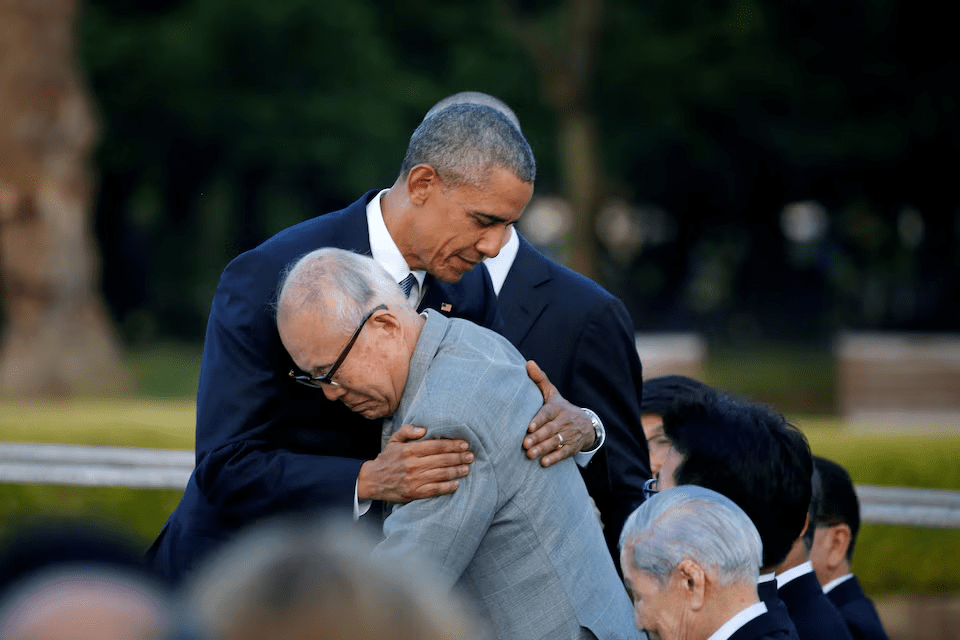
Shigeaki Mori, who survived the atomic bombing of Hiroshima as an eight-year-old boy and spent decades afterwards recovering the names of those the blast erased, has died at 88. He passed away in a Hiroshima hospital on March 14, the Japanese news agency Jiji Press reported Tuesday.
Mori was knocked unconscious by the force of the explosion on August 6, 1945, when the United States dropped the bomb that flattened the city and set in motion the final days of the Second World War. He lived. Hundreds of thousands did not — the two cities of Hiroshima and Nagasaki have counted roughly 550,000 deaths from the attacks to date, including those who died later from radiation-related illness.
What Mori did with his survival set him apart from most who shared it. Three decades after the bombing, he began a painstaking, largely solitary effort to identify victims who had been cremated at his school playground in the chaos following the attack. The project consumed much of his adult life and eventually yielded something that surprised even those who knew his work: the names of 12 American prisoners of war who had died in the bombing, men whose deaths had gone unrecorded and unacknowledged for generations.
Read also: China Ban On Japan Seafood Import Deepens Political Standoff
His work brought him to the attention of the world in 2016, when Barack Obama became the first sitting US president to visit Hiroshima. At the Peace Memorial Park, Obama embraced Mori as the survivor wept — an image that travelled around the world and came to define a visit freighted with historical weight on every side. For many observers, the photograph captured something that no diplomatic statement could have managed: a direct, physical reckoning between the country that built the bomb and one of the people who had lived inside its blast.
Mori belonged to the generation of hibakusha — the Japanese term for atomic bomb survivors — who have carried the memory of Hiroshima and Nagasaki as an obligation as much as a burden. Their numbers have thinned steadily with age, and those who remain have long understood that when they are gone, the living link to August 1945 goes with them. Many have spent their final decades speaking to schools, attending memorials, and pressing governments to pursue nuclear disarmament, motivated by the conviction that what happened to them must not be allowed to fade into abstraction.
Read more: ‘Oppenheimer’ Oscars Win Sparks Debate In Hiroshima
Mori pursued that mission through archives and records rather than speeches, reconstructing individual lives from fragments — a school register here, a family account there — until he could attach names to deaths that had been anonymous for decades. The Americans he identified had been held as prisoners in Hiroshima when the bomb fell. Their inclusion in his research was an act of historical completeness that cut against any simple nationalist framing of the bombing’s legacy: the dead, Mori’s work implied, were the dead, regardless of which side they had fought on.
He was eight years old when the blast knocked him down. He was in his seventies before the full scope of what he had recovered was widely recognised. The embrace in the memorial park came near the end of a life spent in deliberate, unglamorous service to people who could no longer speak for themselves.