
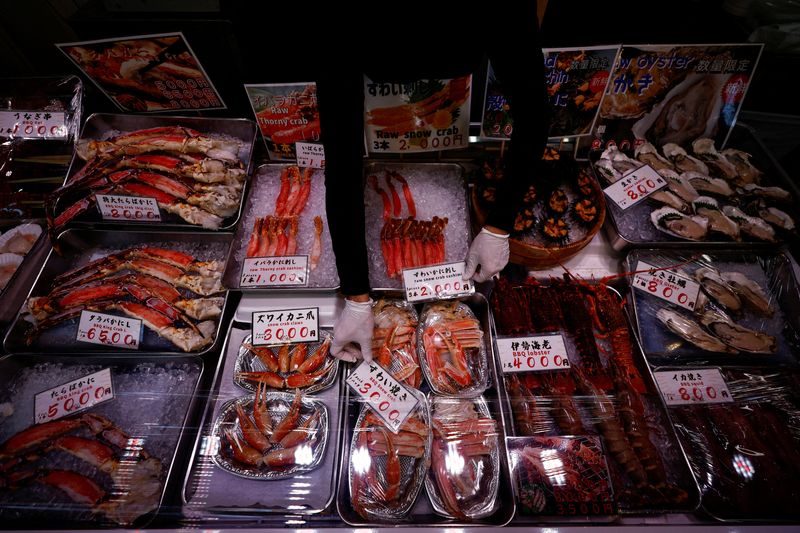
China has notified Japan that it intends to halt all imports of Japanese seafood, according to multiple Japanese media outlets, marking a sharp escalation in a fast-deepening dispute triggered by comments from new Prime Minister Sanae Takaichi about a possible military response to a Chinese attack on Taiwan.
The move threatens a major export market for Japan and adds to a wave of retaliatory steps from Beijing, including a travel boycott and cancellations of cultural and academic events. The standoff has quickly grown into one of the most serious strains in years between the two largest economies in Asia.
During a press briefing on Wednesday, Chinese foreign ministry spokesperson Mao Ning said Japanese seafood would struggle to find buyers in China “under the current circumstances,” adding that Beijing would take “stern and resolute” countermeasures unless Takaichi retracts her remarks.
Tokyo has denied receiving any formal notice of a ban. Chief Cabinet Secretary Minoru Kihara told reporters that no official communication had been delivered, though Japan was monitoring the situation closely.
The expected ban comes only months after China softened restrictions first imposed when Japan began releasing treated wastewater from the Fukushima nuclear plant in twenty twenty two. Citing the need for further monitoring of the water discharge, China informed Japanese officials it planned to restore the broader prohibition, according to NHK and Kyodo.
The measure would be a major setback for exporters trying to regain access to a market that once bought more than a fifth of Japan’s seafood shipments. Agriculture Minister Norikazu Suzuki said nearly seven hundred Japanese exporters had filed applications to resume sales to China, but only three had been approved so far.
Read Also: Chinese Government Warn Students Over Japan, Taiwan Tensions
Before the twenty twenty three restrictions, China was Japan’s largest buyer of scallops and a significant customer for sea cucumbers.
The diplomatic clash has already spilled into tourism, an industry that accounts for about seven percent of Japan’s gross domestic product. Chinese visitors, including those from Hong Kong, typically make up around a fifth of all arrivals.
More than ten Chinese airlines have begun offering refunds for Japan-bound flights through December thirty one. One analyst estimated that roughly half a million tickets have already been cancelled.
A staff member at a state-owned Chinese bank told Reuters that employees had been advised this week that personal travel requests to Japan would not be approved “for the time being”.
Japan’s foreign ministry responded on Monday by warning its citizens in China to heighten safety precautions and avoid crowded areas amid rising nationalist commentary from Chinese diplomats and state media.
The fallout has also reached academic and cultural exchanges. China’s foreign ministry said an annual scholars’ meeting scheduled to open Saturday in Beijing had been postponed due to the political climate.
A Japan–China friendship event planned for November twenty one in Hiroshima was cancelled as well. Japanese comedians scheduled to perform at a Shanghai festival withdrew, while upcoming Japanese film screenings in China were suspended. A Japanese boy band called off a fan gathering in Guangzhou, citing “force majeure”.
The seafood ban, combined with tourism losses and canceled exchanges, signals widening consequences for two economies that remain closely interlinked, even as political relations continue to deteriorate.