
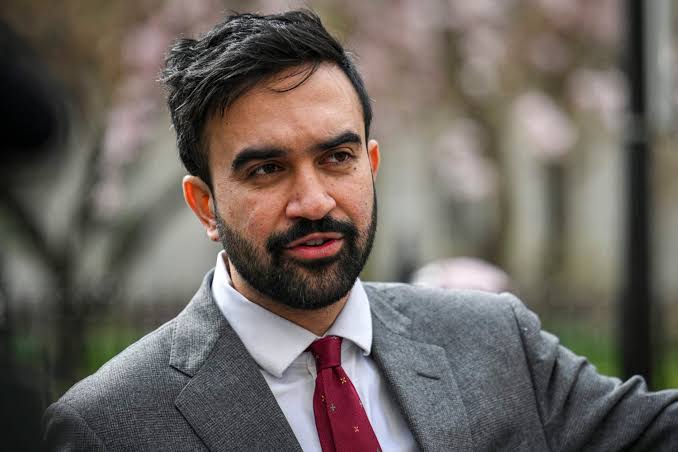
New York City will slash speed limits to 15 miles per hour outside every eligible school in the five boroughs before the end of Mayor Zohran Mamdani’s first term, the administration announced Monday, deploying a state law named after a 12-year-old Brooklyn boy killed by a speeding driver more than a decade ago.
The plan represents the most aggressive use yet of Sammy’s Law, legislation passed by Albany in 2024 that granted New York City the authority to reduce speed limits below the state’s standard minimums.
More than 800 additional school locations will see limits cut to 15 mph this year alone, bringing the total number of schools with the lower limit to 1,300 by December. The full rollout, covering all 2,300 eligible school locations housing approximately 3,200 schools citywide, is targeted for completion within the mayor’s current term.
Mamdani made the announcement at Flushing International High School in Queens, where city transportation workers simultaneously installed new 15 mph signage on 147th Street — a symbolic first act in what officials described as a sweeping city-wide transformation of how streets near schools are managed.
The law carries the name of Sammy Cohen Eckstein, who was struck and killed by a speeding vehicle in Brooklyn in 2013 at age 12. His mother, Amy Cohen, founded Families for Safe Streets in the aftermath and spent years pressing the state legislature to give the city the power to lower speed limits without Albany’s case-by-case approval. That campaign succeeded in the spring of 2024. Since then, the city had implemented the lower limits at just over 100 locations — a pace critics called inadequate. Monday’s announcement effectively ends that criticism by committing to a timeline covering the entire school system.
“Lower speeds save lives, and we will use every tool at our disposal to protect our neighbors as they move about our city,” Mamdani said.
The physics behind the policy are straightforward and stark. A pedestrian struck at 25 mph is more than three times as likely to suffer serious injury than one hit at 15 mph. The difference between those two numbers, in the context of a child stepping off a kerb, is often the difference between a hospitalisation and a fatality.
Read also: Islamist Group Claims Amsterdam School Blast In Jewish Attack Wave
New York City’s streets kill dozens of pedestrians every year despite years of Vision Zero initiatives, and school zones — crowded twice daily with children, parents, and distracted drivers — concentrate that risk in predictable locations at predictable times.
This year’s implementation will proceed in two tracks. Roughly 700 school locations that already carry 20 mph School Slow Zone designations will have their limits reduced further to 15 mph. About 100 additional locations currently at the standard 25 mph limit will be brought into the slow zone programme for the first time. The city’s transportation department said it would prioritise sites using safety data, focusing on locations with the worst crash histories and the most vulnerable pedestrian populations.
Each location requires a mandatory 60-day public notice and comment period before a new limit takes effect, giving community boards an opportunity to weigh in. Beyond signage, the department said it would continue upgrading street and intersection designs at the most dangerous locations — installing speed humps, hardened daylighting treatments and other physical modifications intended to slow vehicles through engineering rather than relying on enforcement alone.
NYC DOT Commissioner Mike Flynn said the department would apply its data-driven approach to determine where reductions would have the greatest impact. “Speeding is the leading cause of traffic deaths,” he said, “and even a small speed reduction can mean the difference between life and death in a crash.”
Read more: ISIS-Inspired Terror Probe Opened After NYC Mayor’s Home Bombed
For Amy Cohen, Monday’s announcement arrived after more than a decade of grief turned into organised advocacy. “In 2013, my 12-year-old son Sammy was struck and killed by a speeding driver in Brooklyn, and ever since, I’ve been fighting for safer speeds on our streets,” she said. She credited the coalition of families, elected officials and advocacy groups who sustained the campaign through what she called a long battle, and expressed eagerness to see the administration move toward even broader implementation beyond school zones.
The announcement drew praise from elected officials across the boroughs, several of whom had been directly involved in passing the enabling legislation. Manhattan Borough President Brad Hoylman-Sigal, who co-led the Albany push, called lower speed limits around schools “one of the most effective ways to protect children and families.” City Council Majority Leader Shaun Abreu, who sponsored the home rule measure that made the law possible, said the rollout was precisely what the Council envisioned when it passed.
Transportation advocates welcomed the pace of the new administration’s action but signalled they would keep pressing for more.
Ben Furnas of Transportation Alternatives called Monday’s announcement a critical first step while making clear that full neighbourhood-wide slow zone implementation remained a goal. Representatives of the previous administration, whose slower rollout drew sustained criticism from street safety groups, did not immediately respond to a request for comment.
Sammy Cohen Eckstein would have been 24 years old this year.