
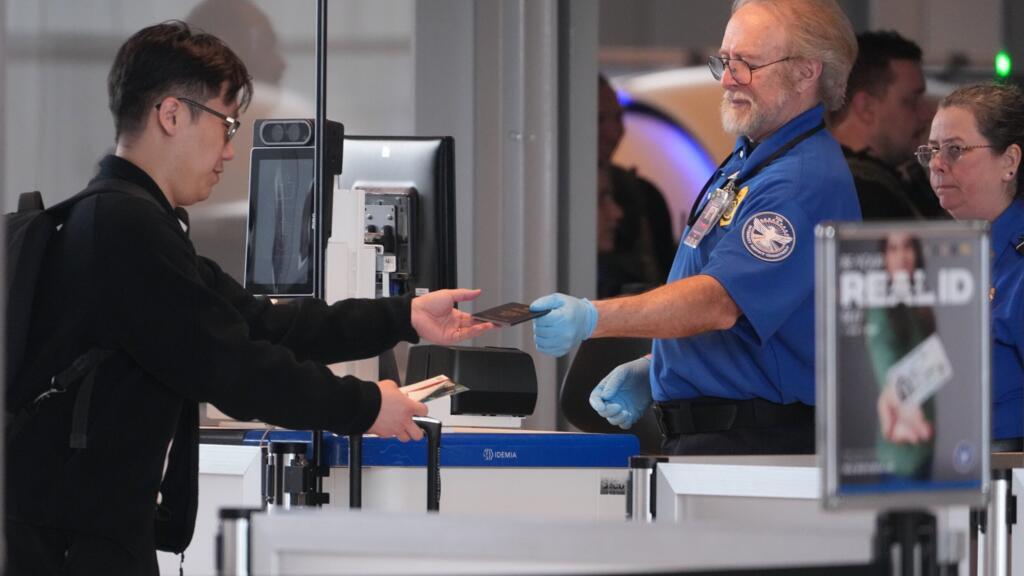
American airports are haemorrhaging security staff and House Republicans have blocked the bill that would have stopped it, deepening a standoff that has turned air travel across the country into an exercise in managed chaos.
The Senate moved first, passing a bill unanimously in the early hours of Friday morning that would restore funding to most Department of Homeland Security agencies — the Transportation Security Administration, the Coast Guard, FEMA — that have been operating without money since a partial government shutdown began in mid-February. The bill was a deliberate compromise, funding the agencies that keep airports functioning and coasts secure while withholding money from border patrol and Immigration and Customs Enforcement pending the reforms Democrats have demanded.
Read also: Coney Island Gets $1M Business District Under Mamdani Plan
House Speaker Mike Johnson killed it before it reached the floor. He called the Senate legislation “a joke” and said the House would pursue its own approach — a two-month funding bill covering all DHS agencies without conditions. Senate Minority Leader Chuck Schumer immediately declared that version dead on arrival in the upper chamber. The money continues not to flow. TSA agents continue to work without pay, or not work at all.
Nearly 500 security agents have left their posts since the shutdown began, Trump acknowledged in an executive memo signed Friday that directed DHS and the White House budget office to find a way to pay TSA employees outside the stalled legislative process. “America’s air travel system has reached its breaking point,” he wrote, and attributed the crisis to Democratic obstruction — a framing Democrats rejected with some force, given that the Senate bill Republicans just blocked would have solved the immediate problem.
The political architecture underneath the standoff is not complicated, even if the consequences are. Democrats have refused to fund immigration enforcement agencies without reforms addressing racial profiling and the identification of agents during operations. Republicans have refused to separate immigration funding from homeland security funding, insisting on a single bill that covers everything. Each side has a bill it will pass and a bill it will not, and the two positions have not moved since January.
Read more: Havana Oil Facility Fire Compounds Cuba’s Fuel Shortage
What has moved is the situation on the ground. TSA agents screening passengers at airports across the country have been working without paycheques for six weeks. Some have quit. Some have called in sick in numbers that stretch the polite fiction of coincidence. The agents who remain are doing the work of people who left, under conditions that would test the commitment of anyone whose rent is due regardless of whether Washington has resolved its funding dispute. Long lines, inconsistent screening capacity and the particular anxiety of an air travel system where the people responsible for security are themselves in crisis have become the texture of flying in America in the spring of 2026.
Trump has deployed ICE agents to airports to help manage the staffing shortfall — a decision that introduced its own complications, given that ICE agents are trained for immigration enforcement rather than aviation security screening, and given the political temperature around ICE operations in public spaces. The deployment answered one problem while raising several others.
The deeper context is the sustained public anger over immigration enforcement that has been building since January. Federal agents have conducted aggressive raids across the country under the administration’s mass deportation programme. Rights organisations have documented allegations of violence and civil liberties violations. The anger sharpened into something more acute when two US citizens — Alex Pretti and Renee Nicole Good — were shot and killed by federal agents during separate immigration operations in Minneapolis. The Trump administration’s initial characterisation of both as domestic terrorists, subsequently contradicted by video footage of the incidents, produced a wave of outrage that has not fully subsided and that makes further blank-cheque funding for immigration enforcement politically untenable for Democrats whose constituents are paying attention.
“We will not give a blank check to Trump’s lawless and deadly immigration militia without reforms,” Senate Minority Leader Chuck Schumer said Friday.
The Republican counter-argument is that Democrats are holding airport security hostage to immigration policy demands — that the refusal to pass a clean TSA funding bill is a form of political leverage that is causing real harm to real travellers. The argument has merit as a description of what is happening, even if it omits the question of why Democrats adopted the leverage in the first place.
The executive memo Trump signed Friday cannot substitute for an appropriations bill. It can direct agencies to explore workarounds, but federal employees cannot legally be paid from funds that Congress has not authorised. The memo is a signal of intent and a deflection of blame — both of which are useful politically and neither of which puts money in a TSA agent’s bank account.
Johnson has suggested the House could move its own bill quickly. Schumer has said the Senate will not pass it. The airports remain understaffed, the lines remain long, and the 500 agents who have already left are not coming back because a memo told their former agency to look into it.