
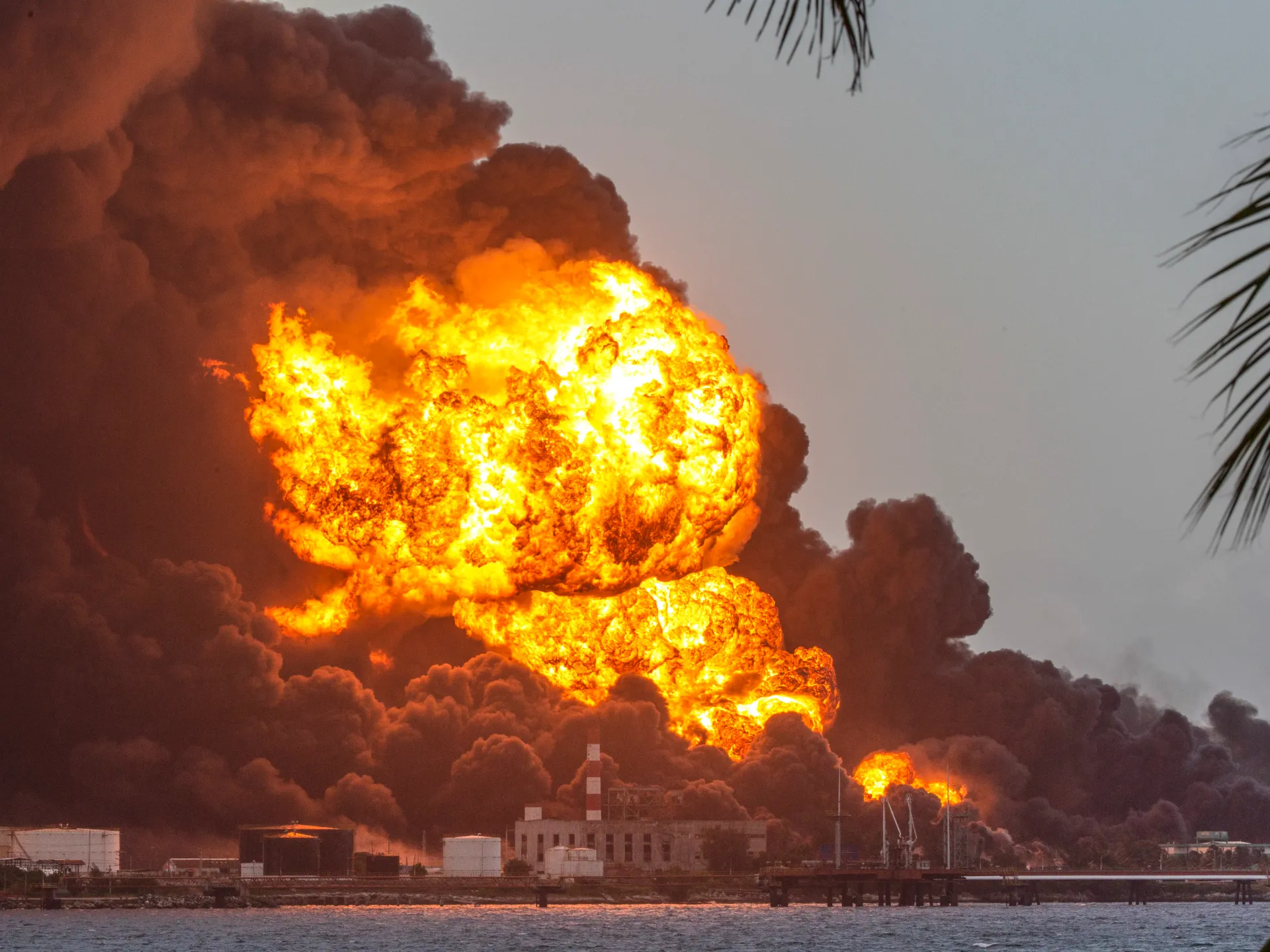
A fire erupted at Havana’s Nico Lopez refinery Friday, sending a large plume of smoke over the bay before emergency crews contained the blaze, Cuba’s energy ministry said.
The ministry reported the fire broke out in a warehouse at the facility and was brought under control. “The cause is under investigation,” officials said in a post on X.
The incident occurred near where two oil tankers were docked. Two Mexican navy vessels arrived at the harbor Thursday carrying more than 800 tons of humanitarian supplies.
Cuba faces mounting risks of widespread blackouts after President Donald Trump moved to cut off the island’s oil supply. The Caribbean nation of 9.6 million people lost its primary source of petroleum last month when Trump ordered the removal of Nicolas Maduro, the longtime leader of Venezuela, Cuba’s key ally.
Trump declared Venezuelan oil shipments to Cuba would cease and threatened tariffs against any nation attempting to supply crude to the island.
Maritime tracking specialists told AFP that no foreign fuel or oil tanker has reached Cuban ports in recent weeks, a development experts say threatens the country’s ability to maintain basic services.
The island has endured years of severe economic distress characterized by prolonged power outages and acute shortages of fuel, medicine and food. A U.S. trade embargo imposed in 1962 remains in effect.
Emergency conservation measures took effect this week as Cuba’s fuel reserves rapidly depleted. Authorities closed universities, reduced school hours and shortened the workweek. Public transportation services were sharply curtailed and fuel sales restricted.
Hospital staffing levels were also reduced as part of the conservation effort.
The United Nations said Friday it was deeply concerned about the unfolding crisis in Cuba, though it did not specify what actions, if any, the organization might take.
Cuba’s power grid operates primarily on imported petroleum, with the country producing minimal domestic oil. Venezuelan shipments had accounted for the bulk of supply under an arrangement in which Havana sent medical personnel and other services in exchange for crude.
Trump’s intervention followed his administration’s broader campaign to isolate the Maduro government, which Washington does not recognize as legitimate. The move to block oil flows to Cuba represents an expansion of pressure tactics aimed at both Caracas and Havana.
Cuban officials have not disclosed how long existing fuel stocks might last under current consumption patterns. The government has not announced contingency plans beyond the immediate conservation measures already implemented.
Read also: Trump Latina Leader: Immigration Policy Risks GOP Midterms
Energy analysts say prolonged fuel shortages could force Cuba to implement rolling blackouts affecting residential areas, industrial facilities and critical infrastructure. Previous extended outages triggered public protests in some communities.
The situation has drawn criticism from regional governments and international organizations that argue the restrictions amount to collective punishment of Cuba’s civilian population. Defenders of the policy contend it appropriately targets a government aligned with U.S. adversaries.
Mexico’s humanitarian shipment arrived as part of ongoing support the country has provided Cuba during periods of acute need. Mexican officials have not indicated whether additional aid deliveries are planned.
Cuba imports virtually all petroleum products it consumes, making the economy particularly vulnerable to supply disruptions. Domestic production remains negligible despite past exploration efforts.
Read more: US–Iran Nuclear Talks Set for Oman After Trump Warning
The Nico Lopez refinery processes imported crude for domestic use. Any extended shutdown or damage to the facility would further strain Cuba’s capacity to distribute fuel even if supplies resume.
Authorities have not reported injuries from Friday’s fire or assessed potential damage to infrastructure at the refinery complex. The facility represents one of Cuba’s few operational refineries after years of insufficient maintenance and investment.
Previous fires at Cuban energy installations have caused extended disruptions. A 2022 blaze at a fuel storage facility in Matanzas province burned for days and destroyed millions of gallons of petroleum.
The current crisis coincides with Cuba’s worst economic conditions in decades. Chronic shortages and deteriorating public services have prompted significant emigration, with tens of thousands leaving the island in recent years.
International observers have warned that sustained fuel shortages could precipitate humanitarian emergencies, particularly affecting access to clean water, medical services and food distribution systems that rely on refrigeration and transportation.
Cuban authorities have appealed to the international community for assistance but have received limited response beyond rhetorical support from allied governments.
The extent to which other nations might attempt to circumvent U.S. pressure and supply Cuba with petroleum remains unclear. Trump’s tariff threats have deterred some potential suppliers from pursuing such arrangements.