
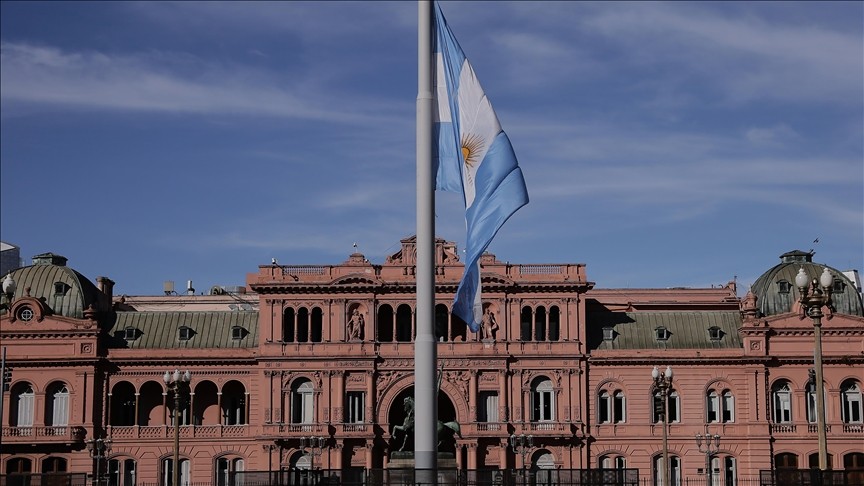
A municipal decision in Tehran to rename a prominent public square has brought into sharp focus the intersection of domestic symbolism and international diplomacy, following Argentina’s designation of Iran’s Islamic Revolutionary Guard Corps as a terrorist organization. The move, approved by the city council, reflects a calibrated political response that extends beyond local governance into the broader terrain of state signaling and geopolitical messaging.
At the center of the development is Argentina Square, a well-known location in the Iranian capital whose name has, until now, represented a nominal gesture of international reference. The proposal to alter that designation was endorsed by the council in direct reaction to Buenos Aires’ recent policy shift, which formally classified the Revolutionary Guards as a terrorist entity. For Tehran’s municipal leadership, the naming decision has become a vehicle for expressing institutional disapproval of what is perceived as a hostile foreign stance.
Tehran operates within a governance structure where local administrative bodies often serve as conduits for broader national sentiment, particularly in matters involving sovereignty and external relations. While the renaming of a public square may appear procedural, in this context it carries symbolic weight, signaling alignment with national policy and reinforcing narratives of resistance to external pressure.
Council member Mehdi Pirhadi confirmed that the proposal had been approved and would now proceed to the next stage of review. The city’s naming committee is tasked with evaluating potential alternatives and presenting a final recommendation at a future public session. This process, while administrative in form, underscores the deliberate nature of the decision-making framework, ensuring that the eventual name reflects both political intent and institutional consensus.
The list of proposed replacements provides further insight into the underlying objectives of the initiative. Among the names under consideration are several Iranian military figures who have been killed in recent years, including Amir Ali Hajizadeh, Alireza Tangsiri, Mohammad Bagheri, Mohammad Pakpour, and Majid Mousavi. The inclusion of these figures suggests a conscious effort to recast the space as a site of national commemoration, emphasizing themes of sacrifice, defense, and institutional continuity.
Read Also: The Foreign Vaults That Shield Africa’s Looters—Part III
This approach is consistent with a broader pattern in which public spaces are utilized to reinforce state narratives. Across multiple political systems, the naming of streets, squares, and monuments serves as a form of symbolic communication, embedding particular interpretations of history and identity within the urban landscape. In Iran’s case, the proposed shift reflects a desire to foreground domestic figures associated with national security at a moment of heightened international tension.
The trigger for this development—Argentina’s designation of the Revolutionary Guards—marks a notable evolution in Latin American engagement with Middle Eastern security dynamics. By formally classifying the organization as a terrorist entity, Argentina has aligned itself with a position more commonly associated with Western powers. This decision carries implications not only for bilateral relations but also for the broader configuration of diplomatic alignments.
From Tehran’s perspective, such a designation is viewed as a direct challenge to its institutional legitimacy. The Revolutionary Guards occupy a central role within Iran’s political and security architecture, and external attempts to label the organization as terrorist are interpreted as efforts to delegitimize the state itself. The renaming of Argentina Square can therefore be understood as a localized response to a global political gesture, translating abstract diplomatic tensions into tangible urban change.
The implications of this decision extend beyond symbolism. Public acts of renaming can influence diplomatic atmospherics, shaping perceptions and signaling intent to both domestic and international audiences. While unlikely to alter the structural dynamics of Iran-Argentina relations, the move contributes to a broader pattern of reciprocal signaling that characterizes contemporary geopolitics.
It also highlights the ways in which subnational actors—such as city councils—participate in the articulation of foreign policy narratives. In systems where national and local governance are closely aligned, municipal decisions can serve as extensions of central policy, reinforcing coherence across different levels of administration. This dynamic is particularly evident in contexts where political messaging is tightly integrated into public life.
For Argentina, the designation of the Revolutionary Guards reflects its own strategic calculations, including considerations related to international partnerships, security policy, and domestic political positioning. The response from Tehran underscores the reciprocal nature of such decisions, where actions taken in one jurisdiction prompt symbolic or substantive reactions in another.
The process now moves into a deliberative phase, with the naming committee expected to assess the proposed alternatives and consider additional options before presenting a final recommendation. This stage provides an opportunity for further refinement, ensuring that the chosen name aligns with both the council’s objectives and broader national narratives.
Read Also: Germany May Require Military Clearance For Young Men Abroad
In the interim, the decision serves as a reminder of the layered nature of international relations, where actions at the level of state policy can reverberate through local institutions and public spaces. The transformation of Argentina Square, once completed, will stand as a visible marker of this interaction, embodying the intersection of diplomacy, identity, and urban governance.
As global political alignments continue to evolve, such gestures are likely to remain a feature of the international landscape. They offer insight into how states and their constituent institutions interpret and respond to external developments, translating geopolitical tensions into forms that are both immediate and enduring. In Tehran, the renaming initiative reflects a broader effort to assert narrative control, reinforcing national identity in the face of perceived external challenges while embedding that response within the fabric of the city itself.