
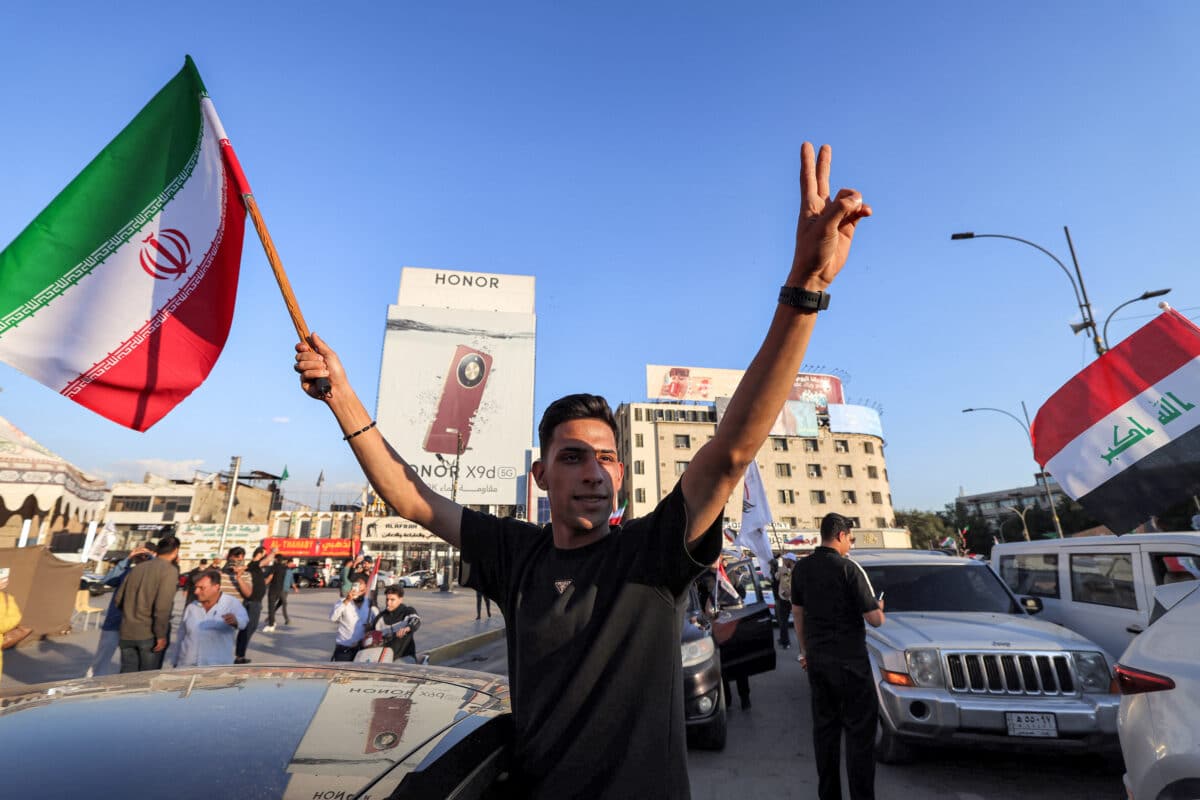
American and Iranian delegations were heading to Islamabad on Friday for ceasefire negotiations scheduled to begin Saturday — but the talks were already in serious trouble before either side had sat down, with Tehran demanding preconditions Washington has not accepted and both governments offering contradictory accounts of what their ceasefire agreement actually says.
Iran’s parliamentary speaker Mohammad Bagher Ghalibaf posted Friday that two conditions agreed between the parties had not been implemented: a ceasefire in Lebanon and the release of Iran’s frozen assets before negotiations begin. “These two matters must be fulfilled before negotiations begin,” he wrote on X. Hours later, Iranian state media confirmed the delegation had arrived in Pakistan but would only enter talks if Washington accepted Tehran’s preconditions — a formulation that left the entire process contingent on a dispute neither side had resolved.
The Iranian military’s joint command added its own pressure, warning it had its “fingers on the trigger” due to repeated breaches of trust by the United States and Israel.
Trump, simultaneously, was loading new threats alongside the diplomacy. He told the New York Post the United States was “loading up the ships with the best weapons ever made, even at a higher level than we used to do a complete decimation,” and warned that if no deal emerged, those weapons would be used “very effectively.” On Truth Social he was more cutting: “The Iranians don’t seem to realize they have no cards, other than a short term extortion of the World by using International Waterways. The only reason they are alive today is to negotiate.”
Read also: Iran’s Khamenei Issues Written Peace Message: ‘No War Wanted’
The ceasefire announced Tuesday was supposed to end five weeks of US-Israeli strikes on Iran and pause Iranian attacks across the region. Instead it has produced a new argument about what was agreed. The United States and Israel say a ceasefire in Lebanon was not part of the deal. Iran and Pakistan say it was. The Trump administration has not released a clear account of the initial framework it accepted, saying only that it differs from Iran’s 10-point published proposal — a claim that has generated more confusion than clarity.
The Lebanon question has become the most immediate fault line. Israeli attacks in the country killed at least 300 people on Wednesday, one of the deadliest single days of the offensive. Trump told an Israeli reporter Thursday that he had encouraged Prime Minister Benjamin Netanyahu to make operations against Hezbollah more “low-key” ahead of the Islamabad talks. On Friday, Al Jazeera’s correspondent in Tyre reported seeing “no sign of any dialback or slowdown” in southern Lebanon. Kuwait said it had intercepted seven Iranian drones fired into its airspace over the preceding 24 hours.
Read also: NATO Criticized Over Iran As Trump Revives Greenland Claim
The gaps between the two sides extend well beyond Lebanon. Analysts have identified at least four areas of fundamental disagreement: Iran’s future control over the Strait of Hormuz, the release of frozen Iranian assets, the future of Iran’s nuclear programme, and the scope of Israel’s military operations in Lebanon. None of these questions has a bridging position currently visible in public statements from either government.
US Vice President JD Vance, leading the American delegation, said Friday he expected “positive” results from the talks before departing for Pakistan. He added that he had received “pretty clear guidelines” from Trump — a formulation that suggested limited negotiating flexibility heading into talks with a country that has arrived with preconditions and a military command publicly declaring its finger on the trigger.
Pakistan’s prime minister has described the talks as “make or break.” The country hosting the negotiations has set a modest public goal: not a peace agreement, but a deal to keep talking. Whether even that minimum survives Saturday’s opening session depends on whether Washington will address the Lebanon ceasefire and frozen assets questions Iran has made non-negotiable entry requirements — and whether Tehran will enter the room before those questions are answered.
The ceasefire that was supposed to create space for diplomacy has instead created a new argument that threatens to collapse the diplomacy before it starts.