
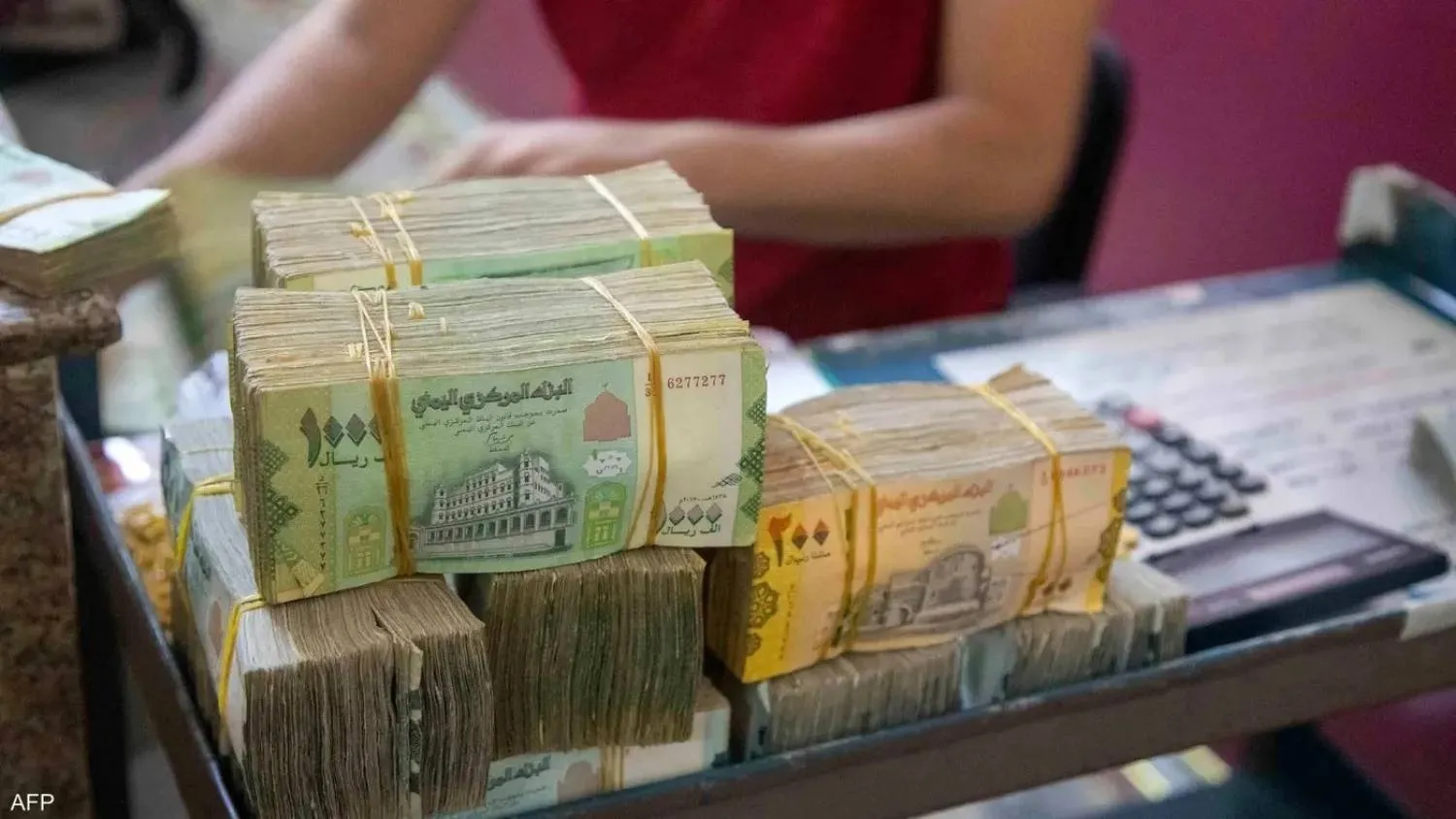
Yemen’s central bank succeeded in halting the collapse of the riyal. The fix has created a different crisis. A severe cash shortage has seized government-controlled cities across the country after the Aden-based Central Bank of Yemen moved aggressively to curb currency speculation — shutting unauthorised exchange firms, centralising internal remittances and establishing a committee to manage hard currency allocation for importers.
The riyal, which had sunk to around 2,900 to the US dollar, has recovered to roughly 1,500. But the stabilisation has drained the market of local banknotes, leaving ordinary Yemenis unable to convert foreign currency, pay for groceries or access medical care.
Mohammed Omer, who runs a small grocery in the port city of Mukalla, spent hours travelling between exchange offices trying to convert a few hundred Saudi riyals he had received from customers. Each firm turned him away or capped daily conversions at 50 Saudi riyals per person. He closed his shop. “It’s a waste of time and effort,” he said.
The shortfall cuts across most of Yemen’s government-held south. In Aden, Taiz, Mukalla and Lahj, residents describe banks and exchange firms refusing outright to convert Saudi riyals or US dollars into local currency. For the many Yemenis who hold savings or receive wages and remittances in foreign currency — soldiers paid in Saudi riyals, diaspora families dependent on transfers from the Gulf — the blockage is not abstract. It is the inability to buy food, pay rent or settle a hospital bill.
Read also: Israel Strike Kills IRGC Figure Ashrafi In Tehran
Government workers have been caught in a related bind. Because the Yemeni government is itself short of cash, it has begun paying salaries in low-denomination 100-riyal notes. Workers carry wages home in bags. Munif Ali, a government employee in Lahj, posted a video on Facebook showing himself beside stacked bundles of 100- and 200-riyal notes, reporting that merchants were refusing to accept large quantities of the low-value currency. “Legal action should be taken against them,” he wrote.
People have improvised. Trusted shopkeepers allow delayed payment. Some exchange foreign currency at grocery stores at rates worse than official. Banks and exchange firms have pushed online money transfers, which have provided partial relief. In rural areas, where internet access is scarce and exchange shops often don’t exist at all, these workarounds are largely unavailable.
Saleh Omer, from the Dawan district in Hadramout, received a 1,300 Saudi riyal remittance from a relative in Saudi Arabia. The exchange firm that paid it out refused to convert any of it into riyals. A shopkeeper, after repeated appeals, agreed to convert 500 riyals — at a rate below the official exchange — and told him to return for the rest another day. “I nearly begged the shopkeeper,” Saleh said. “We are suffering greatly just to convert Saudi riyals into Yemeni riyals.”
Access increasingly follows connections. Khaled Omer, who runs a travel agency in Mukalla, transacts mostly in Saudi riyals and dollars but keeps a contact at a local exchange firm he calls on when he needs local currency to pay staff or utilities. Most people have no such contact.
Read more: Iranian Speaker: Our Forces Ready To Torch US Troops
The human cost has extended into healthcare. Reports circulating on Yemeni social media describe hospitals turning away patients whose families hold Saudi riyals but cannot convert them. In Taiz, Hesham al-Samaan described roaming the city searching for someone willing to exchange currency so he could pay for a relative’s treatment after a local hospital refused payment in Saudi riyals. His Facebook post drew dozens of responses from others who reported similar experiences.
The Central Bank acknowledged the problem at a board meeting in March, saying it had approved unspecified short- and long-term measures and was pursuing what it called “conservative precautionary policies” to stabilise the currency and contain inflation. No timeline was given.
A narrow category of traders has benefited. Importers who source goods from Saudi Arabia and need foreign currency find that Saudi riyals are increasingly available at discounted rates, as cash-strapped sellers accept below-market conversions. A clothing trader in Mukalla said he deliberately accepts both currencies to attract customers while securing cheap hard currency for procurement. “As a businessman who sells goods in Yemeni riyals, I benefit from the cash shortage,” he said, speaking anonymously.
For most people, the arithmetic runs the other way. Yemen has endured economic collapse for more than a decade, a byproduct of war between the Saudi-backed government and the Houthi movement that has killed thousands and displaced millions. Both sides have systematically targeted each other’s revenue streams, leaving each struggling to pay public workers and maintain basic services. The riyal’s stabilisation was a genuine achievement. The shortage it produced has made daily life, in many cases, harder than before.