
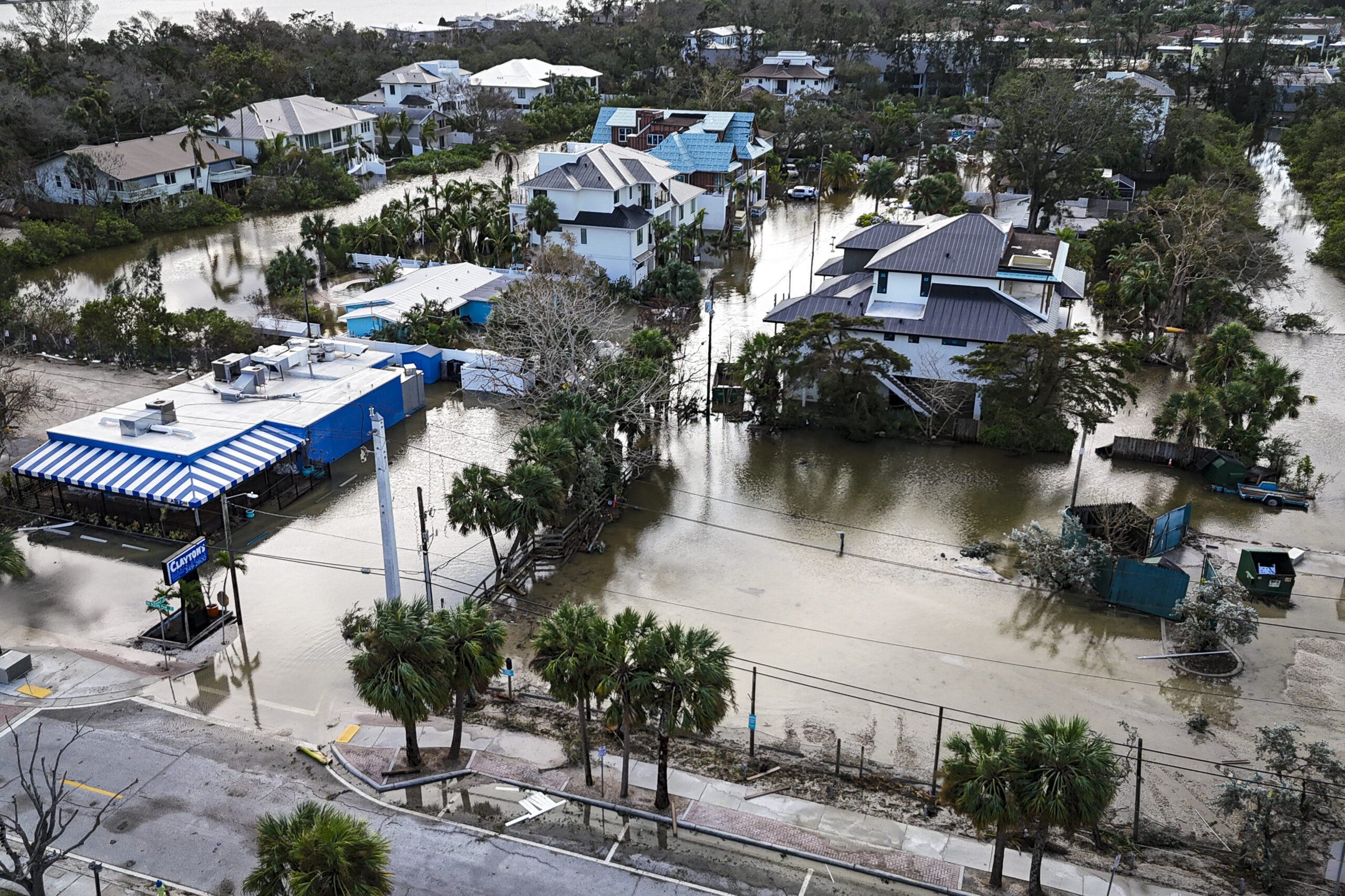
A single catastrophic hurricane making landfall at the wrong point along New York’s coastline could generate more than $200 billion in insured losses — a figure that would dwarf anything the American insurance industry has absorbed from a single weather event and that reflects the staggering concentration of insured wealth packed into one of the world’s most densely developed urban coastlines.
That is the finding of a new white paper from catastrophe modelling firm Karen Clark & Company, which analysed New York’s exposure to natural disasters and concluded that the state’s $9 trillion in insured property — $6 trillion of it sitting in coastal counties — makes even statistically rare storms capable of producing losses that would reorder the economics of the global insurance market.
The firm’s worst-case hurricane scenario places landfall near Rockaway Beach, a location whose geometry relative to New York Harbour, Long Island Sound and the surrounding built environment creates the maximum possible combination of storm surge, wind damage and inland flooding across the most densely insured real estate in the country. A Category 3 hurricane striking that point, KCC calculated, would produce more than $100 billion in insured losses in New York State alone and over $200 billion in total insured losses across the broader affected region.
Scale the probability downward to a 1-in-250-year event — a borderline Category 3 to 4 storm — and the numbers move to well over $200 billion for New York and more than $350 billion in total insured losses. The firm characterises that scenario not as apocalyptic fiction but as a statistically real possibility that the insurance industry and policymakers need to price and plan for now.
Read also: Lebanon Sheds Pawn Role As Ceasefire Holds, Leader Says
To anchor those projections in historical reality, KCC points to the Great New England Hurricane of 1938 — a storm that made landfall on September 21 of that year at Bellport, New York, as a Category 3 system with maximum sustained winds of 121 miles per hour. It drove more than 15 feet of storm surge onto Long Island, tracked inland causing devastation well into Canada before losing tropical characteristics, and remains the benchmark against which northeastern hurricane risk is measured. KCC’s modelling determined that if the identical storm struck today, it would produce $20.5 billion in insured losses in New York alone — a figure that reflects not the storm’s intensity but the extraordinary growth of insured property values in its path over the intervening 87 years.
Eleven hurricanes have affected New York since 1850, a frequency that places the city well outside the annual hurricane experience of Florida or the Gulf Coast but firmly within the range of meaningful long-term risk. The 1-in-100-year threshold — the standard benchmark used across the insurance and reinsurance industry for stress-testing capital adequacy — produces a loss estimate above $100 billion under KCC’s modelling, a number that would test the reserves of even the largest global insurers and likely trigger significant reinsurance recalculations.
The hurricane analysis sits alongside findings on the two other natural catastrophe categories that generate the most consistent annual losses in New York: severe convective storms, which include tornadoes, hail and damaging straight-line winds, and winter storms. Together, KCC says these two categories produce an average of nearly $1 billion in annual property losses across the state — a figure that accumulates quietly without producing the single catastrophic event that focuses public and regulatory attention, but that nonetheless represents a substantial ongoing drain on insurance reserves and household finances.
Read more: Crude Prices Drop As Iran Confirms Hormuz Strait Access
What the KCC analysis ultimately describes is a state that sits outside the traditional high-risk hurricane corridor but carries a concentration of insured value so extreme that even a low-probability event produces losses of a magnitude that would be significant anywhere on earth. New York is not Florida. But $9 trillion in insured property does not need Florida-level hurricane frequency to generate Florida-level insurance losses. It needs only one storm, in one location, on one September afternoon.
The industry has been warned. Whether the capital and pricing structures currently in place are adequate to absorb what KCC’s modelling describes is the question that white paper leaves for underwriters, regulators and policymakers to answer — preferably before the storm rather than after it.