
The international response to the hantavirus outbreak aboard the cruise vessel MV Hondius is rapidly evolving into a coordinated multinational public health operation, as authorities across Europe and North America intensify containment, monitoring, and repatriation efforts following the confirmation of additional infections among passengers evacuated from the ship.
Health agencies in the United States and France have now confirmed new positive cases linked to the outbreak, reinforcing concerns among epidemiologists about the cross-border management of infectious diseases originating in mobile travel environments. While officials continue to stress that the probability of a large-scale transmission event remains low, the incident is drawing renewed attention to the vulnerabilities within global cruise operations, emergency maritime health protocols, and international quarantine coordination.
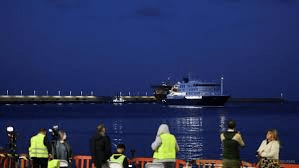
The MV Hondius, a polar expedition cruise vessel operated by Oceanwide Expeditions, is currently docked in Spain’s Canary Islands after becoming the centre of a complex international health emergency. More than 90 passengers are being repatriated under varying quarantine and monitoring arrangements after at least three passengers died during or shortly after the voyage.
Two of the deceased — a Dutch couple — have been confirmed to have contracted hantavirus, while investigations surrounding the death of a German passenger remain ongoing. The outbreak has been linked to the Andes strain of hantavirus, a rare variant found primarily in South America and notable for its potential, though uncommon, human-to-human transmission capability.
Read Also: US Hantavirus Case Prompts Health Officials To Urge Calm
The latest developments emerged after American and French nationals who had departed the ship and returned home tested positive for the virus. The US Department of Health and Human Services confirmed that one American passenger had tested positive, while another individual on the same repatriation flight had developed mild symptoms consistent with possible infection.
US authorities stated that both passengers had travelled in specially designed “biocontainment units,” reflecting the precautionary approach now shaping parts of the international response. Seventeen American citizens from the vessel are currently undergoing medical assessment at a secure health facility in Nebraska, while seven additional US passengers who had previously returned home are under active monitoring in various states.
The American response, however, has also exposed differing international interpretations of outbreak management protocols. The World Health Organization has recommended a 42-day isolation period for passengers leaving the MV Hondius, citing the uncertain incubation dynamics associated with the Andes strain.
That guidance has not been fully adopted by Washington. Dr Jay Bhattacharya, acting head of the US Centers for Disease Control and Prevention, argued that authorities must avoid generating disproportionate public alarm, emphasising that hantavirus transmission between humans remains exceptionally rare and should not be treated similarly to highly transmissible respiratory pandemics such as Covid-19.
The divergence highlights a recurring challenge in global health governance: balancing precautionary containment strategies with political, economic, and social concerns about overreaction. While WHO officials have urged maximum vigilance, some national authorities appear to be pursuing more calibrated approaches designed to minimise disruption while maintaining surveillance.
WHO Director-General Tedros Adhanom Ghebreyesus publicly cautioned that deviations from international guidance could introduce additional risks, particularly given the uncertainties surrounding exposure chains among passengers who travelled across multiple jurisdictions before the outbreak was fully understood.
In France, Health Minister Stéphanie Rist confirmed that a French national who returned from the cruise is now in isolation in Paris, with officials reporting deterioration in her condition. French authorities have already traced 22 contacts linked to the case, demonstrating the scale of epidemiological follow-up now underway across Europe.
Spain, which has become a critical logistical hub in the response effort, has implemented strict containment procedures following the vessel’s arrival in Tenerife. Images from the port showed passengers disembarking in protective medical gowns, masks, and head coverings as authorities coordinated staggered evacuation and quarantine operations.
Fourteen Spanish nationals transferred from the vessel have entered mandatory isolation at a military hospital in Madrid, while additional evacuation flights continue to transport passengers to their home countries under controlled conditions.
British authorities have also initiated precautionary protocols. A chartered repatriation flight carrying 20 UK nationals landed in Manchester before passengers were transferred to Arrowe Park Hospital in Merseyside for supervised isolation. Officials indicated that none had developed symptoms at the time of arrival.
At the same time, two British nationals with confirmed infections are receiving treatment abroad — one in the Netherlands and another in South Africa — underscoring the multinational complexity of the outbreak’s medical management.
The Netherlands has emerged as another focal point in the response. Dutch authorities received a separate repatriation flight carrying 26 passengers and crew members, including eight Dutch nationals. Additional evacuation flights involving passengers from Australia and other countries are also continuing as governments attempt to complete the controlled dispersal of those aboard the ship.
The broader implications of the outbreak extend beyond the immediate public health concerns. Maritime operators, insurers, and international regulators are likely to face renewed scrutiny regarding infectious disease preparedness aboard cruise vessels operating in remote international routes.
The MV Hondius voyage, which travelled through South American waters before reaching the Atlantic and eventually the Canary Islands, demonstrates how expedition tourism can rapidly transform into a transnational health event requiring simultaneous coordination among multiple governments, aviation authorities, hospitals, border agencies, and international organisations.
The outbreak also reinforces concerns surrounding zoonotic diseases originating in ecologically sensitive regions where human interaction with wildlife reservoirs increases exposure risk. Hantaviruses are commonly transmitted through contact with rodent saliva, urine, or droppings, though the Andes strain has previously shown limited capacity for person-to-person spread in close-contact environments.
Read Also: Oil Prices Surge After Trump Dismisses Iran Proposal
For the cruise industry, which continues rebuilding after the systemic disruption caused by the Covid-19 pandemic, the incident may intensify pressure for stronger onboard surveillance systems, clearer outbreak reporting obligations, and revised quarantine standards for long-duration international voyages.
Despite the rising number of confirmed and suspected cases, public health authorities continue to insist that the likelihood of widespread community transmission remains low. Most infections appear linked to close-contact exposure environments rather than casual interaction.
Even so, the unfolding situation aboard the MV Hondius illustrates how rapidly infectious disease events can intersect with global mobility systems, placing pressure on international coordination frameworks already shaped by lessons from recent pandemics.
As medical evaluations continue and contact tracing expands across several continents, the outbreak is increasingly being viewed not only as a clinical challenge, but also as a test of international preparedness in managing rare but high-consequence infectious threats in an interconnected travel environment.