
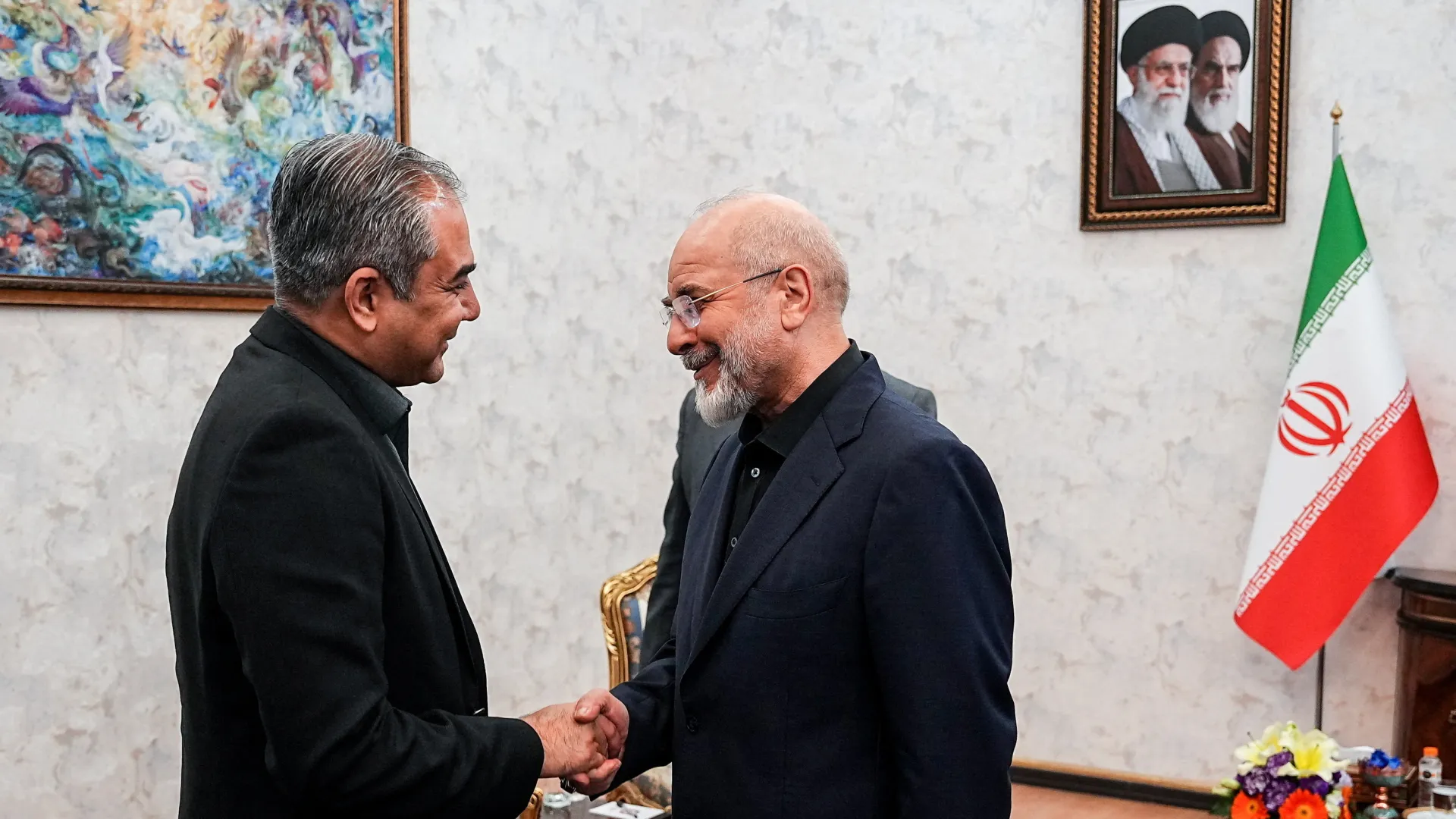
Tehran submitted a 14-point proposal to Pakistani mediators this weekend for transmission to Washington — even as Donald Trump posted a public ultimatum warning Iran there would be nothing left of it if it did not move “FAST” — a collision of back-channel diplomacy and open threats that illustrates precisely how close the 40-day-old ceasefire is to unraveling.
Pakistan’s Interior Minister Mohsin Naqvi was in Tehran Saturday and Sunday, meeting President Masoud Pezeshkian, Iranian Interior Minister Eskandar Momeni, and Parliament Speaker Mohammad Bagher Ghalibaf — the same official who has served as Iran’s chief negotiator in the talks aimed at formally ending a war that began February 28.
Naqvi’s visit was an emergency effort by Islamabad to keep the diplomatic channel from going dark entirely. It very nearly looked that way on Sunday.
While Naqvi was still in meetings with Iranian officials, Trump took to Truth Social to issue one of his starkest warnings yet: “For Iran, the Clock is Ticking, and they better get moving, FAST, or there won’t be anything left of them. TIME IS OF THE ESSENCE!” Over the same weekend, Trump convened his senior national security team — Vice President JD Vance, Secretary of State Marco Rubio, CIA Director John Ratcliffe, Defense Secretary Pete Hegseth, and special envoy Steve Witkoff — as signals from Washington grew that renewed military strikes, paused under the April 8 ceasefire, remained a live option.
Read also: Trump Warns Iran Clock Is Ticking As Peace Talks Stall
What Iran’s government said Monday complicated that picture considerably.
Foreign Ministry spokesman Esmaeil Baghaei, speaking at his weekly press conference, disclosed that despite Trump publicly branding Iran’s previous response “totally unacceptable,” Washington had in fact sent Tehran “a set of revised points and considerations” through Pakistani intermediaries. Iran reviewed them, responded through the same channel, and the process, Baghaei said, was continuing. Iran’s state-run Tasnim news agency later confirmed the substance of what Tehran had sent back — a 14-point proposal, now in Pakistan’s hands for relay to the American side.
The gap between the two countries’ stated positions remains vast. Iran’s April 28 counterproposal had called for a permanent end to hostilities within 30 days, a U.S. withdrawal from areas near its borders, the lifting of a naval blockade, the release of frozen assets, war reparations, and a new framework governing traffic through the Strait of Hormuz.
Nuclear issues were explicitly kept off the table — Tehran’s position, stated clearly and repeatedly, is that ending the war comes first and the nuclear question comes separately, if at all.
Washington’s early-May response went in the opposite direction. The American plan demanded a 20-year moratorium on uranium enrichment, the transfer abroad of Iran’s stockpile of highly enriched uranium — estimated at roughly 400 kilograms enriched to 60 percent — and the physical dismantling of nuclear facilities at Natanz, Isfahan, and Fordow. These were not negotiating footnotes. They were the core of the American offer.
Read also: 53 Million Barrels Released From US Emergency Oil Stockpile
Iran took ten days to respond in writing, offering to transfer some enriched uranium to a third country while deferring nuclear negotiations until after a permanent ceasefire was in place. Trump dismissed it without hesitation.
The weekend brought fresh evidence that the region around the talks is itself becoming more volatile. Drones struck an electrical generator outside the perimeter of the Barakah Nuclear Energy Plant in the United Arab Emirates — an installation whose symbolic weight in any conflict involving nuclear tensions requires no explanation. Saudi Arabia separately reported intercepting three drones launched from Iraqi airspace.
Pakistan’s Foreign Ministry on Monday called the Barakah strike “a grave violation of international law” and urged all parties toward maximum restraint. The statement was notable coming from a government simultaneously serving as the sole functioning conduit between Washington and Tehran — a country whose leverage depends entirely on both sides remaining willing to talk.
Analysts watching the exchange of proposals and counter-proposals since the ceasefire took hold describe the trajectory as deteriorating. Both governments have formally received each other’s terms, rejected the core demands, and increasingly allowed military language to crowd out diplomatic language in their public statements. The ceasefire has held for 40 days.
Whether it survives the current impasse depends, in part, on what Washington makes of the 14-point document now traveling through Islamabad.
Trump’s Truth Social post and Iran’s 14-point submission arrived on the same day. That simultaneity captures the fundamental instability of what Pakistan is trying to hold together — a negotiation in which one party is sending written proposals through a mediator while the other is threatening annihilation on social media, and both actions are, apparently, real.