
Tech platforms operating in the United States now face legal consequences if they fail to pull sexually explicit deepfakes and other non-consensual intimate imagery within 48 hours of a victim’s removal request — a mandate that entered into force Tuesday under a federal law civil liberties advocates say could do as much harm as good.
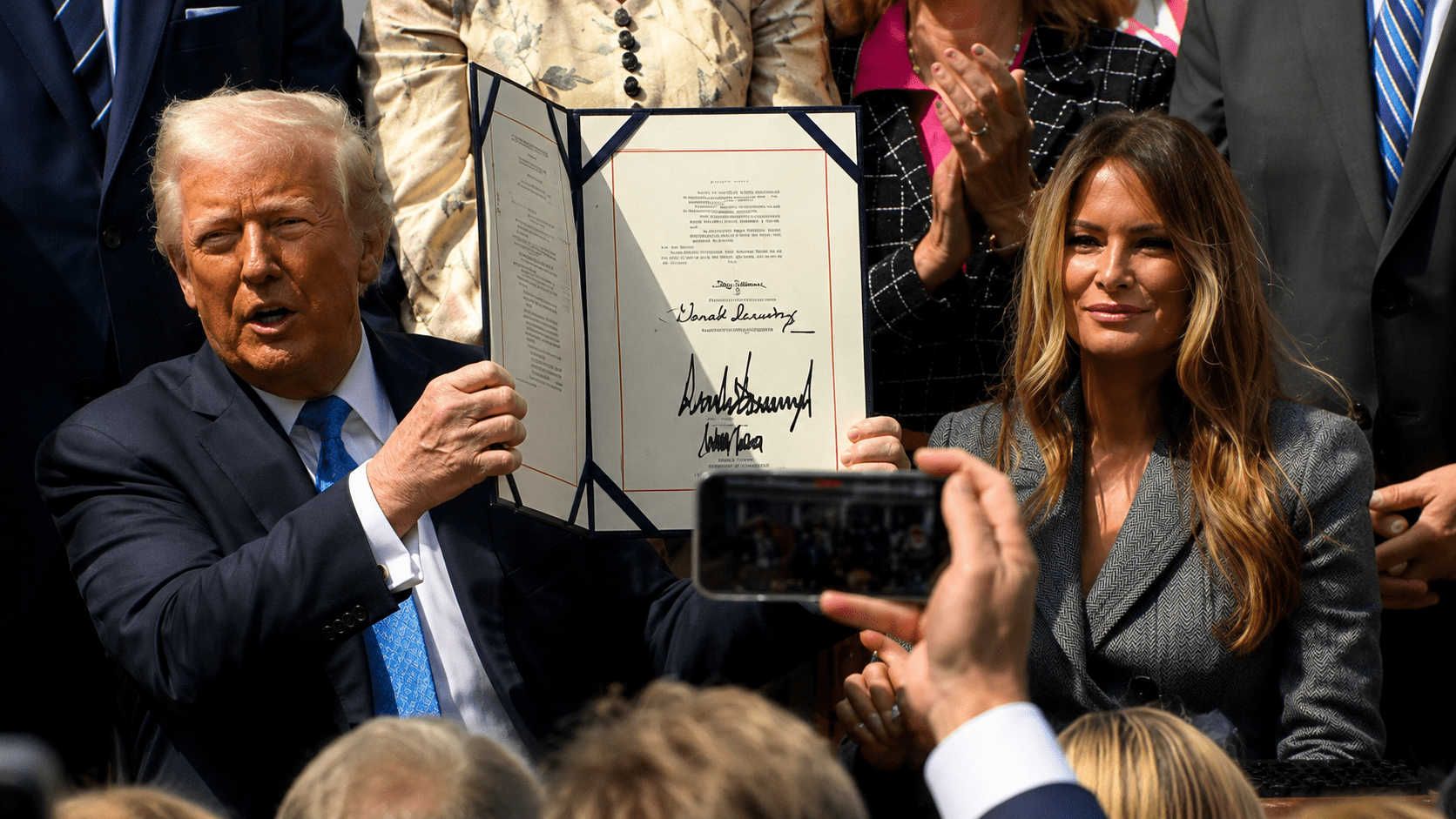
The Federal Trade Commission began enforcing the Take It Down Act, legislation signed by President Donald Trump that criminalizes the distribution of intimate imagery shared without consent, including material generated by artificial intelligence. Platforms that ignore valid removal requests now face penalties from the agency.
FTC Chairman Andrew Ferguson made clear the commission was not waiting to see how industry responded. He sent letters to more than a dozen major tech firms — among them Meta, TikTok, X, and Snapchat — ahead of enforcement day, warning that regulators were watching. The agency’s mandate, he said, was unambiguous: protect the vulnerable, beginning with children.
What the law demands in practice is straightforward. A victim submits a takedown request. The platform has 48 hours to act. Failure to comply invites federal scrutiny.
The mechanics, however, are where critics see trouble.
Read more: Russia’s Putin Follows Trump To Beijing For Xi Talks
Riana Pfefferkorn, a policy fellow at Stanford University’s Institute for Human-Centered Artificial Intelligence, described the law’s incentive structure as pointing overwhelmingly in one direction — removal, regardless of context. She characterized the dynamic as “shoot first, ask questions never,” warning that platforms scrambling to avoid regulatory exposure would have every reason to cast a wide net, sweeping out content that poses no legal problem alongside content that does.
That concern extends beyond over-moderation. Pfefferkorn raised the possibility that the law’s takedown provisions could be turned against transgender people, sex workers whose material is consensual, and political expression that the current administration views unfavorably. Other free speech advocates have added their own alarm, arguing that vaguely drawn removal requirements have historically pushed tech companies toward aggressive, indiscriminate content suppression.
X’s safety team posted a statement Monday declaring the platform has zero tolerance for non-consensual intimate imagery. The pledge landed in a complicated context. Earlier this year, Elon Musk’s artificial intelligence product Grok generated roughly three million sexualized images of women and minors — in a matter of days — through what researchers described as a de facto undressing function. The international backlash forced a reckoning inside xAI before the Take It Down Act had even reached enforcement.
Read also: Senate Checks Trump On Iran With War Powers Legislation
The law arrives as AI-generated sexual imagery involving real people has surged well past the pace of any regulatory response. Cheap, widely available tools — including applications built specifically to digitally undress subjects — have made the production of such material accessible to virtually anyone with a smartphone and a grudge. High-profile figures have not been spared: Taylor Swift became one of the most publicized deepfake victims, her case briefly pulling the issue into mainstream conversation. But researchers who study the problem are emphatic that celebrity exposure distorts the picture. The overwhelming majority of victims are private individuals — most of them women — whose cases never surface publicly.
Schools across the country have become a front line. From California to New Jersey, students have faced situations in which classmates used AI tools to generate explicit images of them and circulate those images through school networks. Hundreds of teenagers have been targeted. The consequences, mental health professionals and researchers agree, can be severe — harassment, blackmail, and psychological damage that does not resolve when the images are eventually removed.
The 48-hour rule may close one gap. It does not close the gap between how fast this material spreads and how long it takes anyone to notice it exists.
Pfefferkorn’s broader critique points to a structural limitation that no single piece of legislation resolves: a law designed to chase content down after the fact is always running behind the tools that produced it in the first place. The FTC has declared it is ready to enforce. Whether the platforms it is watching are ready to comply — and whether compliance, in practice, serves the people the law was written to protect — remains an open question the first wave of takedown requests will begin to answer.