
South Korea’s ruling Democratic Party won 12 of 16 regional leadership contests in Wednesday’s local elections, extended its parliamentary majority, and still managed to lose the one race that mattered most — the contest for mayor of Seoul — in a result that punctured what had been expected to be a clean political triumph for President Lee Jae-myung on the first anniversary of his taking office.
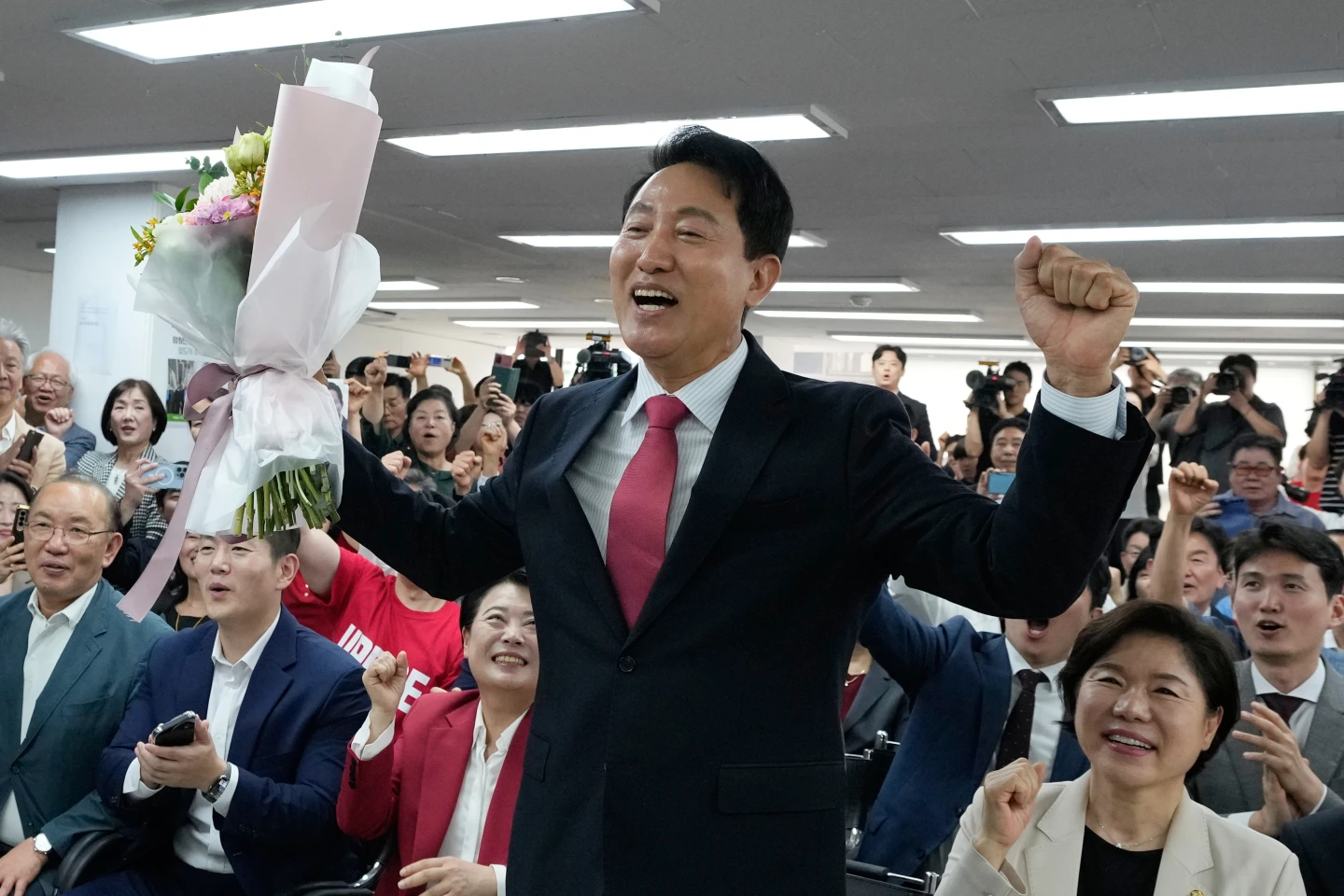
The Seoul mayoral race went to the conservative People Power Party.
That outcome — arriving as the PPP remains structurally weakened after former President Yoon Suk-yeol’s removal from office and his subsequent conviction and life sentence for the martial law episode that brought down his government in late 2024 — struck analysts as a significant missed opportunity for Lee. A party contesting elections against a fractured, discredited opposition on largely favorable terrain, political observers said, should have claimed the capital.
Democratic Party leader Jung Chung-rae acknowledged as much. He called the Seoul defeat painful, while noting his gratitude to voters for the party’s broader performance. The phrasing was careful, but the political weight of the concession was not lost.
Still, the numbers tell a more complicated story than a single loss.
Across the 16 mayoral and provincial gubernatorial contests, the Democratic Party carried 12. In 14 parliamentary byelections held on the same day, the party won nine, adding to an already commanding position in the National Assembly. The PPP, despite its Seoul win, took only four of the regional posts — a thin performance for a party attempting to stabilize itself following the most politically catastrophic 12 months in its recent history. The question now is what the Seoul result actually costs Lee, and over what timeframe.
Thursday marked exactly one year since Lee assumed the presidency through a snap election held after Yoon’s ouster. His approval ratings remain above 60%, a figure that reflects both the disarray of the opposition and Lee’s own record in office — one that has surprised a number of foreign policy observers who had anticipated a more confrontational posture toward Washington and Tokyo.
Read also: Trump Says Time Is On His Side As Tehran Reviews US Position
The administration has instead pursued what Lee has called pragmatic diplomacy, navigating relationships with the United States and Japan without the friction many had predicted given his party’s historical positions. Domestically, a rising stock market and a deliberate effort at greater transparency in government decision-making have added to his political comfort.
His foreign policy course, analysts said, is unlikely to shift regardless of Wednesday’s results.
What does change, at the margins, is the terrain on which Lee governs. Regional leadership posts carry real administrative weight in South Korea — control over policy implementation, budget coordination, and the organizational machinery that feeds into national political cycles. The PPP currently holds 14 of the 16 such posts, a structural advantage that Wednesday’s elections did not fundamentally dislodge despite the Democratic Party’s numerical wins. Choi Jin, director of the Seoul-based Institute of Presidential Leadership, noted that expanding the party’s presence at the regional level would allow Lee to advance policy more effectively and begin building the organizational foundation for the 2028 parliamentary elections.
Seoul, however, sits at the center of that picture.
South Korea’s capital is not simply the country’s largest city; it is the political and economic nerve center whose mayor functions in the South Korean imagination as a figure of genuine national consequence. The PPP’s hold on that office — maintained even in an electoral cycle structured against it — signals that the conservative base retains a foothold in the country’s most symbolically loaded contest, even as the national picture grows steadily more favorable to Lee’s party.
For the Democratic Party, the day produced 12 regional wins, nine parliamentary byelection pickups, and an enduring grievance — the knowledge that with the PPP at its most vulnerable, with a president one year in and polling above 60%, Seoul was there to be taken, and wasn’t. Democratic voters and party strategists will be working through that arithmetic for some time.
The PPP will spend considerably less time on introspection. In a party rebuilding from a martial law conviction, a single mayoral win in the country’s capital is not a result to analyze. It is a result to celebrate.