

Case File: The Couple
Mental Health, Marriage Strain and Sexual Avoidance
Infertility enters the marriage long before it enters the clinic — turning sex into a scheduled trial, money into fear, and every period into a private grief.
Every other chapter in this volume can be measured — a hormone level, a tube, a fibroid, a semen count. This one cannot, and that is exactly why it is so often left out of the file. Long before infertility shows up as a test result, it has already moved into the home: it has rewritten what sex is for, turned the monthly period into a small funeral, made money a source of dread, and set husband and wife quietly blaming themselves and each other. None of that appears on a lab report, yet it shapes whether a couple can keep going at all. A fertility plan that treats only the body and ignores the marriage is repairing an engine while the driver falls apart.
Begin by taking the distress seriously as a medical fact, not a weakness. Infertility affects roughly one in six people at some point, and the World Health Organization classes it as a real health condition rather than a private misfortune. The emotional weight that comes with it is correspondingly heavy: the international guidance on fertility care documents that people facing infertility carry raised rates of depression, anxiety, and sexual difficulty, alongside social stigma, financial strain, and marital instability. These are not signs that a couple is coping badly. They are the ordinary, expected weight of a hard and often lonely experience — and naming them is the first act of care.
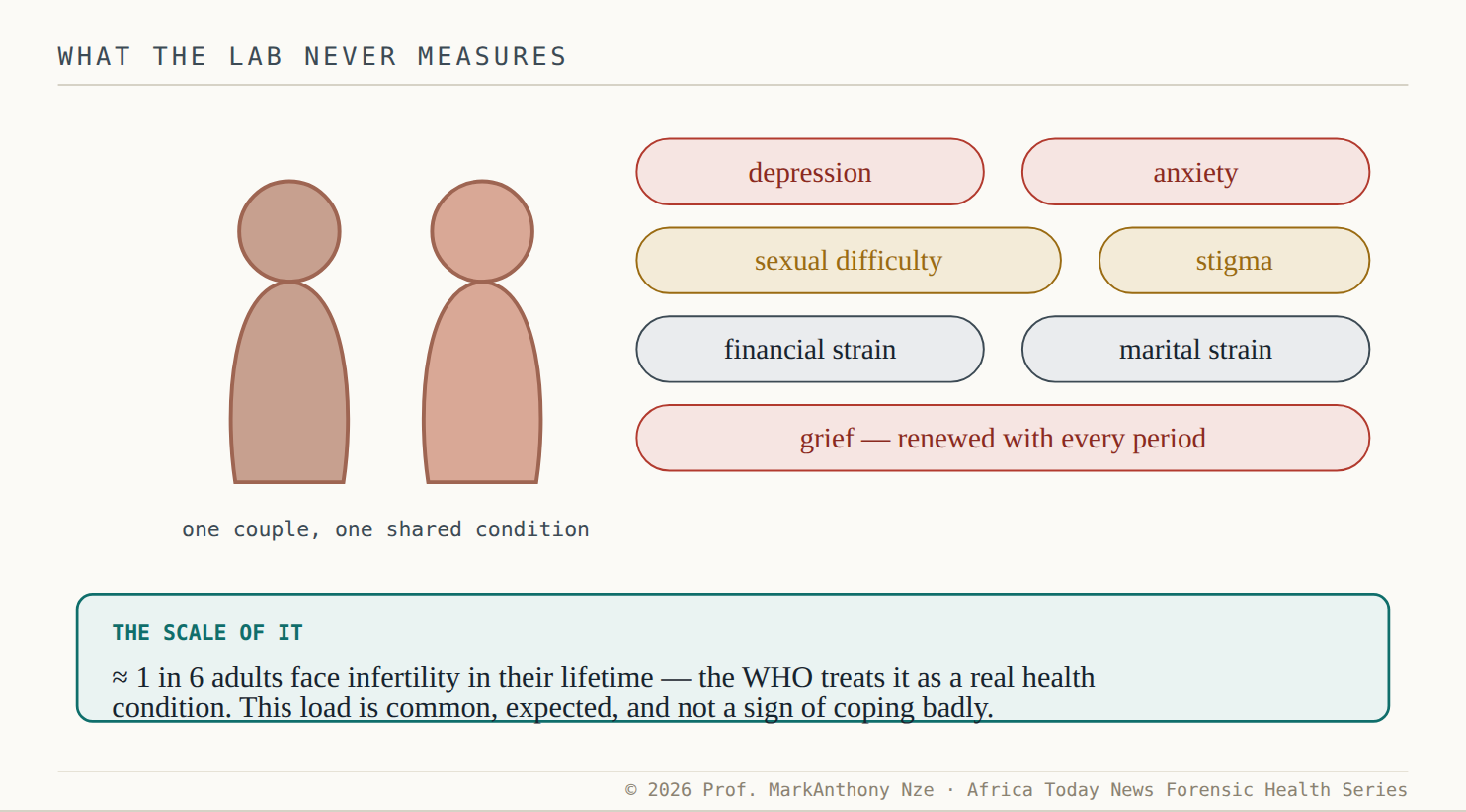
Fig. 28.1 The invisible file. None of this shows on a test, yet it is carried by both partners at once. Naming the load — and treating it as normal, not shameful — is the first step of real care.
Read also: The Fertility Repair Series III — Part 27
How trying to conceive breaks intimacy
The most intimate casualty is sex itself. When a couple begins “trying,” intercourse is quietly reassigned: it stops being a source of closeness and becomes a task performed to a calendar, aimed at a fertile window, watched and scored. That pressure is corrosive in a specific, well-documented way — performance anxiety, loss of desire, and erectile or arousal difficulty rise precisely because sex has been turned into an examination with a deadline. And the trouble feeds itself: pressure worsens performance, worse performance sharpens the pressure, missed windows breed resentment, and some couples begin, without ever quite deciding to, avoiding sex altogether. The very act meant to make a baby becomes the one both partners dread.