
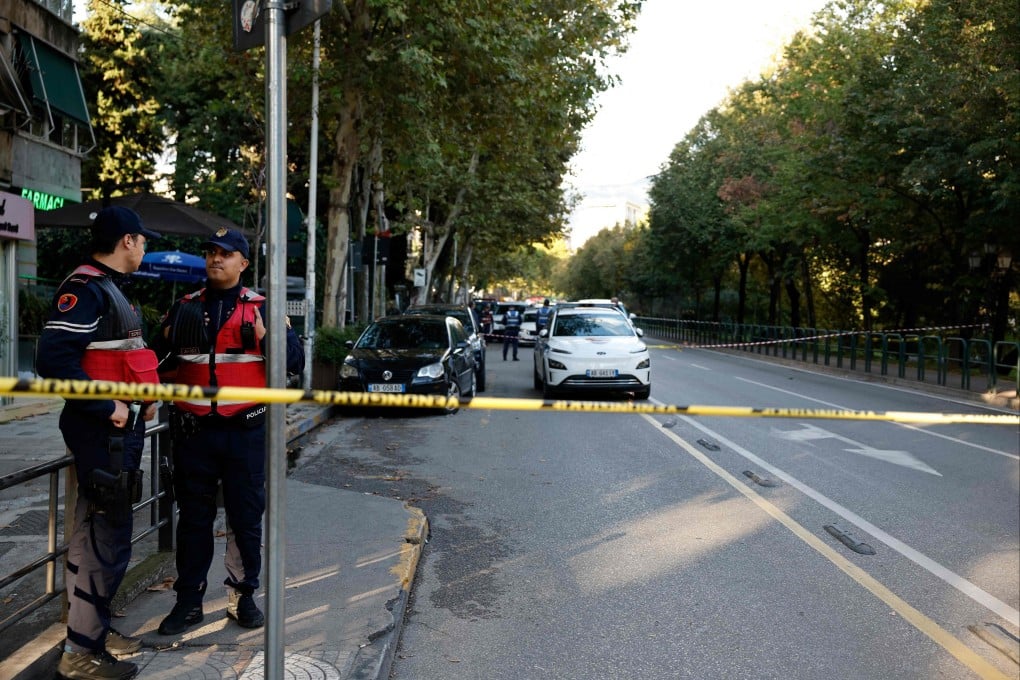
A tragic courtroom shooting in the Albanian capital, Tirana, has shaken the country’s judiciary and reignited debate over courtroom security and the growing culture of violence in the Balkans.
Police confirmed that Judge Astrit Kalaja, who was presiding over an appeals case, died from gunshot wounds after being ambushed during a trial session on Monday. He succumbed to his injuries while being transported to the hospital.
Authorities said the 30-year-old assailant, identified as a party to the dispute being heard in court, fled the scene immediately after the shooting but was apprehended shortly afterward. Officers recovered a revolver believed to have been used in the attack.
Two other men—a father and his son—who were also involved in the property dispute under litigation, sustained gunshot wounds during the incident. Medical officials described their condition as stable, confirming that their injuries were not life-threatening.
Local media reported that the shooting erupted in the middle of a heated hearing over property ownership, a long-standing source of tension in Albania, where land disputes often spill into violence due to weak enforcement of property laws.
Read also: Gaza Peace Talks Begin In Egypt With ‘Positive’ Outlook
The attack prompted swift reactions from the country’s top leadership. Prime Minister Edi Rama described the incident as a “tragic blow to justice” and urged a national review of the judiciary’s internal security systems. Posting on X (formerly Twitter), he called for harsher penalties for gun crimes and insisted that the killer must face “the most extreme legal response under Albanian law.”
President Bajram Begaj also condemned the murder, calling it “an attack on the very foundations of Albania’s justice system,” and appealed for calm as investigators work to establish the motive.
Gun violence has remained a persistent challenge in Albania, a country of 2.8 million that continues to struggle with the legacy of unregistered weapons from past conflicts. Between January and June 2025 alone, there were 213 gun-related incidents, according to data from the South Eastern and Eastern Europe Clearinghouse for the Control of Small Arms and Light Weapons (SEESAC).
Under existing law, illegal firearm possession carries a maximum penalty of three years in prison, though rights groups argue that lax enforcement and slow judicial proceedings have emboldened offenders.
Albania’s justice sector has been under reform since 2016, following European Union and United States–backed initiatives to purge corruption and restore credibility to its courts. But those reforms have also created a backlog of thousands of cases—an administrative strain that critics say has left judges increasingly exposed to frustration, pressure, and now, deadly violence.