
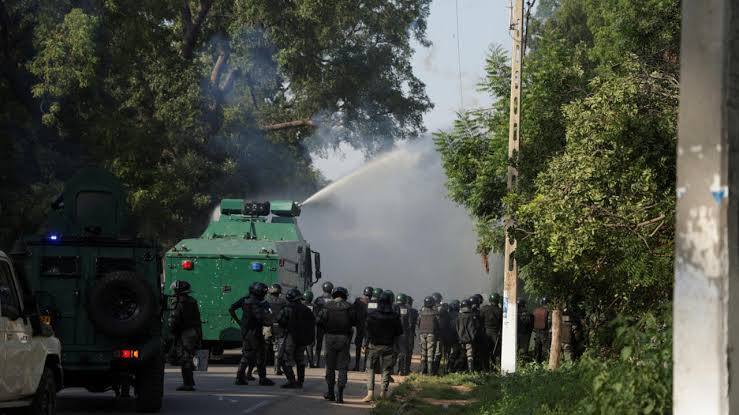
Blood has been spilled on Cameroon’s streets as a contested presidential election spirals toward crisis, with at least four people killed during clashes between opposition supporters and security forces in the economic hub of Douala.
Samuel Dieudonné Diboua, the regional governor, confirmed the deaths Saturday while accusing protesters of attacking police posts and forcing officers to respond with lethal force. The violence erupted as hundreds defied a government ban on public gatherings to demonstrate in multiple cities, backing opposition candidate Issa Tchiroma Bakary’s explosive claim that he won the October 12th election.
That assertion directly challenges President Paul Biya, the 91-year-old autocrat who’s ruled Cameroon for 43 years and shows no signs of relinquishing power. His ruling CPDM party has dismissed Tchiroma Bakary’s victory claims as fantasy, setting up a showdown ahead of Monday’s official results announcement by the constitutional council.
Diboua characterized the demonstrations as “premeditated acts of violence” representing a grave threat to public order and national security. He confirmed that several security personnel were wounded alongside the civilian deaths, and promised investigations would identify those responsible for what he called “unfortunate incidents”—bureaucratic language that barely conceals the gravity of citizens killed by state forces.
Read also: Palestinian Novelist Freed After 21 Years In Israeli Jail
The worst violence occurred in Douala, but tensions flared across the country. In Garoua, Tchiroma Bakary’s political stronghold in Cameroon’s north, police deployed tear gas and water cannons against crowds rallying behind their candidate. What began as peaceful marches devolved into chaos once security forces moved to disperse the gatherings.
Protesters in Garoua accused the CPDM of orchestrating a scheme to “steal the victory” from Tchiroma Bakary—language that echoes disputed elections across Africa where incumbents have been accused of manipulating results to maintain decades-long rule. The demonstrations followed the opposition leader’s call for supporters both domestically and in the diaspora to march peacefully and “liberate Cameroon,” a rallying cry that authorities clearly viewed as incitement.
The government responded by banning all public gatherings through Monday, when the constitutional council is scheduled to certify results. That timing is deliberate—authorities are essentially locking down public spaces to prevent mass protests if, as widely expected, they declare Biya the winner.
Cameroon now finds itself at a familiar yet dangerous crossroads. Biya has weathered opposition challenges before during his four-decade reign, typically through a combination of co-option, repression, and electoral engineering. But Tchiroma Bakary’s refusal to concede before official results, combined with his supporters’ willingness to risk violence by defying protest bans, suggests this challenge may prove more volatile than previous ones.
The regional implications are significant. West and Central Africa have witnessed a wave of contested elections in recent years, several ending in prolonged instability or outright coups. Cameroon already faces internal pressures from Anglophone separatist movements in its western regions and Boko Haram insurgency in the north. Adding a constitutional crisis over presidential succession could fracture an already fragile state.
International observers will be watching Monday’s announcement closely. If the constitutional council declares Biya the winner amid credible allegations of irregularities, and if Tchiroma Bakary’s supporters return to the streets in larger numbers, Cameroon could descend into the kind of post-election violence that has scarred other African nations.