
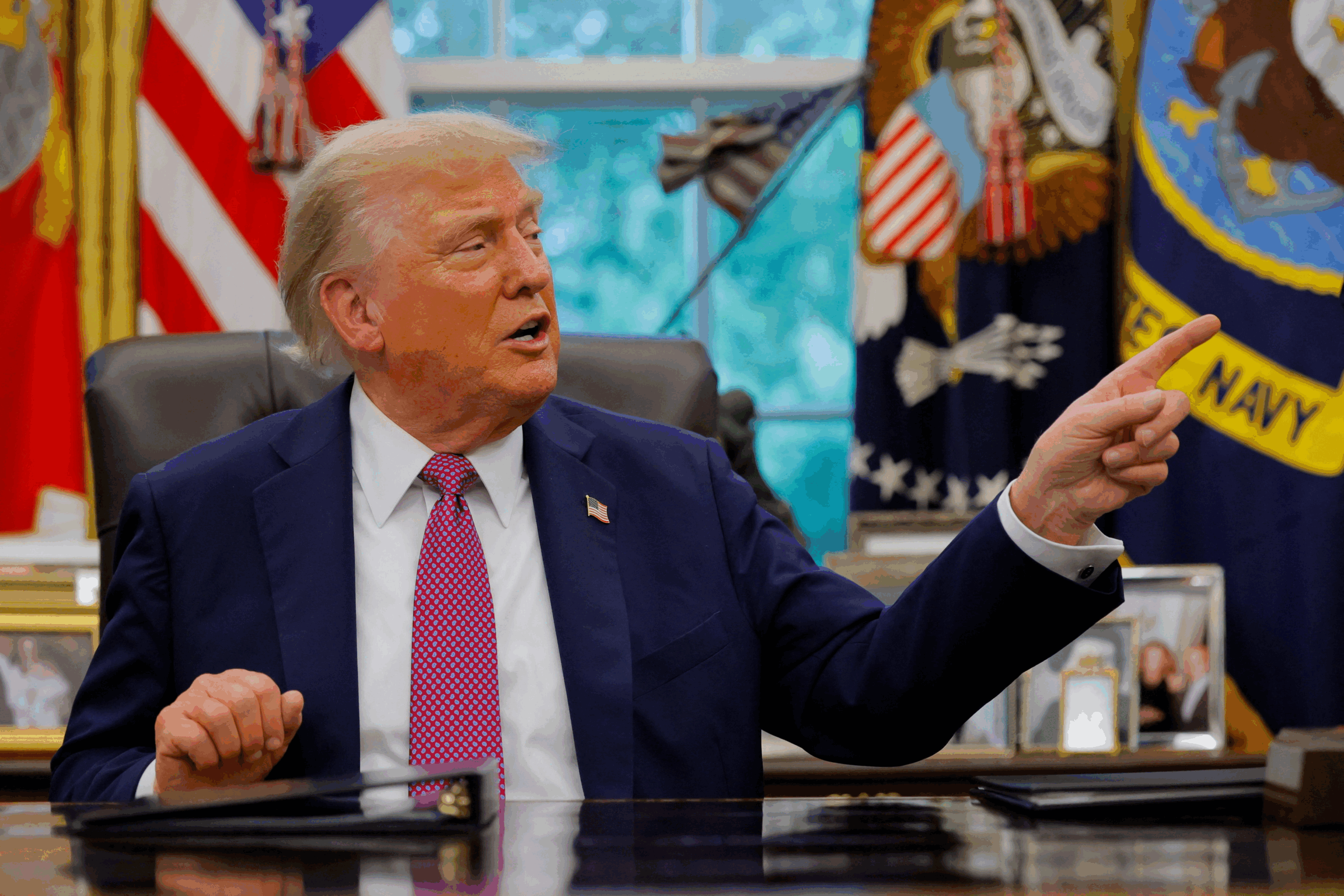
Donald Trump has dampened speculation about imminent U.S. military action against Venezuela while conspicuously leaving the door open to future escalation and suggesting Nicolás Maduro’s presidency is living on borrowed time.
“I doubt it. I don’t think so. But they’ve been treating us very badly,” Trump told CBS’s 60 Minutes when asked directly whether America was heading to war with the South American nation. The carefully hedged response came as U.S. forces continue striking vessels in Caribbean waters—operations Washington insists target drug trafficking but that Caracas and regional critics characterize as pretext for regime change.
At least 64 people have died in those strikes since early September, according to CBS News reporting. The attacks have targeted boats in both the Caribbean and eastern Pacific that American officials claim are smuggling narcotics toward U.S. shores.
Speaking from his Mar-a-Lago estate in Florida, Trump defended the naval campaign with characteristic bluntness. “Every single boat that you see that’s shot down kills 25,000 on drugs and destroys families all over our country,” he said, offering no evidence for the casualty math but framing the strikes as defensive measures protecting American communities.
When pressed on whether the United States might conduct strikes on Venezuelan territory itself—a dramatic escalation that would constitute an act of war—Trump declined to foreclose the possibility. “I wouldn’t be inclined to say that I would do that,” he began, before adding: “I’m not gonna tell you what I’m gonna do with Venezuela, if I was gonna do it or if I wasn’t going to do it.”
That calculated ambiguity keeps Maduro guessing while avoiding the domestic political risks of explicitly threatening military action. Trump rejected suggestions the campaign is fundamentally about toppling Venezuela’s government rather than interdicting drugs, insisting it concerns “many things”—a formulation broad enough to encompass regime change without stating it outright.
Read also: Maduro Alleges US Manufacturing Conflict With Venezuela
Maduro has accused Washington of “fabricating a new war,” while Colombian President Gustavo Petro—whose government recently faced U.S. sanctions—charged that boat strikes represent American efforts to “dominate” Latin America. Trump brushed aside such criticism, pivoting to immigration fears that animate his political base.
“They come in from the Congo, they come in from all over the world, they’re coming, not just from South America,” Trump said, painting migration as a global threat before singling out Venezuela. “Venezuela in particular has been bad. They have gangs.”
He specifically cited Tren de Aragua, a Venezuelan prison gang involved in extortion and contract killings, calling it “the most vicious gang anywhere in the world”—hyperbole that overlooks organized crime networks with far greater operational reach and lethality but serves Trump’s rhetorical purposes.
The interview marked Trump’s first sit-down with CBS since he sued the network’s parent company, Paramount, over its 2024 interview with then-Vice President Kamala Harris. Trump alleged the network edited that conversation to favor Democrats, a claim CBS rejected but that Paramount agreed to settle for $16 million directed toward Trump’s future presidential library rather than his personal accounts. The settlement included no apology.
Trump’s last 60 Minutes appearance, in 2020, ended with him walking out on correspondent Lesley Stahl after accusing her of bias. He declined an interview invitation during the 2024 campaign, making this conversation a notable resumption of engagement with a program he’s frequently attacked.
What emerges from the exchange is a president simultaneously downplaying war while keeping military options rhetorically available—a posture designed to pressure Maduro without committing to actions that could backfire politically or militarily. Whether that ambiguity reflects genuine uncertainty about next steps or calculated psychological warfare remains unclear.
Trump’s comment that Maduro’s “days are numbered” suggests he expects the Venezuelan leader’s fall whether through internal collapse, external pressure, or American action. But translating that expectation into reality without triggering a costly conflict—or a humanitarian catastrophe—presents challenges Trump’s vague answers didn’t address.