
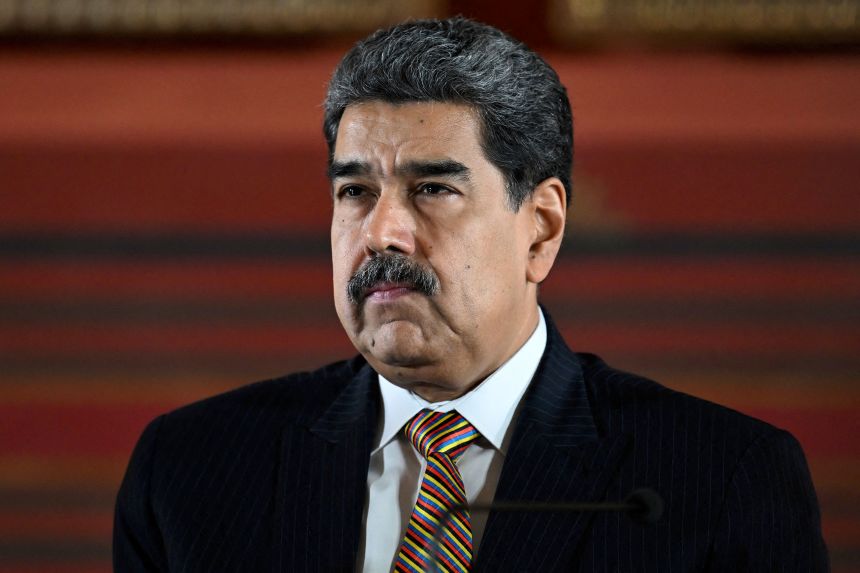
The world’s largest warship is cutting through Caribbean waters toward Venezuela, and Nicolás Maduro isn’t mincing words about what he thinks comes next.
Speaking in a televised national address Friday night, Venezuela’s embattled president accused Washington of “fabricating a new eternal war” as the USS Gerald R Ford—a nuclear-powered behemoth capable of launching 90 aircraft—moves within striking distance of his country’s coastline. It marks the most aggressive American military posture toward Venezuela in years, stoking fears across the region that diplomatic pressure is giving way to something far more dangerous.
Trump administration officials have painted Maduro as the puppet master behind Tren de Aragua, a Venezuelan prison gang that’s expanded into extortion, contract killings and human smuggling. The president has offered no evidence for the claim, but it’s become the stated justification for ramping up military operations. “They are fabricating an extravagant narrative, a vulgar, criminal and totally fake one,” Maduro shot back, noting that Venezuela doesn’t even cultivate coca. “Venezuela is a country that does not produce cocaine leaves.”
That distinction matters less to Washington than perception. Since early September, American forces have struck 10 boats in what officials describe as counter-narcotics operations—eight of them in Caribbean waters. At least 43 people have died in those attacks, and Caracas insists the missions are cover for regime-change ambitions.
Defence Minister Vladimir Padrino López announced Saturday that Venezuelan forces had launched coastal defence drills 72 hours earlier, exercises explicitly designed to repel what he called potential “covert operations.” State television broadcast footage of troops deployed across nine coastal states, including militia members brandishing Russian-made Igla-S shoulder-launched anti-aircraft missiles. “CIA is present not only in Venezuela but everywhere in the world,” Padrino warned. “Any attempt will fail.”
Read also: Caracas Orders Closure Of Norway Embassy Over Nobel Prize Row
Washington’s military buildup has been methodical. Since August, the Pentagon has positioned eight Navy vessels, 10 F-35 stealth fighters and a nuclear submarine in the region, ostensibly for drug interdiction. Trump has gone further, confirming he’s authorized CIA operations inside Venezuela and floated the possibility of ground strikes against alleged cartel infrastructure.
Maduro, already isolated internationally after widespread allegations he stole last year’s election, now faces military pressure alongside diplomatic isolation. On Saturday, he announced legal proceedings to strip opposition figure Leopoldo López of his citizenship and passport, accusing him of encouraging foreign invasion. López, exiled in Spain since 2020, has publicly backed American naval deployments and the attacks on suspected trafficking vessels.
López dismissed the threat on social media, citing constitutional protections against nationality revocation for native-born Venezuelans. He spent over three years imprisoned following 2014 anti-government protests before fleeing during a 2020 political upheaval.
Meanwhile, Trump’s escalation isn’t limited to Venezuela. Treasury Department sanctions landed Friday on Colombian President Gustavo Petro, his family and Interior Minister Armando Benedetti. The move dramatically ratchets up tensions between the leftist Colombian leader and his right-wing American counterpart. Treasury accused Petro of allowing cocaine production to flourish and protecting criminal networks from prosecution—charges Bogotá has rejected as politically motivated interference.
The simultaneous pressure on Venezuela and Colombia suggests a broader regional strategy taking shape, one that treats South America’s leftist governments as interconnected threats rather than sovereign nations pursuing independent policies. Whether that approach achieves Washington’s stated goals or simply destabilizes an already fragile region is the question now hanging over the Caribbean.