
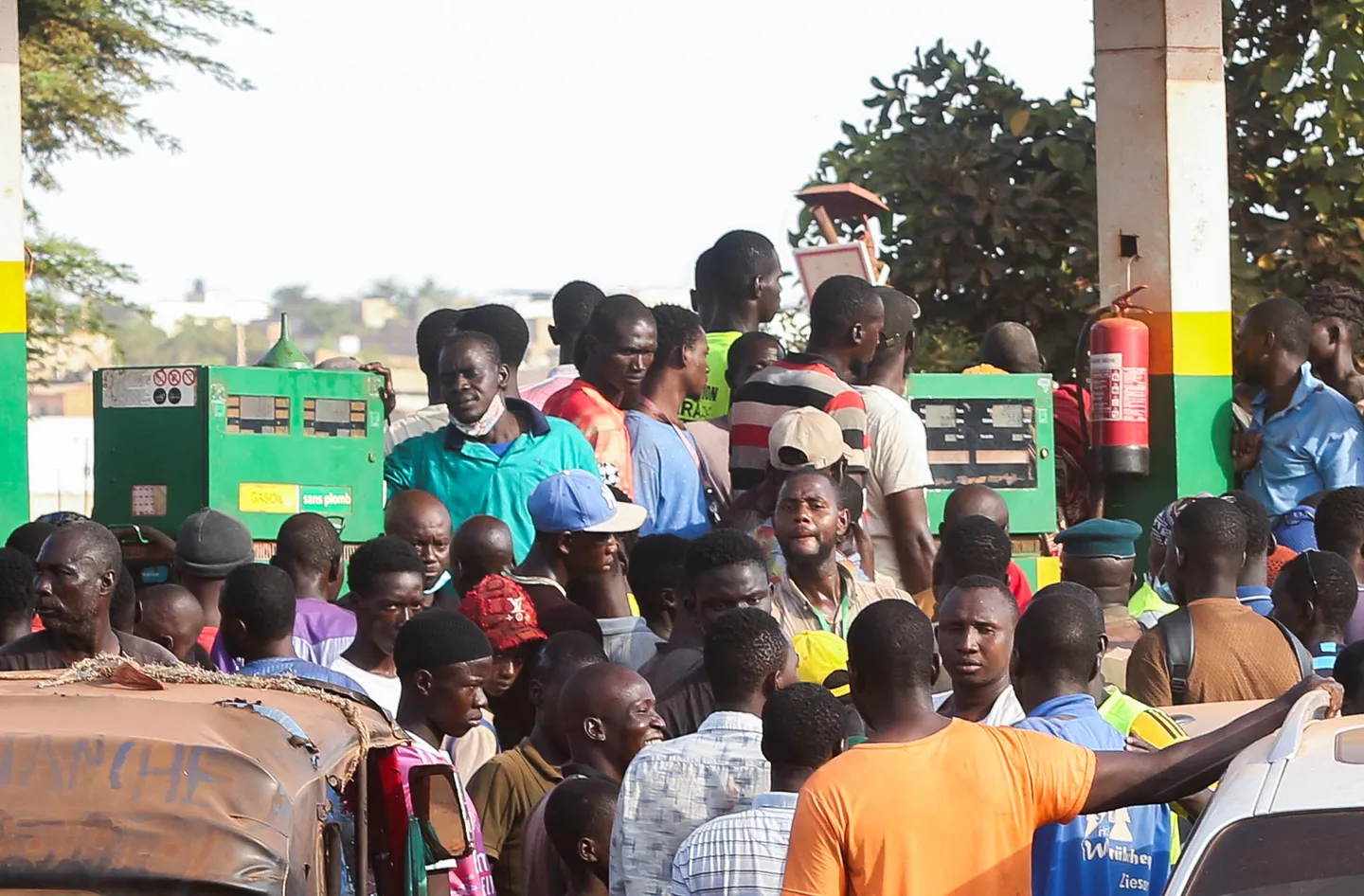
The African Union (AU) has called for an urgent international effort to tackle Mali’s rapidly deteriorating security situation, as Al Qaeda-linked militants tighten control over key supply routes and impose a fuel blockade that has crippled daily life in the West African nation.
In a statement released on Sunday, AU Commission Chairperson Mahmoud Ali Youssouf expressed “deep concern over the rapidly deteriorating security situation in Mali, where terrorist groups have imposed blockades, disrupted access to essential supplies, and severely worsened humanitarian conditions for civilian populations.”
He urged greater intelligence-sharing, regional cooperation, and sustained support from the international community to confront the escalating violence across the Sahel region, which has become a stronghold for Islamist insurgents.
The insurgent group Jama’at Nusrat al-Islam wal-Muslimin (JNIM), an affiliate of Al Qaeda, has reportedly blocked fuel imports since September, attacking convoys and oil tankers heading to the capital, Bamako, and other regions.
Read Also: JNIM Attack In Nigeria: First Strike By Al-Qaeda-Linked Group
The blockade has triggered acute fuel shortages, forcing schools, transportation networks, and small businesses to close. According to Reuters, some schools in Bamako only reopened this week after a two-week suspension caused by the lack of fuel.
Diplomatic sources say the situation has prompted the United States, France, Britain, and Italy to advise their citizens to leave Mali, citing security risks and growing instability.
Youssouf also condemned a recent spate of kidnappings, urging the immediate release of three Egyptian nationals abducted by armed groups.
JNIM has long targeted foreign nationals to fund its operations through ransom payments. In October, Reuters reported that a deal was struck to free two citizens of the United Arab Emirates in exchange for a ransom of roughly $50 million, highlighting the lucrative nature of hostage-taking in the region.
The AU’s appeal follows growing fears that JNIM could extend its influence beyond northern and central Mali, potentially threatening neighboring Niger and Burkina Faso, both of which have faced recent military coups and increased militant activity.
Since the withdrawal of French and UN peacekeeping forces, Mali’s military-led government has struggled to contain jihadist violence that has displaced millions and killed thousands. The AU and Western governments have warned that without coordinated regional action, the crisis could further destabilize the Sahel.
“We cannot afford to let Mali slide deeper into chaos,” Youssouf said, emphasizing the need for a unified counterterrorism approach across the region.
Humanitarian agencies continue to warn of worsening conditions, with fuel shortages hampering the delivery of food, medicine, and aid to remote areas. Analysts say that unless the blockade is lifted and supply routes secured, economic paralysis and food insecurity could intensify in the coming weeks.