
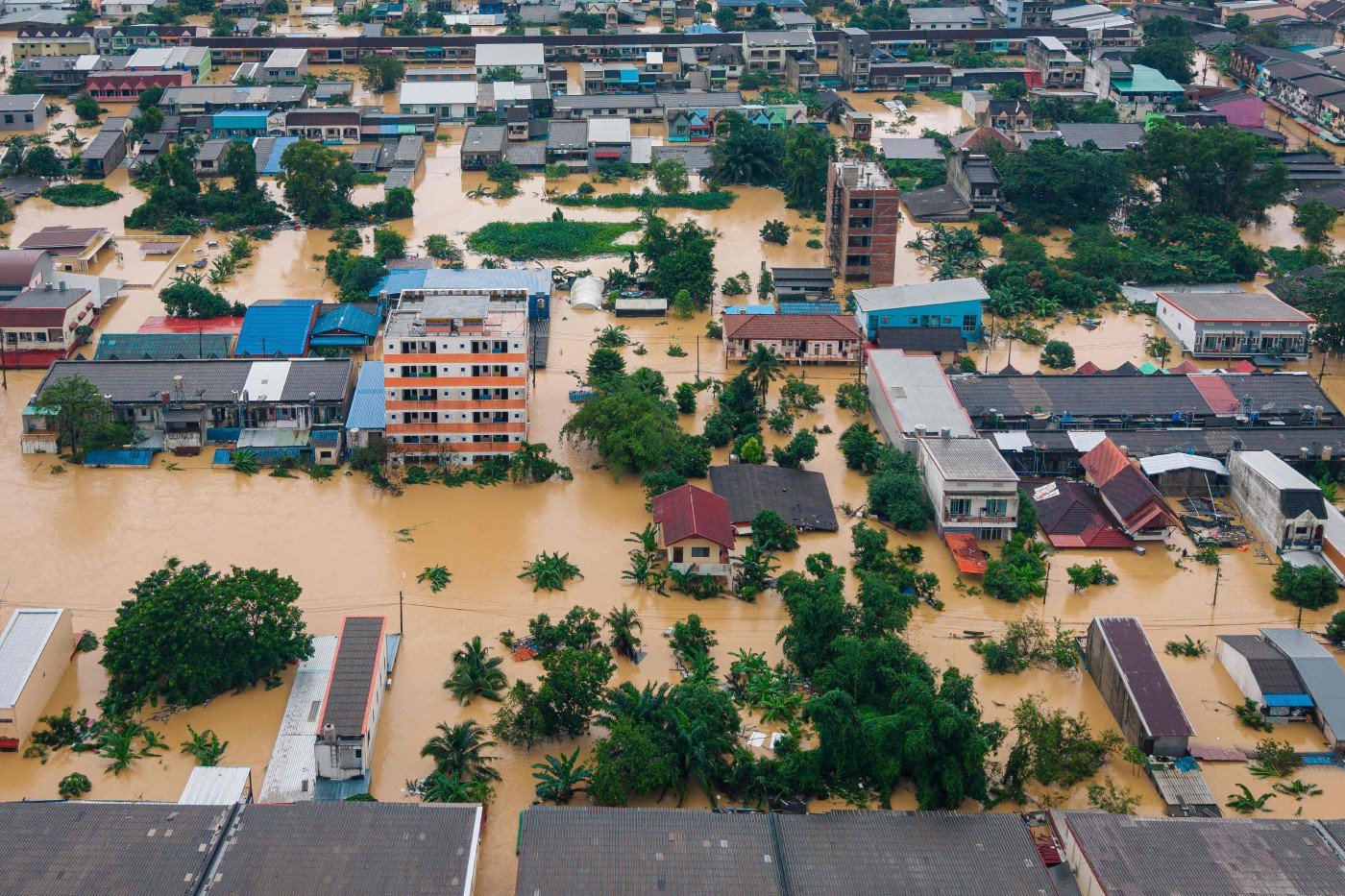
Storms batter Indonesia, Sri Lanka, Thailand and Malaysia, leaving more than 1,000 dead and triggering mass evacuations as rescue teams race against rising waters.
Severe storms sweeping across Asia have unleashed catastrophic flooding and landslides that have killed more than 1,000 people and left entire communities isolated as emergency workers struggle to reach survivors.
The devastation spans four countries—Indonesia, Sri Lanka, Thailand and Malaysia—where days of relentless rain, fueled by powerful cyclones and monsoon systems, have inundated towns, destroyed homes and forced mass evacuations.
Indonesia has suffered the gravest impact, with at least 502 people confirmed dead and hundreds more missing after Cyclone Senyar triggered destructive landslides across Sumatra. Entire villages were swallowed by mud and debris as swollen rivers burst their banks, leaving rescue teams to navigate blocked roads and washed-out bridges. Helicopters have been deployed to drop supplies into remote areas where stranded families reported looting as food shortages grew.
Sri Lanka is facing one of its worst natural disasters in recent memory after Cyclone Ditwah swept across the island, killing at least 355 people and leaving nearly 400 missing. President Anura Kumara Dissanayake described the crisis as the most challenging nationwide rescue effort the country has ever confronted. Relief groups in Colombo are delivering thousands of hot meals by boat, while authorities warn that further landslides remain possible even as the weather clears.
Read Also: Deadly Storms Sweep Asia, Over 600 Dead And Hundreds Missing
In southern Thailand, 176 people have died and almost three million have been affected by torrential rainfall that produced once-in-centuries flood levels in the city of Hat Yai. Entire neighborhoods were submerged, including a maternity unit temporarily cut off by rising waters. Military helicopters have been flying oxygen tanks and emergency supplies into communities still unreachable by road.
Malaysia has reported two deaths and widespread displacement after the same weather system swept across its northern regions. More than 34,000 people were evacuated from low-lying areas, and rescue teams continue to assist elderly residents trapped by fast-moving floodwaters.
Meteorologists say the simultaneous storms were intensified by the interaction of Typhoon Koto in the Philippines and the unusual formation of Cyclone Senyar in the narrow Malacca Strait, leaving over 200 people dead and over 127 missing. While the precise influence of climate change on these specific events will take time to assess, scientists agree that warmer seas and wetter atmospheres are increasing the likelihood of extreme rainfall across Southeast Asia.
Governments across the region are now shifting from rescue operations to recovery, warning that rebuilding efforts may take months as communities confront the scale of the destruction.