
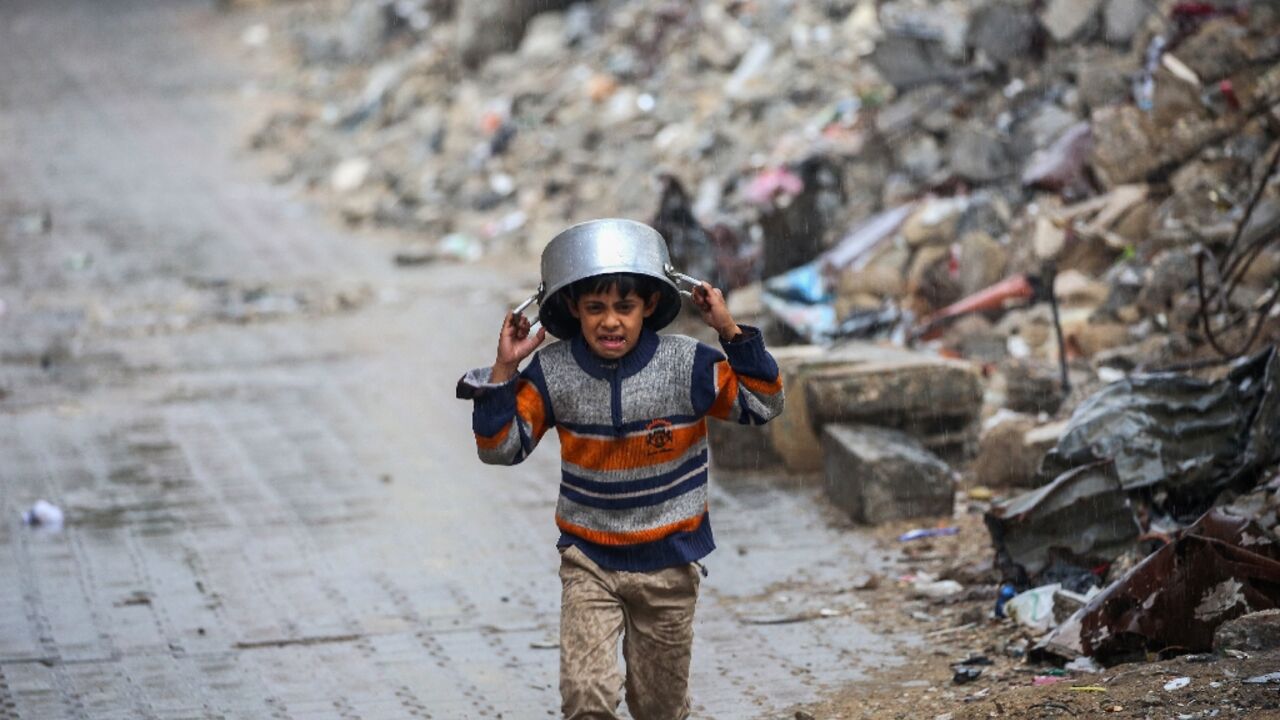
After a night soaked through by merciless rain, a brief patch of sunlight gave Arafat al Ghandour and his wife, Nour, a momentary sense of relief inside the displacement camp in Deir el Balah. Their relief did not last long. The storm had already turned their fragile shelter into a swamp, and another round of rain was expected.
The couple and their five children live inside a thin, battered tent filled with holes. They share the same cramped eight square metre space with ten other relatives, including Arafat’s elderly parents and his siblings’ families. The tent leaks from every corner, and the family spent the entire night plugging gaps with scraps of cloth and nylon.
By sunrise, they rushed to drag out their soaked belongings, spreading clothes and blankets across the muddy ground in an effort to dry anything they could. Nour said she awoke to the sensation of water rushing under the sleeping children. She pulled them up one by one, trying to keep them from becoming even more drenched. Winter, once a season she loved, now fills her with dread because the tents offer no protection.
She says journalists repeatedly film their situation, but nothing improves. “Would anyone accept living like this? Facing winter in a place that barely functions as a shelter?” she asked, pointing to the torn fabric around her.
Read also: Gaza Plan Phase Two “Close,” Netanyahu Says
Arafat has been without work for two years and cannot afford basic needs, let alone a better tent. He says decent tents cost the equivalent of several hundred dollars, far beyond reach for displaced families. Even tarpaulins are sold at prices no one in the camp can manage. “These things should be given to us, not sold,” he said, frustrated that the promised caravans and sturdier shelters never arrive.
Not far from their tent, sixty six year old Basma al Sheikh Khalil stood watching sewage wash through the narrow paths. She said her grandchildren trembled through the night from the cold and the fear. Rainwater flooded their tent, mixing with an overflowing cesspool and leaving blankets soaked in sewage. A shallow pit covered with scraps functions as their toilet. Basma says the situation has dragged on for years with no relief in sight.
Whether under scorching summer heat or freezing winter rain, families like Arafat’s and Basma’s say life in the camp has become a cycle of exhaustion, hunger, and displacement, with no season offering comfort and no sign of stability ahead.