
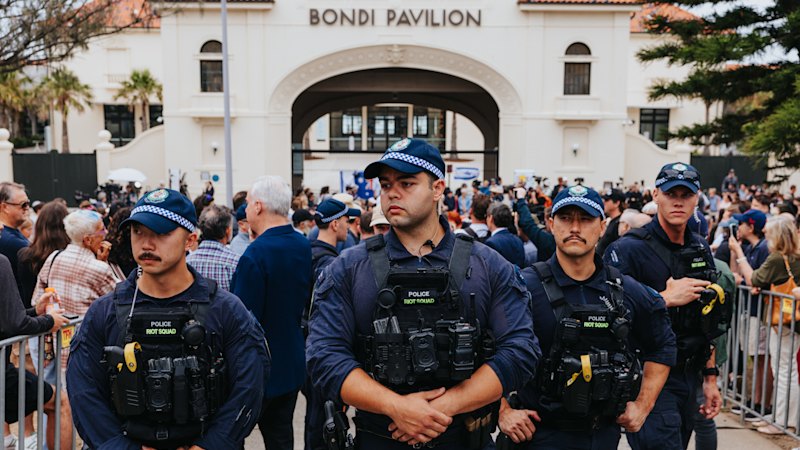
The Australian state of New South Wales has moved to fast-track sweeping new gun control and protest laws in the aftermath of the deadly Bondi shopping center attack, triggering sharp criticism from civil liberties groups and gun owners who warn the measures risk overreach.
The NSW parliament was recalled on Monday to debate the package of reforms, which includes limits on firearm ownership, expanded police powers during protests, and a proposed ban on the phrase “globalise the intifada.” Premier Chris Minns said the legislation was necessary to protect public safety, even as opponents argue it threatens democratic freedoms.
Premier Minns acknowledged the laws may be controversial but said they respond to rising concerns over public safety and social cohesion following the Bondi shooting, which left 15 people dead.
Addressing the proposed ban on the use of the phrase “globalise the intifada” at protests, Minns said the slogan has increasingly been used in ways that promote division and incite violence. “I do believe it leads to a culture and environment of heightened disunity,” he said, describing it as “an invitation to violence” when used in Australia.
The term “intifada” originated during the 1987 Palestinian uprising against Israeli occupation of the West Bank and Gaza Strip. While some interpret it as a call for violence against Jewish people, others describe it as a symbol of resistance, including nonviolent protest.
In the wake of the Bondi attack, leaders within Australia’s Jewish community accused authorities of failing to adequately address a rise in antisemitism, intensifying pressure on the government to act.
Under the proposed legislation, police would gain broader authority to restrict protests near places of worship and impose tougher penalties for violations. Officers would also be permitted to remove face coverings from demonstrators suspected of committing offences during protests, including minor ones—an expansion from current laws that allow removal only following arrest or suspicion of serious crimes.
Civil liberties advocates say the measures undermine fundamental democratic rights. Timothy Roberts, president of the NSW Council for Civil Liberties, said the legislation disregards a recent ruling by the state’s Supreme Court, which found similar “move-on powers” at religious sites breached Australia’s implied constitutional freedom of political communication.
Read Also: Bondi Beach Attack Memorial Marks Week Since Shooting
“Religious institutions exercise significant and overt political power in Australian politics, which makes them legitimate sites of protest,” Roberts said. He described the laws as “an affront to our right to assemble and communicate,” warning they would “damage our democracy.”
The reforms would also introduce a cap on firearm ownership in NSW, limiting most license holders to four guns. Exceptions would apply to farmers and sport shooters, who could own up to ten. Gun license renewals would be shortened from every five years to every two years, and the government would review the types of firearms available to civilians.
The changes follow similar gun ownership caps introduced in Western Australia earlier this year. Other Australian states currently impose no such limits.
One of the attackers involved in the Bondi shooting, Sajid Akram, was legally registered to own six firearms.
Mark Banasiak, a lawmaker from the Shooters, Fishers and Farmers Party, criticized the reforms, saying law-abiding gun owners were being unfairly targeted. “Our 260,000 license holders are being punished and made a scapegoat for agency failings,” he said, adding that deeper social divisions were being ignored.
Not all reaction has been negative. Walter Mikac, whose wife and two daughters were killed in Australia’s deadliest mass shooting in Tasmania in 1996, said the reforms would close critical loopholes in existing gun laws. “These changes put community safety first,” he said.
David Ossip, president of the NSW Jewish Board of Deputies, also welcomed the measures, describing the proposed ban on “intifada” chants as a turning point in addressing hate speech. While affirming the importance of protest rights, he said those rights do not extend to concealing identities or calling for violence.