
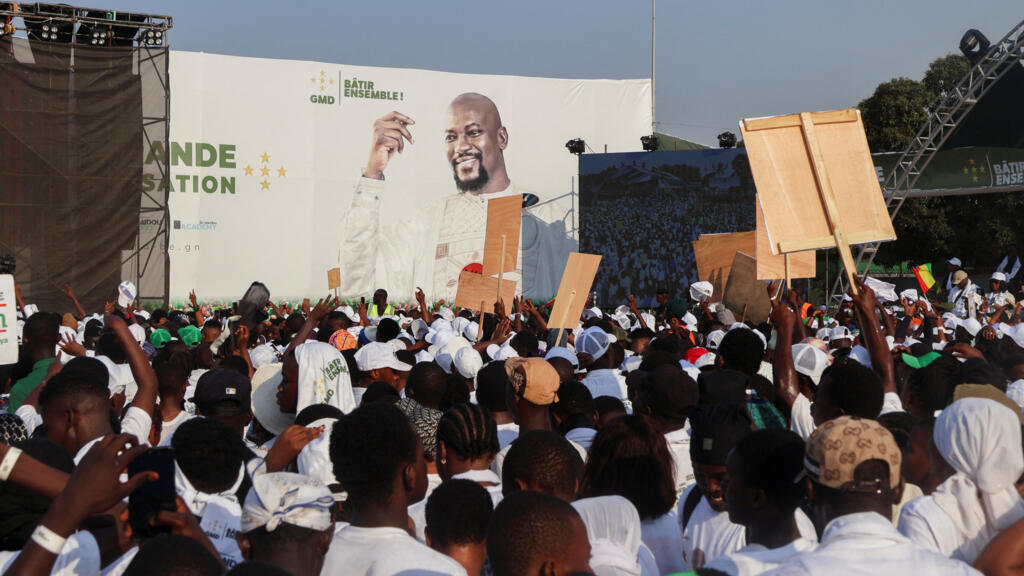
Guinea held a presidential election on Sunday that is widely expected to formalize the rule of Mamady Doumbouya, the military leader who took power in a 2021 coup, as the West African country moves toward an end to its transitional period.
Polling opened early in the capital Conakry and across the country, with voters casting ballots in an election many described as a confirmation rather than a contest. Doumbouya, a former special forces commander believed to be in his early forties, faces eight other candidates in a crowded field with no clear rival. Former president Alpha Condé and longtime opposition figure Cellou Dalein Diallo both remain in exile.
The Guinea presidential election is seen by authorities as the final step in restoring civilian rule after nearly three years of military leadership. Polling stations opened at 7 a.m. local time, with officials reporting only minor delays and small queues in some areas, according to Reuters.
Several voters said the outcome felt inevitable. Moussa Kaba, a shopkeeper in Conakry, said he voted for continuity. He told Reuters that his priority was stability, adding that he supported the current leader because he represents the functioning of the state.
About 6.7 million people are registered to vote. Polls are due to close at 6 p.m., with provisional results expected within two to three days.
Guinea’s vast mineral wealth has played a central role in Doumbouya’s popularity. The country holds the world’s largest known reserves of bauxite and the Simandou range contains one of the richest undeveloped iron ore deposits globally. Production at Simandou was officially launched last month after years of delays, a milestone Doumbouya has repeatedly cited as evidence of progress.
Earlier this year, the government also withdrew the operating license of Guinea Alumina Corporation, a subsidiary of Emirates Global Aluminium, following a dispute over refinery obligations. The assets were transferred to a state owned company, reinforcing a broader shift toward tighter state control of resources.
That approach mirrors policies adopted by military led governments in Mali, Burkina Faso and Niger and has resonated with younger voters. Guinea’s median age is about 19. Mohamed Kaba, a mechanic in Conakry, said Doumbouya represents a generational break. He told Reuters that many young people see him as a way to move beyond the entrenched political class, even as concerns about corruption persist.
Read Also: Guinea Election: Mamady Doumbouya Poised For Decisive Win
Analysts caution that the vote may further entrench military influence. Benedict Manzin, lead Middle East and Africa analyst at risk consultancy Sibylline, said Doumbouya is likely to use an electoral mandate to strengthen his hold on power and position allies to benefit from the expected economic growth tied to Simandou.
A transition charter adopted after the 2021 coup initially barred junta members from running for office. That restriction was removed in September after voters overwhelmingly approved a new constitution. The revised charter also extended presidential terms to seven years and established a Senate.
With ballots now cast, attention will shift to announcement of results and how Guinea’s new political order takes shape.