
When Forfeiture Leads Somewhere Else: Comparative Case Law and the Exception That Was Made
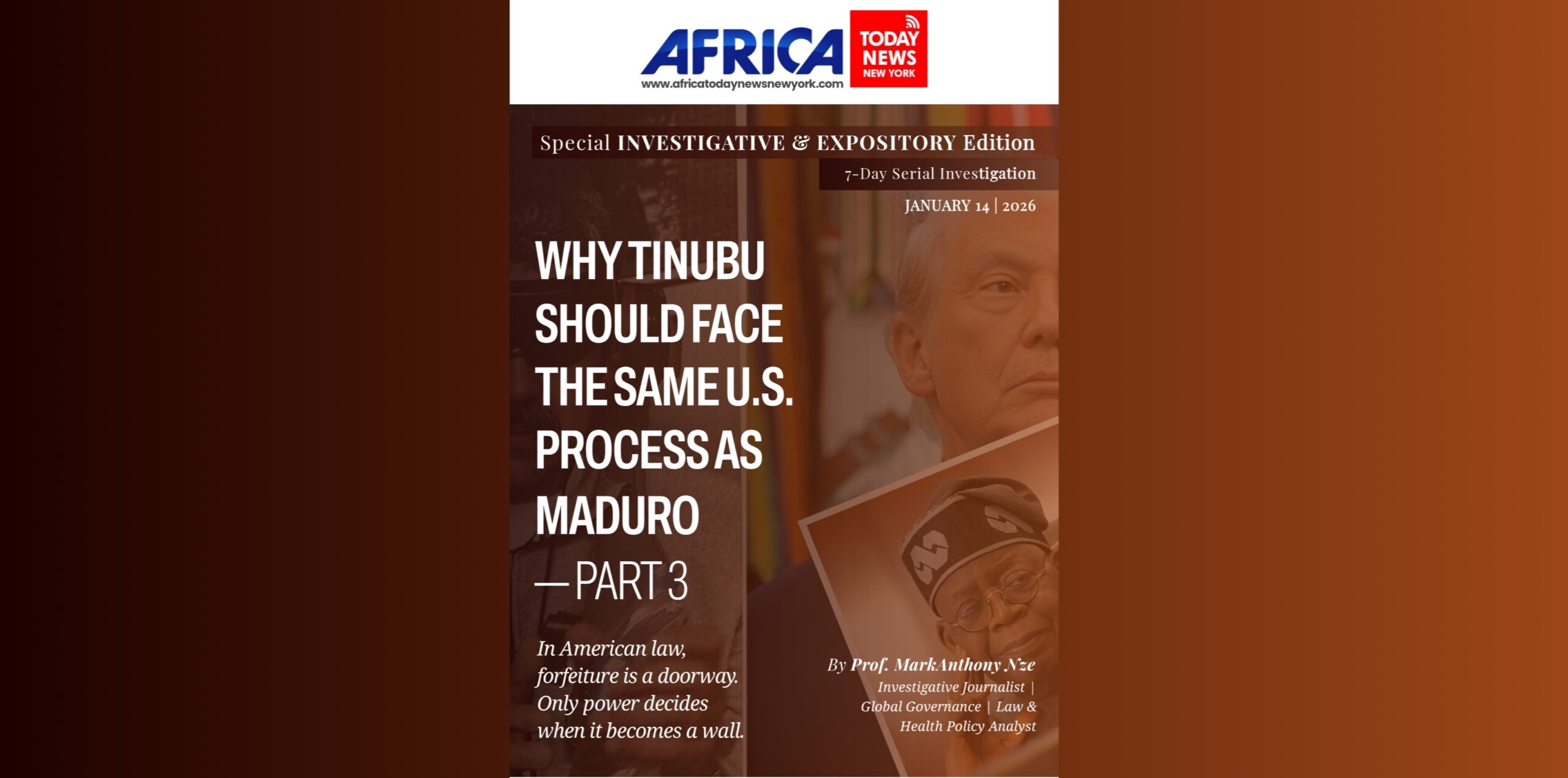
In American law, forfeiture is a doorway. Only power decides when it becomes a wall.
Forfeiture as a Threshold, Not an Ending
Civil forfeiture in the United States is not a terminal legal action. It is a provisional enforcement mechanism designed to preserve assets while the government determines whether civil adjudication or criminal prosecution should follow. The governing statutory framework makes this explicit. 18 U.S.C. § 983 establishes forfeiture as a process embedded within broader enforcement obligations, not as a substitute for resolution (U.S. Code, n.d.).
This understanding is reinforced by institutional analysis. The Congressional Research Service (2023) describes civil forfeiture as an adjunct to criminal enforcement, emphasizing that once probable cause is asserted and property is seized, the government is expected to pursue adjudication, escalation, or formal closure. The framework does not contemplate indefinite suspension or silent abandonment.
Judicial Expectations: Forfeiture Must Remain Tethered to Resolution
Federal courts have repeatedly enforced this principle.
In United States v. $405,089.23 in U.S. Currency (2022), the Ninth Circuit held that forfeiture proceedings must remain tethered to an underlying theory of illegality capable of judicial testing. The court emphasized that once the government acts on probable cause, it assumes a duty to proceed coherently—either by substantiating its allegations or relinquishing the property. Forfeiture, the court made clear, cannot function as a legal holding pattern.
A similar position was taken in United States v. $124,700 in U.S. Currency (2020). There, the district court required the government to demonstrate a clear nexus between the seized funds, the alleged criminal activity, and the statutory basis for forfeiture. The court rejected the notion that seizure alone could justify prolonged inaction, reaffirming that forfeiture demands evidentiary follow-through.
Reviewability as a Core Enforcement Obligation
Earlier appellate jurisprudence reinforces this requirement of continuity. In United States v. Batato (2016), the Fourth Circuit emphasized that enforcement actions must remain reviewable and accountable. Once coercive legal mechanisms are activated, the court held, the government cannot disengage without explanation. Process, once triggered, carries institutional obligations.
Together, these cases establish a consistent procedural norm: forfeiture initiates responsibility.
Read also: Why Tinubu Should Face The Same U.S. Process As Maduro—Part 2
Heightened Duties in Narcotics and Money-Laundering Cases
That responsibility becomes more pronounced when forfeiture is tied to narcotics and money-laundering statutes. The Department of Justice (2023) describes forfeiture in such cases as an early enforcement step, frequently preceding or accompanying criminal investigation and prosecution. The DOJ’s Asset Forfeiture Policy Manual makes clear that forfeiture is intended to disrupt criminal enterprises—not to replace criminal accountability where evidence supports escalation.
In practice, when the government believes conduct is serious, it does not remain in civil court.
Full Escalation in Practice: The Maduro Precedent
This enforcement pattern is visible in international prosecutions involving foreign political figures. When federal authorities determine that evidence supports escalation, the process becomes unmistakably public. Investigations are sealed, indictments prepared, and charges unsealed when prosecutors are ready.
The prosecution of Nicolás Maduro illustrates this pathway. According to official DOJ statements, the case progressed from investigation to indictment to arrest warrants under narcotics and money-laundering statutes (Department of Justice, 2020). The government did not rely on unresolved civil actions. It invoked criminal jurisdiction and subjected its allegations to judicial scrutiny.
The significance of this comparison is procedural, not personal.
Explaining Divergence: Why the Law Alone Is Insufficient
The same statutory tools—narcotics conspiracy, money laundering, forfeiture—were available in other matters. Yet the procedural outcomes diverged. In one instance, the legal process advanced visibly. In another, it did not.
One explanation sometimes offered for such divergence is evidentiary insufficiency. But forfeiture itself undermines that claim. Probable cause, according to the Administrative Office of the U.S. Courts (2022), is the constitutional threshold that authorizes seizure, arrest, and search. When asserted in a verified forfeiture complaint, it represents a sworn determination that evidence meets a defined legal standard.
Courts have consistently recognized that probable cause sufficient to justify forfeiture under narcotics-linked statutes reflects more than conjecture. It reflects evidence warranting continued investigation and, where corroborated, criminal review.
The Limits of Prosecutorial Discretion
Another explanation often invoked is prosecutorial discretion. Discretion exists, but it is not unlimited. Scholarly analysis shows that once the government has seized property and invoked serious criminal statutes, unexplained abandonment undermines the legitimacy of the enforcement regime itself (Carpenter II, 2023).
Oversight findings reinforce this conclusion. The Office of the Inspector General (2021) audit of the DOJ’s forfeiture program highlights that unresolved forfeiture actions weaken program integrity and raise concerns about uneven enforcement. Transparency and traceability, the audit emphasizes, are essential safeguards against selective application of power.
Structural Inequality and the Credibility Cost of Selective Enforcement
Academic scholarship further sharpens the critique. Didwania (2025) describes how inconsistent forfeiture outcomes contribute to systemic legitimacy deficits, particularly when powerful actors appear insulated from full legal process. The issue is not merely fairness; it is institutional credibility.
These concerns resonate globally. Transparency International (2022) describes how selective enforcement of financial-crime statutes erodes deterrence and public trust, transforming law into an instrument of convenience rather than principle.
Unfinished Process as a Signal, Not an Outcome
Against this backdrop, unresolved forfeiture actions acquire significance beyond their immediate facts. They become signals—of deviation, not of innocence.
This does not establish guilt. Courts do that.
It establishes departure from the standard process.
And in systems governed by law, departure demands explanation.
Professor MarkAnthony Ujunwa Nze is an internationally acclaimed investigative journalist, public intellectual, and global governance analyst whose work shapes contemporary thinking at the intersection of health and social care management, media, law, and policy. Renowned for his incisive commentary and structural insight, he brings rigorous scholarship to questions of justice, power, and institutional integrity.
Based in New York, he serves as a full tenured professor and Academic Director at the New York Center for Advanced Research (NYCAR), where he leads high-impact research in governance innovation, strategic leadership, and geopolitical risk. He also oversees NYCAR’s free Health & Social Care professional certification programs, accessible worldwide at:
https://www.newyorkresearch.org/professional-certification/
Professor Nze remains a defining voice in advancing ethical leadership and democratic accountability across global systems.
Selected Sources (APA 7th Edition)
Carpenter II, D. M. (2023). Generating revenue through civil forfeiture. New York University Law Review, 98, 205–240.
https://www.nyulawreview.org/wp-content/uploads/2023/05/NYULawReview-Volume98-Carpenter.pdf
Department of Justice. (2020). Justice Department announces charges against Nicolás Maduro and other Venezuelan officials.
https://www.justice.gov/opa/pr/justice-department-announces-charges-against-nicolas-maduro
Department of Justice. (2023). Asset forfeiture policy manual.
https://www.justice.gov/afp/asset-forfeiture-policy-manual-2023
Didwania, S. H. (2025). Asset forfeiture and inequality. Stanford Law Review, 77(1), 159–210.
https://review.law.stanford.edu/wp-content/uploads/sites/3/2025/01/Didwania-77-Stan.-L.-Rev.-159.pdf
Electronic Privacy Information Center. (2023). Glomar responses and FOIA litigation.
https://epic.org/issues/open-government/glomar/
Harvard Law Review. (2020). Civil asset forfeiture and the Constitution. Harvard Law Review, 133(6), 1749–1772.
https://harvardlawreview.org/print/vol-133/civil-asset-forfeiture-and-the-constitution/
Office of the Inspector General, U.S. Department of Justice. (2021). Audit of the Department of Justice asset forfeiture program.
https://oig.justice.gov/reports/audit-department-justice-asset-forfeiture-program
Pozen, D. E. (2019). Freedom of information beyond the Freedom of Information Act. University of Pennsylvania Law Review, 165(5), 1097–1158.
https://scholarship.law.upenn.edu/penn_law_review/vol165/iss5/1/
Transparency International. (2022). Exporting corruption: Enforcement of foreign bribery laws.
https://www.transparency.org/en/publications/exporting-corruption-2022
United States v. $124,700 in U.S. Currency, 458 F. Supp. 3d 1030 (D. Ariz. 2020).
https://law.justia.com/cases/federal/district-courts/arizona/azdce/4:2019cv08250/1168948/34/
United States v. $405,089.23 in U.S. Currency, 33 F.4th 1021 (9th Cir. 2022).
https://law.justia.com/cases/federal/appellate-courts/ca9/20-55514/20-55514-2022-05-09.html
United States v. Batato, 833 F.3d 413 (4th Cir. 2016).
https://law.justia.com/cases/federal/appellate-courts/ca4/14-4753/14-4753-2016-08-03.html
U.S. Code. (n.d.). 18 U.S.C. § 983 – General rules for civil forfeiture proceedings. Legal Information Institute.
https://www.law.cornell.edu/uscode/text/18/983
U.S. Congress, Congressional Research Service. (2023). Crime and forfeiture: Legal overview.
https://crsreports.congress.gov/product/pdf/R/R43890
U.S. Courts. (2022). Probable cause. Administrative Office of the U.S. Courts.
https://www.uscourts.gov/glossary/probable-cause