
Reading the File: What the Forfeiture Complaint Actually Does—and Demands
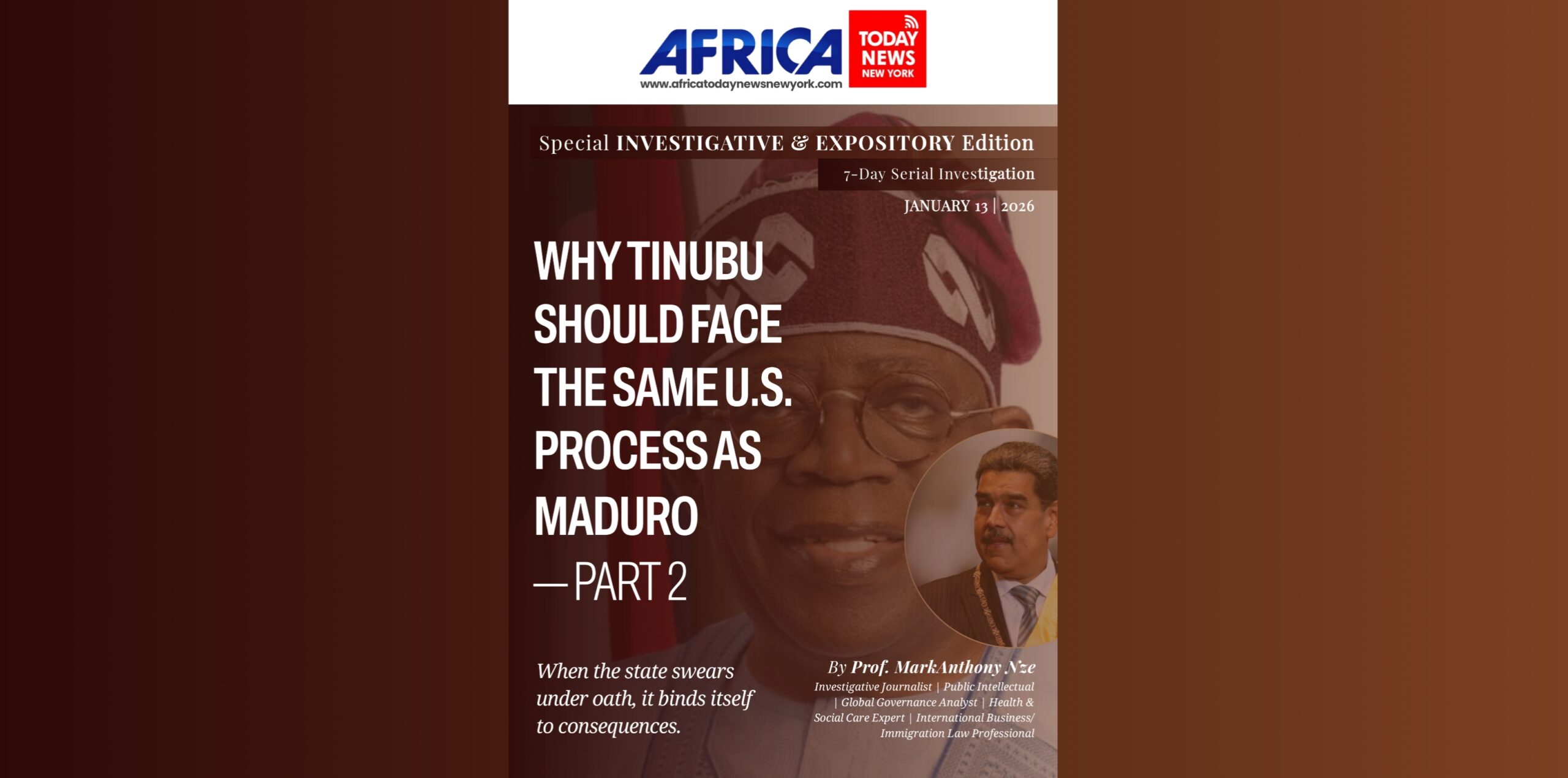
When the state swears under oath, it binds itself to consequences.
Why a Forfeiture Complaint Is Not a Gesture
A civil forfeiture complaint is not a trial brief. It is not a warning shot. It is not a press release. It is the moment at which the United States government tells a federal court—formally, verifiably, and under oath—that it possesses enough evidence to justify the seizure of property because that property is believed to be connected to serious criminal conduct.
This matters because U.S. law is conservative about such declarations. The government does not lightly assert probable cause tied to narcotics trafficking and money laundering. To do so requires internal vetting, prosecutorial authorization, and confidence that the filing can withstand judicial scrutiny. According to the U.S. Department of Justice, forfeiture is an enforcement tool reserved for situations where investigators believe financial assets are traceable to specified unlawful activity, particularly narcotics offenses that operate across borders and financial systems (Department of Justice, 2023).
In other words, forfeiture is not ambiguity. It is institutional commitment.
The forfeiture complaint associated with Bola Ahmed Tinubu therefore cannot be dismissed as incidental or misunderstood. Its existence signals that U.S. authorities once believed—at minimum—that evidentiary thresholds had been crossed. Not that guilt had been proven, but that suspicion had matured into legally actionable form.
What the Government Must Prove to File at All
Under the Civil Asset Forfeiture Reform Act (CAFRA), the government bears the burden of alleging facts sufficient to establish probable cause that seized property is connected to a specified unlawful activity. Probable cause is not a vague standard. It is the same constitutional threshold that justifies arrests and searches throughout the American legal system. According to the Administrative Office of the U.S. Courts, it requires a factual basis that would lead a reasonable person to believe a crime has occurred and that the property is linked to it (U.S. Courts, 2022).
CAFRA tightened—not loosened—these requirements. It was enacted precisely to prevent arbitrary seizures and to ensure that forfeiture proceedings are tethered to real evidence and real accountability. According to congressional and DOJ guidance, forfeiture complaints must articulate a coherent theory of illegality, identify the statutory basis for seizure, and outline how the property in question is traceable to the alleged criminal conduct (Department of Justice, 2023).
This framework leaves little room for improvisation. A forfeiture complaint is drafted with future scrutiny in mind—by judges, defense counsel, and potentially grand juries.
Why Narcotics and Money-Laundering Statutes Change Everything
The statutes invoked in a forfeiture action matter. They are not interchangeable. When the government relies on narcotics-linked money-laundering provisions, it is asserting something qualitatively different from a technical banking violation or paperwork offense.
Money-laundering statutes are designed to capture the financial residue of serious crime. They assume an underlying offense—often narcotics trafficking—and focus on how illicit proceeds are moved, concealed, or integrated into legitimate financial systems. According to DOJ enforcement policy, these statutes are central to dismantling transnational criminal networks because they follow money rather than individuals (Department of Justice, 2023).
Thus, when such statutes are invoked in a forfeiture complaint, the implication is not marginal suspicion. It is that investigators believed they were confronting proceeds of serious criminal activity with international dimensions.
That belief, once sworn, carries procedural consequences.
Forfeiture Is Supposed to Go Somewhere
One of the most persistent misconceptions about civil forfeiture is that it is an endpoint. It is not. In practice, forfeiture is often an early step—a mechanism for freezing assets while investigations mature. According to DOJ policy manuals and Inspector General audits, forfeiture commonly feeds into broader criminal inquiries, including grand jury review and potential indictments, especially in narcotics-related cases (Office of the Inspector General, 2021; Department of Justice, 2023).
Where forfeiture does not escalate, it still resolves. Property is forfeited uncontested, returned, or disposed of through settlement or judicial decision. What does not ordinarily happen is silence.
Process leaves traces. Even dismissal leaves a record.
The absence of a clear, publicly documented resolution in this matter therefore raises a narrow but serious procedural question: Was the legal pathway completed in a manner consistent with standard U.S. practice, or was it interrupted without explanation?
Silence Is Not a Legal Outcome
In American law, silence is not neutral. It is not benign. It is a condition that requires justification.
According to legal scholarship on prosecutorial discretion, while the government retains broad authority to prioritize cases, that discretion is bounded by transparency where formal enforcement actions have already been taken. Decisions not to proceed are ordinarily documented, especially where property has been seized and statutes invoking serious criminal conduct have been activated (Shiner, 2018).
When those explanations are absent, the issue is no longer prosecutorial judgment. It is procedural opacity.
Opacity matters because it undermines the credibility of the enforcement regime itself. According to Transparency International, the legitimacy of anti-money-laundering systems depends not merely on enforcement power, but on consistent application across political and geopolitical contexts (Transparency International, 2022).
Read also: Why Tinubu Should Face The Same U.S. Process As Maduro—Part 1
Why Comparison Is Methodologically Unavoidable
Comparison is not an accusation. It is a tool of institutional analysis.
When the United States chooses to pursue a foreign political figure for narcotics-related conduct, it does so visibly. It files indictments. It unseals charges. It creates a public procedural arc that invites judicial testing. According to official DOJ announcements, the handling of Nicolás Maduro exemplifies full activation of U.S. criminal process: investigation, indictment, arrest warrants, and open prosecution (Department of Justice, 2020).
The divergence between that pathway and the unresolved trajectory of the Tinubu forfeiture matter is not a moral judgment. It is a mechanical observation. The same legal system produced radically different procedural outcomes.
That divergence demands explanation.
What the Complaint Demands of the Law
A forfeiture complaint does not merely accuse. It obligates.
By filing it, the United States obligated itself to either (a) carry the matter forward through recognized legal channels, or (b) close it transparently with documented reasons. According to CAFRA’s structure and DOJ policy, abandonment without explanation is not contemplated as a legitimate endpoint (Department of Justice, 2023).
This is why the existence of the complaint remains legally consequential decades later. It is not a historical curiosity. It is an unresolved trigger.
Why This Matters Now
The reopening of this issue through modern FOIA litigation emphasizes that the unresolved process does not expire quietly. According to contemporary FOIA jurisprudence, courts are increasingly skeptical of broad secrecy claims—such as Glomar responses—where the underlying matter involves acknowledged enforcement activity rather than speculative intelligence (Pozen, 2019; Electronic Privacy Information Center, 2023).
A federal judge’s decision to compel U.S. agencies to lift Glomar silence confirms that this matter remains legally cognizable. The law has not forgotten it. It has merely deferred explanation.
What This Part Establishes
This part establishes a precise, defensible proposition: the forfeiture complaint is not ambiguous, not casual, and not procedurally inert. It reflects a moment when U.S. authorities believed the legal threshold for narcotics-linked financial enforcement had been met.
What followed—or failed to follow—is not a question of rumor. It is a question of record.
Part 3 will examine how forfeiture functions in comparable cases and why, under U.S. practice, it is ordinarily a gateway rather than a graveyard. Only then can the question of equal process be addressed without conjecture.
Because in systems governed by law, the most dangerous thing is not accusation.
It is an unfinished procedure.
Professor MarkAnthony Ujunwa Nze is an internationally acclaimed investigative journalist, public intellectual, and global governance analyst whose work shapes contemporary thinking at the intersection of health and social care management, media, law, and policy. Renowned for his incisive commentary and structural insight, he brings rigorous scholarship to questions of justice, power, and institutional integrity.
Based in New York, he serves as a full tenured professor and Academic Director at the New York Center for Advanced Research (NYCAR), where he leads high-impact research in governance innovation, strategic leadership, and geopolitical risk. He also oversees NYCAR’s free Health & Social Care professional certification programs, accessible worldwide at:
https://www.newyorkresearch.org/professional-certification/
Professor Nze remains a defining voice in advancing ethical leadership and democratic accountability across global systems.
Selected Sources (APA 7th Edition)
Carpenter II, D. M. (2023). Generating revenue through civil forfeiture. New York University Law Review, 98, 205–240.
https://www.nyulawreview.org/wp-content/uploads/2023/05/NYULawReview-Volume98-Carpenter.pdf
Department of Justice. (2020). Justice Department announces charges against Nicolás Maduro and other Venezuelan officials.
https://www.justice.gov/opa/pr/justice-department-announces-charges-against-nicolas-maduro
Department of Justice. (2023). Asset forfeiture policy manual.
https://www.justice.gov/afp/asset-forfeiture-policy-manual-2023
Didwania, S. H. (2025). Asset forfeiture and inequality. Stanford Law Review, 77(1), 159–210.
https://review.law.stanford.edu/wp-content/uploads/sites/3/2025/01/Didwania-77-Stan.-L.-Rev.-159.pdf
Electronic Privacy Information Center. (2023). Glomar responses and FOIA litigation.
https://epic.org/issues/open-government/glomar/
Harvard Law Review. (2020). Civil asset forfeiture and the Constitution. Harvard Law Review, 133(6), 1749–1772.
https://harvardlawreview.org/print/vol-133/civil-asset-forfeiture-and-the-constitution/
Office of the Inspector General, U.S. Department of Justice. (2021). Audit of the Department of Justice asset forfeiture program.
https://oig.justice.gov/reports/audit-department-justice-asset-forfeiture-program
Pozen, D. E. (2019). Freedom of information beyond the Freedom of Information Act. University of Pennsylvania Law Review, 165(5), 1097–1158.
https://scholarship.law.upenn.edu/penn_law_review/vol165/iss5/1/
Transparency International. (2022). Exporting corruption: Enforcement of foreign bribery laws.
https://www.transparency.org/en/publications/exporting-corruption-2022
United States v. $124,700 in U.S. Currency, 458 F. Supp. 3d 1030 (D. Ariz. 2020).
https://law.justia.com/cases/federal/district-courts/arizona/azdce/4:2019cv08250/1168948/34/
United States v. $405,089.23 in U.S. Currency, 33 F.4th 1021 (9th Cir. 2022).
https://law.justia.com/cases/federal/appellate-courts/ca9/20-55514/20-55514-2022-05-09.html
U.S. Code. (n.d.). 18 U.S.C. § 983 – General rules for civil forfeiture proceedings. Legal Information Institute.
https://www.law.cornell.edu/uscode/text/18/983
U.S. Congress, Congressional Research Service. (2023). Crime and forfeiture: Legal overview.
https://crsreports.congress.gov/product/pdf/R/R43890
U.S. Courts. (2022). Probable cause. Administrative Office of the U.S. Courts.
https://www.uscourts.gov/glossary/probable-cause