
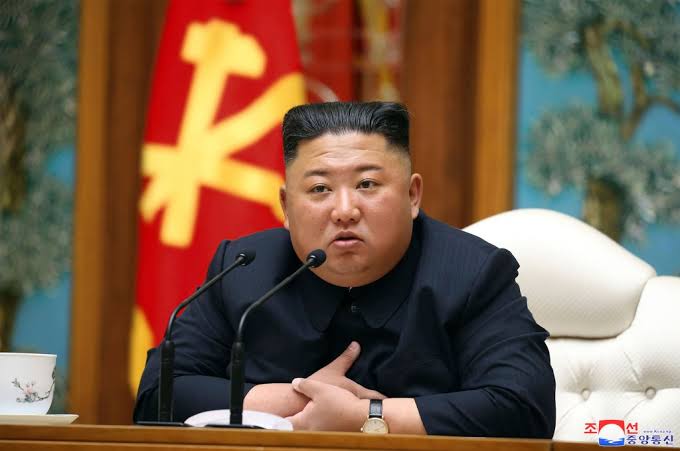
North Korean leader Kim Jong Un has dismissed a senior official responsible for economic policy and openly rebuked party cadres, an uncommon display of public criticism in one of the world’s most secretive political systems. State media framed the episode as a warning shot to the bureaucracy, reflecting Kim’s mounting frustration with economic underperformance as the country approaches a critical political milestone.
The Korean Central News Agency reported that Kim removed Vice Premier Yang Sung-ho during an on site visit to the Ryongsong Machine Complex, where the first phase of a long delayed modernization project was being inaugurated. According to the report, Yang was dismissed immediately, with Kim declaring that he was unfit to be entrusted with major responsibilities. In strikingly blunt language rarely published in North Korean media, Kim compared the appointment to hitching a cart to a goat, stressing that an ox, not a goat, is meant to pull such a burden. The remark underscored both dissatisfaction with Yang’s performance and broader anger over flawed кадров decisions within the party.
Yang, a former machinery industry minister promoted to vice premier to oversee the machinery sector, is also an alternate member of the ruling Workers’ Party’s top leadership body. His sudden removal, without any announcement of a replacement, has added to uncertainty within the economic management structure at a time when North Korea faces persistent sanctions, resource shortages and structural inefficiencies.
Read also: Kim Jong Un Attends New Year Celebrations In Pyongyang
During the same visit, Kim extended his criticism beyond Yang, sharply attacking economic guidance officials he blamed for delays at the Ryongsong complex. He accused them of irresponsibility, rudeness and incompetence, arguing that their failures had obstructed the first stage of the modernization effort. Kim also condemned party members who, he said, had for too long become accustomed to defeatism, passiveness, and a lack of accountability. Such officials, he warned, could hardly be expected to lead the broader task of readjusting the country’s industrial base and upgrading it technologically.
The unusually direct reprimand comes as the Workers’ Party prepares for its Ninth Party Congress, expected to convene soon to outline major policy directions and confirm key appointments. Analysts interpret the episode as a deliberate attempt to tighten discipline and signal that poor performance will not be tolerated in the lead up to the congress.
The dismissal also follows other signs of heightened internal vigilance. South Korean media recently reported that several senior officials responsible for Kim’s personal security were replaced amid concerns about potential threats. While public purges are rare, they echo past episodes in which Kim used visible punishment to enforce loyalty. Observers say such public accountability serves as a shock tactic, reinforcing control and reminding officials that authority ultimately flows from the leader alone.