
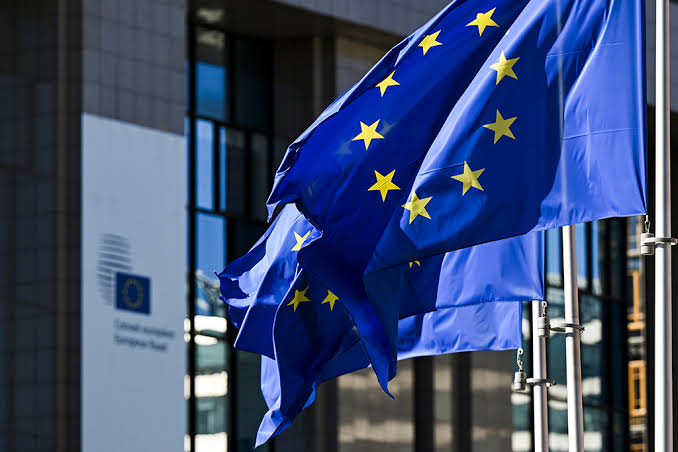
European Union foreign ministers on Thursday approved a fresh round of sanctions on Iran, targeting individuals and entities accused of taking part in a violent crackdown on protesters and providing military support to Russia, according to EU diplomats.
The decision marks another escalation in Europe’s pressure campaign against Tehran, as the bloc also moved closer to formally designating Iran’s Islamic Revolutionary Guard Corps as a terrorist organisation.
The newly adopted measures focus on officials and organisations connected to Iran’s response to months of nationwide protests, as well as those involved in supplying weapons to Russia for use in the war in Ukraine. European officials say the sanctions include asset freezes and travel bans, reinforcing previous penalties imposed over human rights abuses.
EU diplomats told Reuters that the ministers agreed the additional sanctions were necessary to hold Iranian authorities accountable for what the bloc has repeatedly described as excessive use of force against demonstrators.
The protests, sparked last year by the death of Mahsa Amini while in police custody, have drawn sustained international condemnation and triggered multiple waves of European sanctions.
Beyond the sanctions package, foreign ministers were also expected to reach a political agreement to add Iran’s Islamic Revolutionary Guard Corps to the EU list of terrorist organisations. Such a move would place the IRGC in the same category as Islamic State and al Qaeda and would signal a significant shift in Europe’s approach to Iran’s leadership.
Read Also: Gold Breaks $5,500 Ceiling Amid Trump-Iran War Rhetoric
For years, several EU member states had resisted the designation, citing legal and diplomatic concerns. France was among the most cautious voices. That position softened this week when Paris announced it would support the move, opening the door to consensus among the bloc’s 27 member states.
Any formal listing requires unanimous approval, a process diplomats say is now within reach but not yet complete.
The IRGC was established in the aftermath of Iran’s 1979 Islamic Revolution to protect the Shiite clerical system that governs the country. Over time, it has grown into one of the most powerful institutions in Iran, with influence extending across the military, intelligence services, and large sections of the economy.
The force also oversees Iran’s ballistic missile and nuclear programmes and plays a central role in regional operations through allied armed groups across the Middle East.
Read Also: Trump Warns Iran Time Is Running Out On Nuclear Deal
Western governments have long accused the IRGC of destabilizing activities beyond Iran’s borders. The United States designated the group as a foreign terrorist organisation in 2019, a move that sharply raised tensions between Washington and Tehran.
EU officials caution that while the political agreement represents momentum, legal steps remain before the IRGC designation can be finalized. The decision is likely to provoke a strong response from Tehran, which has warned of retaliation if the group is formally listed.
Meanwhile, European leaders say the sanctions reflect a broader strategy of applying sustained pressure while keeping diplomatic channels open on issues such as Iran’s nuclear programme.
Earlier this month, the EU reiterated that it remains committed to preventing Iran from acquiring a nuclear weapon, even as relations continue to deteriorate.