
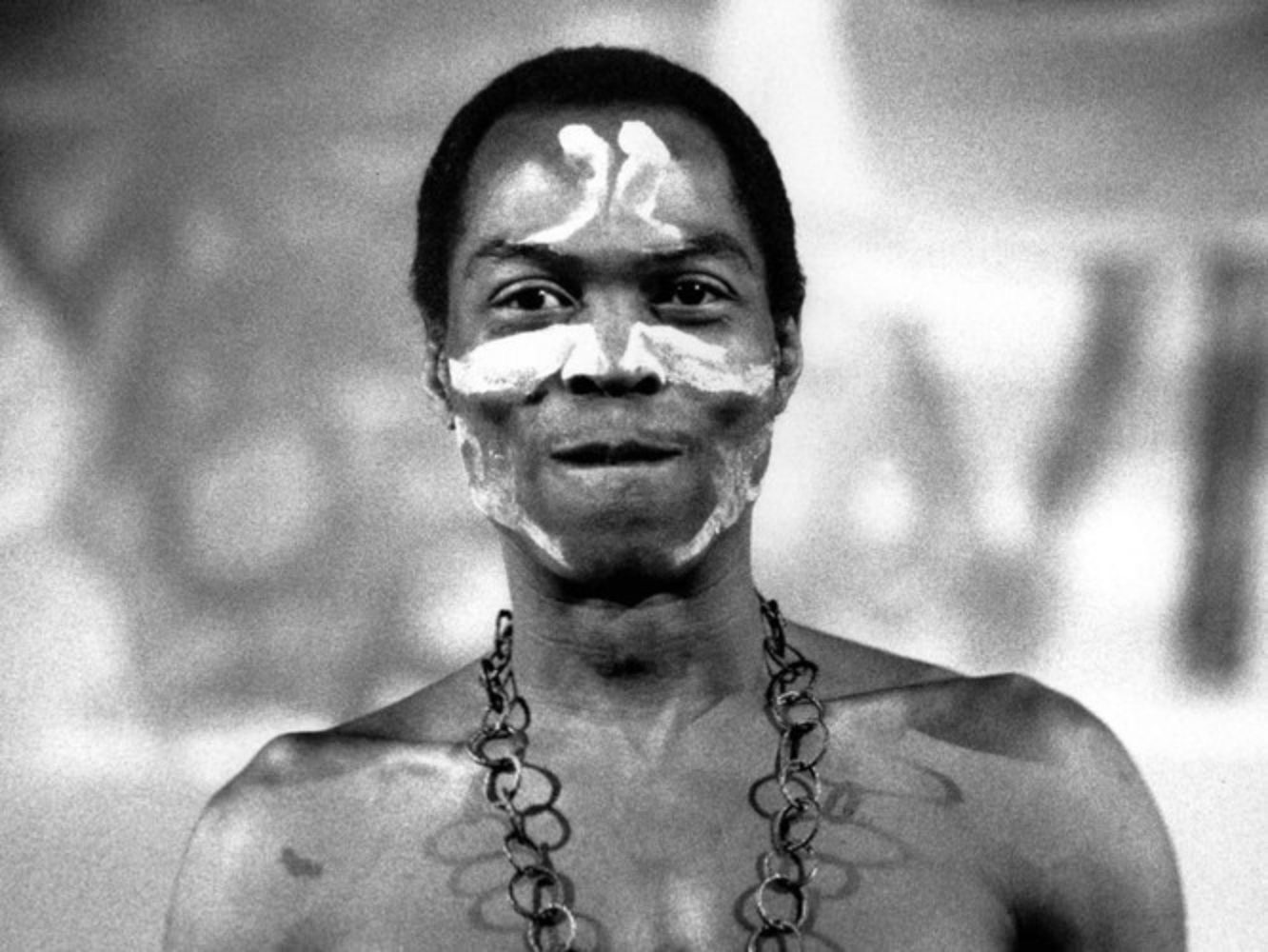
Three decades after his death, Fela Anikulapo Kuti has crossed another historic boundary, becoming the first African artist to receive a Lifetime Achievement Award from the Recording Academy. The honour was announced and conferred in Los Angeles on Saturday night, hours before the 68th Grammy Awards ceremony, placing the late Nigerian musician among a select group of global icons whose influence has outlived their lifetimes.
For Fela’s family, collaborators, and admirers, the moment carried a mix of pride, vindication, and quiet irony. The creator of Afrobeat, a man who spent much of his life railing against Western power structures and cultural gatekeeping, is now being formally recognised by one of the most influential institutions in global music. The award comes long after his passing in 1997, but for many close to his legacy, its timing does not diminish its weight.
“This recognition means a lot to us as a family,” said Yeni Kuti, one of Fela’s daughters, who attended events around the ceremony. She described the honour as overdue, pointing out that her father was never nominated for a Grammy while alive, despite his global reach and influence. For her, the award is welcome, however it also highlights how slowly African artists have been acknowledged on equal terms within international music institutions.
That sentiment was echoed by Lemi Ghariokwu, the celebrated Nigerian visual artist who designed 26 of Fela’s album covers and helped define the iconography of Afrobeat. Ghariokwu described the award as both affirming and revealing, noting that it underscores how much more effort African creatives often have to make to gain the same level of recognition. He admitted he was surprised by the decision, given Fela’s unapologetically anti establishment stance. To him, there is a certain poetic contradiction in seeing a system Fela openly challenged now honouring his life’s work.
Speculation about how Fela himself would have responded to the award remains part of the conversation. Ghariokwu imagines a defiant satisfaction, a raised fist and a declaration that his message could no longer be ignored. Yeni Kuti, however, offers a more restrained view. She insists her father was largely indifferent to awards, driven instead by the desire to communicate with ordinary people and fellow artists. Public applause, she says, mattered far less to him than political awareness and cultural awakening.
Read also: Obama Amplifies Fela Kuti’s Legacy through Fresh Podcast
Other members of the Kuti family share that view. Yemisi Ransome-Kuti, Fela’s cousin and a leading voice in preserving the family’s history, believes he would have seen the award as symbolically important rather than personally meaningful. In her assessment, Fela would have questioned what structural changes might follow such recognition, especially for African thinkers, musicians, and historians who remain marginalised on the global stage.
Born in 1938 in Ogun State to politically active parents, Fela’s path was shaped early by ideas of resistance and African self determination. He travelled to London in the late 1950s intending to study medicine but pivoted to music at Trinity College of Music. There, he began experimenting with sound, blending jazz and highlife before returning to Nigeria and forging what would become Afrobeat, a genre rooted in Yoruba rhythms, funk, soul, and sharp political commentary.
By the 1970s, Fela’s music had become inseparable from his activism. Songs like Zombie and Sorrow, Tears and Blood directly confronted Nigeria’s military rulers, exposing corruption, brutality, and social inequality. His self declared Kalakuta Republic in Lagos became both a creative hub and a symbol of defiance, until it was violently raided by soldiers in 1977, an attack that resulted in the fatal injury of his mother, Funmilayo Ransome-Kuti, a prominent feminist and nationalist.
Read also: Burna Boy To Cover Four Funerals After Stockton Mass Shooting
Despite repeated arrests, beatings, and censorship, Fela refused to soften his message. His performances, often marathon sessions filled with political monologues, turned him into an international emblem of artistic resistance. Amnesty International later recognised him as a prisoner of conscience, and when he died at 58, an estimated one million people flooded the streets of Lagos for his funeral, a testament to his impact far beyond the music industry.
The Recording Academy’s citation for the award acknowledges both sides of that legacy, describing Fela as a musical innovator whose influence spans generations, while also noting his role as a political radical. Contemporary artists across genres, from global pop stars to alternative rock musicians, have cited his work as foundational. Afrobeat’s DNA can be traced through modern Afrobeats, a genre that now dominates African pop culture worldwide.
Today, Fela’s legacy is actively curated by his children and collaborators. Yeni Kuti oversees the New Afrika Shrine in Lagos, a cultural centre and performance space built in his honour, and leads Felabration, an annual festival celebrating his music and philosophy. She continues to emphasise that her father’s core message was African unity and political consciousness, ideas she believes remain urgently relevant.
For Ghariokwu, the Grammy recognition carries a challenge as much as a celebration. He argues that many modern artists borrow Fela’s sound and style without fully engaging with his ideological depth. The award, he hopes, might encourage younger musicians to explore not just the music but the convictions behind it, and to speak boldly even when power resists.
In that sense, Fela’s posthumous Grammy is more than a lifetime achievement award. It is a reminder that cultural influence cannot be buried, delayed, or confined by institutions. Long after his voice was silenced, the questions he asked, about power, freedom, and African identity, continue to demand answers.