
Ethiopia is hosting a military training camp for Sudan’s Rapid Support Forces (RSF) paramilitary group, according to Reuters reporting, providing the first direct evidence of Ethiopian involvement in Sudan’s civil war. The facility, located in the western Benishangul-Gumuz region near the Sudanese border, could supply the RSF with thousands of fighters as fighting escalates in Sudan’s southern regions.
Satellite imagery, internal Ethiopian security documents, and a diplomatic cable reviewed by Reuters show that the camp has been operational since October. Ethiopian security officials report that as of early January, approximately 4,300 RSF recruits were undergoing military training at the site, with logistical and military support reportedly provided by the United Arab Emirates. Reuters could not independently verify the UAE’s involvement. The UAE foreign ministry said it was not a party to the conflict and “in any way” involved in hostilities.
Sudan’s civil war began in 2023 following a power struggle between the Sudanese Armed Forces and the RSF over a planned transition to civilian rule. The conflict has displaced millions, prompted famine, and included reports of racially charged atrocities. Refugees have fled to Egypt, Chad, Libya, and South Sudan. Both sides have drawn support from foreign backers, prolonging the conflict and raising concerns about regional spillover.
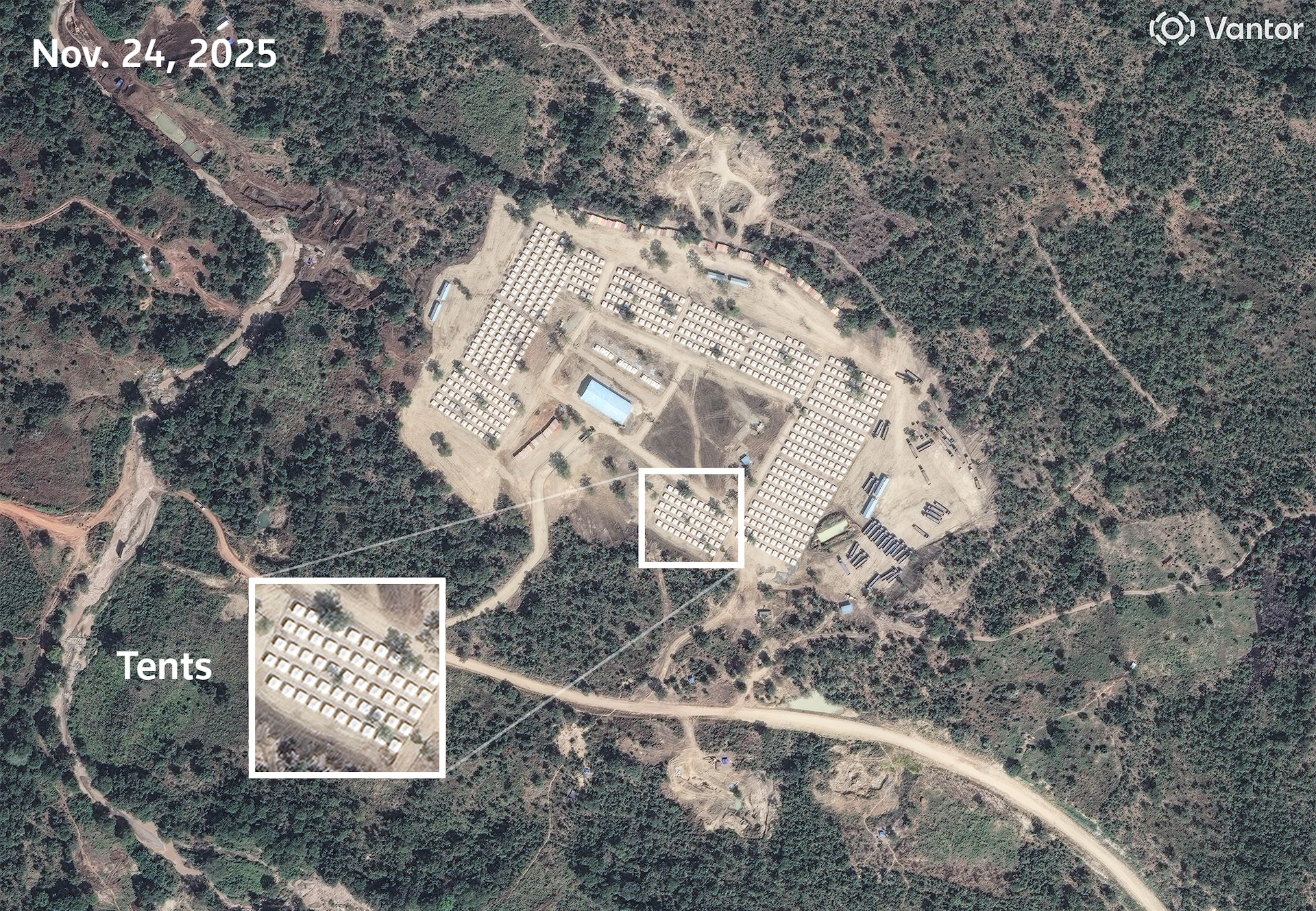
Eight sources, including a senior Ethiopian government official, told Reuters that the UAE financed the camp’s construction, provided military trainers, and supplied equipment. Two Ethiopian intelligence officials and satellite imagery corroborated these details, showing newly constructed metal-roofed buildings, tented areas for training, and a nearby drone ground control station. The facility’s exact operational plans and long-term staffing arrangements remain undisclosed.
The camp’s recruits are mainly Ethiopian, but sources said citizens from South Sudan and Sudan, including members of the Sudan People’s Liberation Movement–North (SPLM-N), are also present. A senior SPLM-N leader denied his forces had a presence in Ethiopia. The Ethiopian government, its army, and the RSF did not respond to requests for comment. Sudan’s army also did not respond to inquiries.
Read also: Britain, EU Nations Stripped Of Measles-Free Designation
A diplomatic cable reviewed by Reuters, dated November, describes the camp as capable of housing up to 10,000 fighters. It notes that activity began in October, with the arrival of RSF units, Land Cruisers, heavy trucks, and UAE trainers. The cable, obtained from a confidential source, does not identify the author country to protect its origin.
The facility is located in Menge district, about 20 miles (32 km) from the Sudanese border, at a strategic intersection connecting Ethiopia, Sudan, and South Sudan. Satellite images show forest clearing beginning in April, followed by the construction of initial buildings, with expanded activity in the second half of October.
Ethiopian security documents name General Getachew Gudina, Chief of the Defense Intelligence Department of the Ethiopian National Defense Force, as responsible for establishing the camp. A senior Ethiopian government official and four diplomatic and security sources confirmed his role. Getachew did not respond to a request for comment.
The RSF recruits are expected to join operations in Sudan’s Blue Nile region, where the paramilitary group has been battling Sudanese army units for control. Two officials told Reuters that hundreds of trained fighters had already crossed the border in recent weeks. The camp provides a fresh supply of personnel to the RSF, potentially intensifying the fighting in the southern front.
The facility’s construction and operation illustrate the role of international actors in Sudan’s conflict. Sudanese authorities have previously accused the UAE of supplying the RSF with weapons, allegations U.N. experts and U.S. lawmakers have deemed credible. Abu Dhabi has been a strong supporter of Ethiopian Prime Minister Abiy Ahmed since he took office in 2018, and the two countries have cultivated a military partnership in recent years.
Ethiopia and the UAE issued a joint statement on January 6 calling for a ceasefire in Sudan and highlighting cooperation that “serves the defense of each other’s security.” Officials from both countries declined to comment specifically on the training camp.
Read further: South Sudan Jonglei Fighting Raises Fears Of Civil War
The presence of foreign-backed paramilitary training in Ethiopia underscores concerns that Sudan’s civil war is attracting regional powers from both Africa and the Middle East. Analysts have noted that support from outside states has exacerbated the conflict, allowing both the RSF and the Sudanese army to sustain operations despite high casualties and humanitarian crises.
The camp’s location near the borders of Sudan and South Sudan suggests a broader strategic significance, potentially facilitating movement of fighters across the region. Satellite imagery also shows a newly constructed drone control facility nearby, indicating possible coordination of surveillance or reconnaissance operations.
The conditions of recruitment at the camp remain unclear. Reuters was unable to independently verify the identities of all recruits or the terms under which they are enlisted. Ethiopian and diplomatic sources indicated that the recruits would be deployed to frontline operations, but no operational timelines have been publicly disclosed.
The emergence of the training site adds to a pattern of external support prolonging Sudan’s civil war. Millions of civilians have been affected, and humanitarian agencies report ongoing food insecurity, displacement, and threats to public health. Regional actors’ involvement could heighten tensions in neighboring countries already hosting large numbers of refugees.
No additional details regarding the duration of the camp’s operations, further UAE involvement, or the movement of trained fighters have been released. Ethiopian authorities and RSF officials have not commented on next steps, leaving the facility’s future role in Sudan’s conflict uncertain.